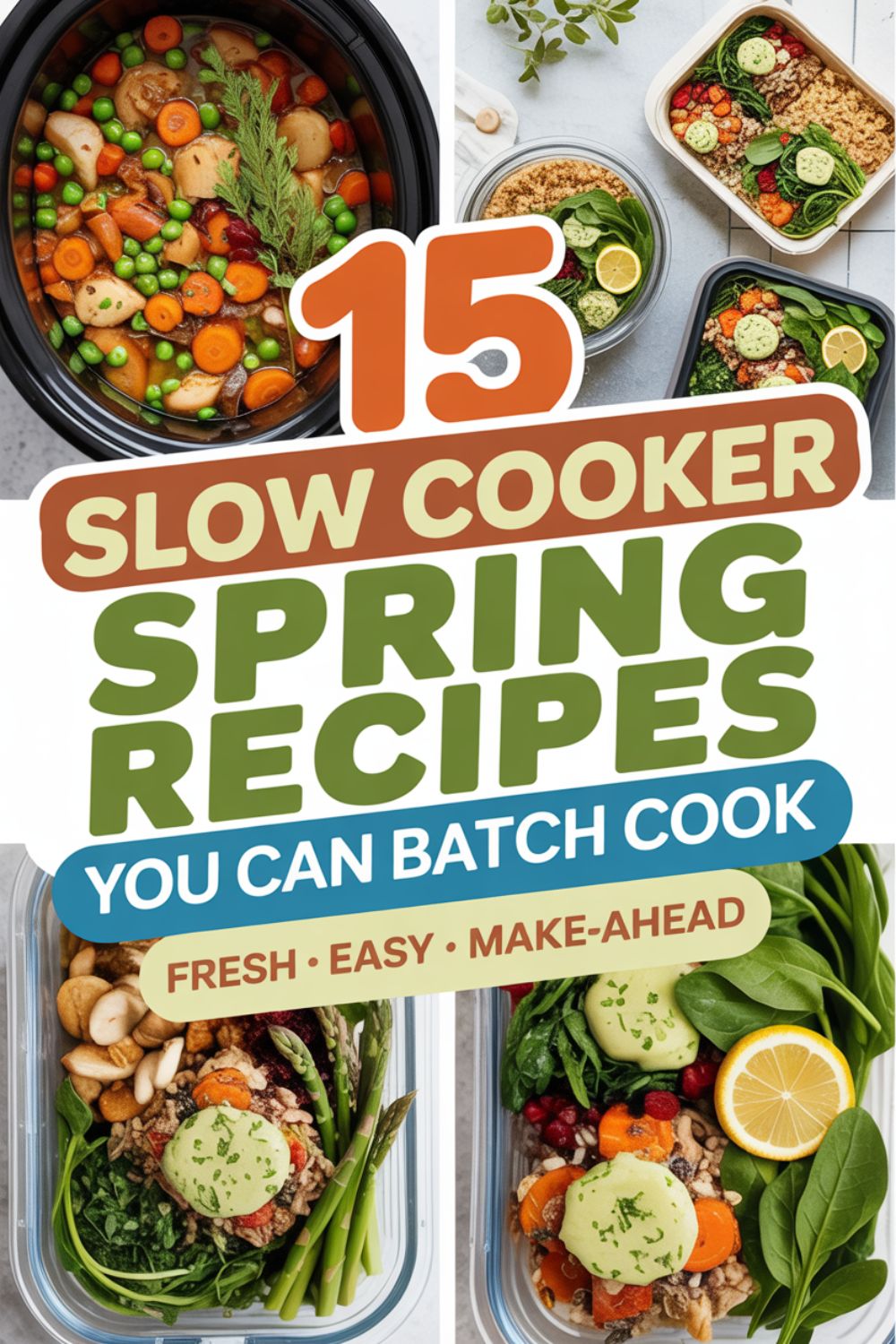
15 Slow Cooker Spring Recipes You Can Batch Cook
Look, I’m not going to pretend spring cooking is all about delicate asparagus tips and hand-rolled gnocchi. When you’ve got a full week ahead and about twenty minutes of energy left on a Sunday afternoon, batch cooking becomes your best friend. And honestly? Your slow cooker might just be the MVP of spring meal prep.
Spring is weird, right? One day you’re craving something light and fresh, and the next you need actual comfort food because it’s somehow still jacket weather. That’s where slow cooker batch cooking comes in clutch. You get all those gorgeous spring vegetables—asparagus, peas, baby carrots, fresh herbs—without standing over a stove for hours.
Here’s the thing about slow cooker spring recipes: they’re not just about convenience. When you cook low and slow following proper food safety guidelines, you’re actually coaxing out flavors that high-heat cooking just can’t match. Plus, you can make enough to freeze or eat throughout the week, which is basically like giving your future self a gift.
I’ve been batch cooking spring recipes for years now, and I’ve learned a few things. First, spring vegetables don’t need to be overcooked to oblivion. Second, your slow cooker is way more versatile than you think. And third, there’s something deeply satisfying about opening your door after work to a house that smells like dinner already made itself.
Why Batch Cook Spring Recipes in Your Slow Cooker?
Before we dive into the recipes, let’s talk about why this actually makes sense. I know some people think slow cookers are just for winter stews, but hear me out.
Spring produce is incredibly flavorful but can be expensive if you’re not buying in season. When you batch cook, you can buy larger quantities when things are on sale and transform them into multiple meals. I’ve made one big batch of spring vegetable soup and portioned it into five different lunches. That’s basically free lunch money right there.
The other massive benefit? Temperature control. Slow cookers maintain safe cooking temperatures between 170°F and 280°F, which means your food stays in that sweet spot where flavors meld without nutrients breaking down too much. It’s gentle cooking at its finest.
Plus, let’s be honest—spring means you want to be outside, not stuck in a hot kitchen. Your slow cooker keeps the heat contained, and you get to enjoy the weather while your food does its thing. It’s a win-win.
Essential Tips for Slow Cooker Spring Batch Cooking
Alright, before we get to the good stuff, here are some things I wish someone had told me when I started batch cooking spring recipes.
Layer Your Ingredients Properly
This is crucial. Root vegetables and heartier spring veggies like carrots and potatoes go on the bottom because they take longer to cook. Tender stuff like peas, asparagus tips, and fresh herbs? Those go in during the last 30-60 minutes. I learned this the hard way after turning asparagus into green mush one too many times.
Speaking of asparagus—and this goes for most spring vegetables—they’re packed with vitamins and antioxidants that can be compromised by overcooking. So timing really matters here.
Don’t Skip the Searing Step
I know, I know. The whole point of a slow cooker is minimal effort. But trust me on this—if you’re doing a protein-based batch cook, quickly searing your chicken, lamb, or whatever in a good quality cast iron skillet before it goes in the slow cooker makes a huge difference. You get that caramelization and depth of flavor that slow cooking alone just can’t achieve.
Embrace Freezer-Friendly Portions
Not everything needs to be eaten fresh. I use these glass meal prep containers with divided sections to portion out individual servings before freezing. They stack beautifully, and you can see exactly what you’ve got. Plus, glass doesn’t absorb odors like plastic can.
For soups and stews, those silicone freezer bags are game-changers. They lay flat in the freezer, thaw quickly, and you can reuse them basically forever. Much better than dealing with freezer-burned Tupperware disasters.
The 15 Spring Recipes Worth Batch Cooking
1. Spring Vegetable and White Bean Stew
This is my go-to when I need something that feels light but still fills me up. You’re basically throwing in whatever spring vegetables you can get your hands on—asparagus, peas, baby carrots, leeks—with white beans and a ton of fresh herbs.
The key is adding the asparagus and peas in the last hour. Get Full Recipe. I usually make a double batch and freeze half in individual portions. It reheats beautifully and tastes even better the next day when the flavors have had time to hang out together.
2. Slow Cooker Lemon Herb Chicken with Spring Vegetables
Look, chicken and vegetables is about as basic as it gets, but when you add fresh lemon, garlic, and a mountain of fresh herbs, it becomes something actually crave-worthy. I use bone-in chicken thighs because they stay ridiculously moist in the slow cooker.
Throw in some baby potatoes, carrots, and snap peas. The chicken releases its juices, the vegetables soak up all those lemony, herby flavors, and you end up with something that tastes way fancier than the effort involved. Get Full Recipe.
For similar flavor-packed slow cooker chicken ideas, check out these slow cooker chicken recipes for every occasion or these crowd-pleasing chicken dishes.
3. Spring Lamb Stew with Root Vegetables
Lamb is peak spring protein, and when you braise it low and slow with carrots, turnips, and fresh rosemary, it’s basically spring on a plate. The meat gets so tender it falls apart with a fork, and the vegetables absorb all that rich, savory flavor.
I like using lamb shoulder because it’s more affordable than leg and has enough fat to stay moist during the long cooking time. Plus, it makes your house smell absolutely incredible. Get Full Recipe.
4. Slow Cooker Minestrone with Spring Vegetables
Traditional minestrone is already pretty great, but when you load it up with spring vegetables instead of the usual winter suspects, it becomes something lighter and brighter. Think fresh peas, asparagus, baby spinach, and lots of basil.
I cook the pasta separately and add it when serving—otherwise it gets mushy and absorbs too much liquid. This makes enough for about six generous servings, and it freezes perfectly. Get Full Recipe.
If you’re into batch-cooking soups, you’ll probably also enjoy these warming slow cooker soups and these meal prep-friendly options.
5. Honey Garlic Glazed Carrots and Parsnips
Okay, this is technically a side dish, but I make it in bulk and use it throughout the week with different mains. Baby carrots and parsnips get slow-cooked in a mixture of honey, garlic, and butter until they’re caramelized and ridiculously good.
The slow cooker turns them into candy without the risk of burning that you get with roasting. I portion these into containers and reheat them as needed. They’re great alongside grilled chicken, fish, or even just scrambled eggs for a weird but delicious breakfast. Get Full Recipe.
6. Spring Vegetable Curry with Coconut Milk
Not every spring recipe has to be light and delicate. Sometimes you want something with actual punch, and this curry delivers. Cauliflower, peas, baby potatoes, and chickpeas in a coconut milk curry sauce that’s aromatic without being overwhelming.
I use this Thai curry paste from Amazon because it’s legit and saves me from tracking down fifteen different spices. The slow cooker lets all those flavors meld together beautifully. Get Full Recipe.
7. Slow Cooker Ratatouille
Ratatouille screams summer, but early spring vegetables like zucchini and baby eggplant work just as well. Layer everything in the slow cooker with plenty of garlic, fresh basil, and good olive oil. The key is not stirring it too much—let the vegetables maintain some structure.
This is one of those dishes that’s somehow better cold the next day. I eat it straight from the container for lunch, use it as a pasta sauce, or serve it alongside grilled protein. Super versatile. Get Full Recipe.
8. Lemon Asparagus Risotto
Yeah, you can make risotto in a slow cooker, and no, you don’t have to stand there stirring. The result isn’t quite as creamy as the traditional method, but it’s close enough, and the effort-to-deliciousness ratio is unbeatable.
Fresh asparagus, lemon zest, parmesan, and arborio rice. That’s basically it. I add the asparagus tips in the last 20 minutes so they stay bright green and slightly crisp. Get Full Recipe.
Want more set-it-and-forget-it dinner ideas? These weeknight slow cooker meals and quick dinner options are perfect for hectic schedules.
9. Spring Pea and Ham Soup
This is comfort food that doesn’t feel heavy. Split peas, a ham bone or ham hock, carrots, celery, and lots of fresh dill. It cooks down into this thick, creamy soup without needing any actual cream.
The slow cooker does all the work of breaking down the peas and creating that silky texture. I freeze this in individual portions using wide-mouth mason jars—just make sure to leave headspace for expansion. Get Full Recipe.
10. Slow Cooker Spring Chicken Soup
Chicken soup, but make it spring. Use bone-in chicken pieces for maximum flavor, then add spring vegetables like asparagus, peas, baby carrots, and lots of fresh dill and parsley. The result is lighter than traditional chicken soup but just as comforting.
I strain out the chicken, shred the meat, and return it to the pot. Then I portion everything into containers for easy grab-and-go lunches. Get Full Recipe.
11. Braised Spring Greens with Garlic
Swiss chard, kale, collards—whatever spring greens you can find—get slow-cooked with garlic, a little vinegar, and some red pepper flakes. They reduce down to this intensely flavored side that pairs with literally everything.
The slow cooker removes all the bitterness without turning them into mush. I make a huge batch and eat them throughout the week with eggs, on toast, or as a side to grilled meats. Get Full Recipe.
12. Spring Vegetable Frittata (Yes, in the Slow Cooker)
Okay, this one sounds weird, but it works. Eggs, asparagus, peas, goat cheese, and fresh herbs cook into a fluffy frittata without any oven babysitting. I slice it into wedges and eat it cold for breakfast all week.
The key is using a slow cooker liner or really good non-stick spray. Nothing worse than trying to chisel out stuck eggs. Get Full Recipe.
13. Slow Cooker Spring Chili
Chili in spring? Absolutely. This version uses white beans, chicken or turkey instead of beef, and gets brightened up with lime juice and cilantro. It’s lighter than traditional chili but still hearty enough to be satisfying.
I top mine with avocado, sour cream, and extra cilantro. Makes a ton, freezes beautifully, and tastes even better after a day or two. Get Full Recipe.
If you’re a chili enthusiast, don’t miss these must-try slow cooker chili variations for more inspiration.
14. Lemon Garlic Shrimp and Spring Vegetables
Shrimp in the slow cooker sounds sketchy, but you add them in the last 30 minutes, so they don’t get rubbery. The vegetables cook first—asparagus, cherry tomatoes, bell peppers—then the shrimp go in with lemon and garlic.
This is one of those recipes that feels fancy enough for company but easy enough for a regular Tuesday. Get Full Recipe.
15. Spring Vegetable and Quinoa Bowl
Last but not least, a grain bowl that cooks entirely in the slow cooker. Quinoa, spring vegetables, chickpeas, and a lemony tahini dressing. It’s healthy without being boring, and you can customize it with whatever vegetables you have.
I make a big batch on Sunday and portion it into containers for lunch. Add some crumbled feta or a fried egg on top, and you’ve got a complete meal. Get Full Recipe.
Kitchen Tools & Essentials That Make Spring Batch Cooking Easier
Look, you don’t need a million gadgets to batch cook successfully, but a few key items really do make life easier. Here’s what I actually use regularly:
- Programmable 6-Quart Slow Cooker with Timer – Seriously, the timer function is a game-changer. You can set it to switch to “warm” automatically so your food doesn’t overcook if you’re running late.
- Glass Meal Prep Containers (Set of 10) – These are microwave, dishwasher, and freezer safe. No weird plastic smells, and you can actually see what’s in them.
- Stainless Steel Ladle and Slotted Spoon Set – For portioning soups and stews without making a mess. The long handles keep your hands away from the heat.
- Spring Meal Prep Planner & Shopping List Template – A digital download that helps you plan your batch cooking sessions and generates organized shopping lists. Saves me so much time.
- Slow Cooker Spring Recipe E-Book Collection – 50+ tested recipes specifically designed for spring ingredients and batch cooking. Worth every penny.
- Freezer Meal Labels Printable Pack – Printable labels with spaces for recipe name, date, and reheating instructions. Because future you will not remember what that mystery container is.
Making Batch Cooking Actually Work for Your Life
Okay, so you’ve got recipes and maybe some new containers. Now what? Here’s how I actually make batch cooking happen without losing my mind.
Pick Your Batch Cooking Day
For most people, this is Sunday. For me, it’s Wednesday because that’s when I have the most energy and fresh produce is at its best mid-week. Figure out what works for your schedule and stick with it.
I set aside about three hours—one hour for prep, 30 minutes for starting everything, and the rest is just waiting while the slow cooker does its thing. During that time, I’m not stuck in the kitchen. I’m doing laundry, reading, or catching up on shows.
Start Simple
Don’t try to make all fifteen recipes your first week. That’s a recipe for burnout (pun intended). Pick two or three recipes that use similar ingredients so your shopping is efficient and you’re not buying seventeen different vegetables.
For instance, if you’re making the spring vegetable soup and the chicken with vegetables, you can use the same asparagus, carrots, and fresh herbs for both. Smart shopping equals less waste and less money spent.
Label Everything
I cannot stress this enough. Write the recipe name, the date, and reheating instructions on every container. Your future self, standing in front of the freezer at 6 PM on a Wednesday, will be grateful.
I use these erasable freezer labels that stick to anything and come off clean. Much better than playing “guess what this frozen blob is” six weeks from now.
Rotate Your Recipes
Don’t make the same three recipes every single week. You’ll get bored, and batch cooking will start feeling like a chore instead of a time-saver. I keep a rotation of about eight recipes and cycle through them monthly.
This way, by the time I make the same recipe again, I’m actually excited about it instead of groaning at the thought of another bowl of the same soup.
Looking for more variety? Check out these addictive slow cooker recipes and these healthy options that don’t sacrifice flavor.
Common Batch Cooking Mistakes (And How to Avoid Them)
Let me save you from some disasters I’ve experienced firsthand.
Overfilling Your Slow Cooker
Your slow cooker should be between half and two-thirds full for optimal cooking. Too full, and the food won’t cook evenly. Too empty, and you risk burning. This is actually a food safety issue, not just a quality thing.
If you want to make massive batches, invest in a second slow cooker or cook in multiple sessions. I picked up a smaller 4-quart model for sides and smaller batches, and it’s been super useful.
Not Adjusting Cooking Times for Altitude
If you live at high altitude, slow cooker recipes take longer. Add about an hour on LOW for every 4,000 feet of elevation. I learned this the hard way with undercooked beans that were basically crunchy pebbles.
Adding Dairy Too Early
Milk, cream, sour cream, cheese—all of these should go in during the last 30 minutes of cooking. Otherwise, they separate and get weird. Trust me on this. Curdled soup is not appetizing, no matter how good the rest of it tastes.
Forgetting to Account for Liquid Evaporation
Actually, wait—liquid doesn’t evaporate much in a slow cooker because of the tight lid. That’s the opposite problem. If you’re adapting a regular recipe, you typically need less liquid. Start with about half the amount and add more if needed.
Storage and Reheating Tips
Making the food is only half the battle. Storing and reheating it properly is what makes batch cooking actually sustainable.
Cool Food Quickly and Safely
Hot food should not go directly into the fridge. It raises the internal temperature and puts everything else at risk. Spread hot food in a shallow container to cool it faster, or use an ice bath.
I use these shallow stainless steel pans specifically for cooling food quickly before portioning. They conduct heat away fast and then go straight into the dishwasher.
Freeze Smart
Most cooked food lasts 3-4 days in the fridge. If you’re not going to eat it in that window, freeze it. Soups and stews freeze beautifully. Grain-based dishes are usually fine. Anything with potatoes can get a little mealy, but it’s still edible.
Asparagus and other tender vegetables don’t freeze as well as heartier ones. If you’re planning to freeze a dish, consider leaving out the asparagus tips and adding them fresh when you reheat.
Reheat Properly
Microwave on medium power rather than high. High power makes everything dry out or get rubbery. Medium takes a bit longer but maintains texture much better.
For soups and stews, add a splash of water or broth before reheating. They thicken as they sit, and that little bit of liquid brings them back to the right consistency.
Frequently Asked Questions
Can I really batch cook spring vegetables without them getting mushy?
Absolutely, but timing is everything. The trick is adding tender vegetables like asparagus, peas, and fresh greens during the last 30-60 minutes of cooking rather than at the beginning. Root vegetables and heartier items go in first, then you layer in the delicate stuff toward the end. This way, everything finishes at the same time without turning into mush.
How long can I safely store slow cooker batch meals in the fridge and freezer?
Cooked slow cooker meals stay fresh in the refrigerator for 3-4 days when stored in airtight containers. For longer storage, most slow cooker recipes freeze beautifully for up to 3 months. Just make sure to cool the food quickly before refrigerating or freezing, and label everything with the date and reheating instructions. Soups and stews are particularly freezer-friendly.
Do I need to thaw frozen slow cooker meals before reheating?
For best results, thaw frozen meals in the refrigerator overnight. This ensures even heating and better texture. If you’re short on time, you can reheat from frozen in the microwave on medium power, but expect it to take longer and potentially heat unevenly. Never reheat frozen food in a slow cooker—it takes too long to reach safe temperatures and creates a food safety risk.
Can I double or triple slow cooker recipes for bigger batches?
Yes, but your slow cooker can only hold so much. It should be between half and two-thirds full for optimal cooking—overfilling prevents proper heat circulation and can result in unevenly cooked food. If you want to make larger quantities, either use a bigger slow cooker or cook multiple batches. I keep two slow cookers specifically for this reason.
What’s the best way to prevent spring vegetables from losing nutrients during slow cooking?
Slow cooking at lower temperatures actually helps preserve nutrients better than high-heat methods like frying or boiling. To maximize nutrition, avoid overcooking (especially for water-soluble vitamins in vegetables like asparagus and peas), minimize the amount of cooking liquid, and add delicate vegetables toward the end of cooking time. Using the cooking liquid in the final dish also helps retain nutrients that leach out during cooking.
Final Thoughts
Spring batch cooking with your slow cooker isn’t just about convenience—though that’s definitely a massive perk. It’s about making the most of seasonal ingredients when they’re at their peak, saving money, and giving yourself the gift of ready-made meals throughout the week.
The recipes I’ve shared here are just starting points. Once you get comfortable with the rhythm of batch cooking, you’ll start adapting them to your own tastes, substituting vegetables based on what’s on sale, and building a repertoire that works for your life.
Start with one or two recipes this week. See what works. Adjust as needed. Before you know it, you’ll have a freezer full of homemade meals and a lot more free time during the week to actually enjoy spring instead of stressing about what’s for dinner.
And honestly? There’s something quietly satisfying about opening your fridge and seeing rows of perfectly portioned meals, knowing that past you took care of future you. That’s the real magic of batch cooking.