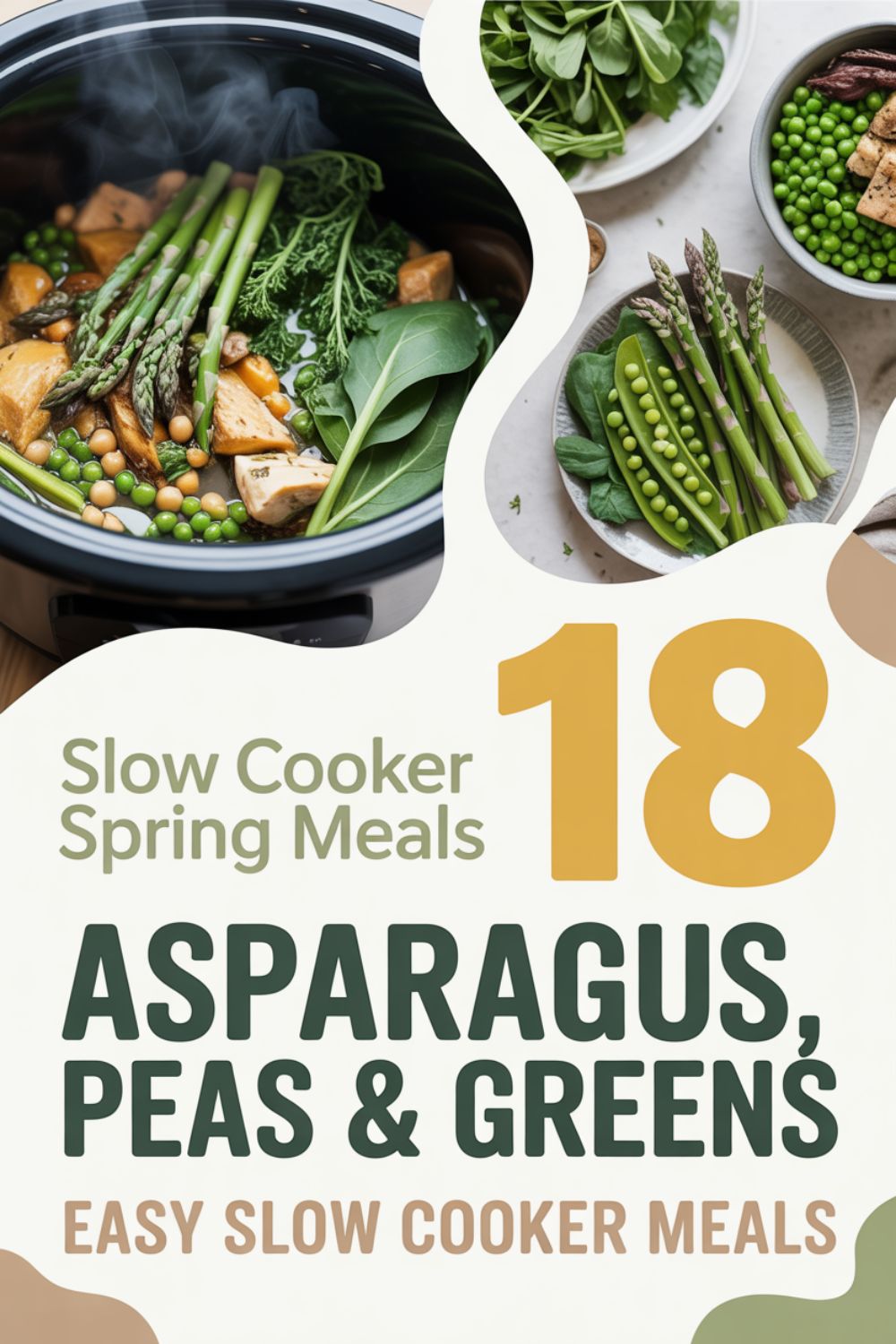
18 Slow Cooker Meals with Asparagus, Peas, and Greens
Look, I’m not here to tell you that greens are the answer to all your problems. But after months of tossing asparagus, peas, and leafy greens into my slow cooker, I’ve stumbled onto something that makes weeknight dinners feel less like a chore and more like actual food worth eating. These recipes aren’t complicated, they don’t require you to stand over a stove for an hour, and honestly? They taste way better than you’d expect from something you basically just threw in a pot and forgot about.
Here’s the thing about slow cooker meals with greens: they’re ridiculously forgiving. You can use fresh asparagus or frozen peas, swap kale for spinach, and the slow cooker won’t judge you. It’ll just quietly turn everything into something tender and flavorful while you’re off doing literally anything else. And if you’re anything like me—someone who wants healthy meals but also wants to Netflix in peace—this might just be your new favorite way to cook.
Why Your Slow Cooker Actually Loves Greens
I used to think slow cookers were just for pot roast and chili. Turns out, they’re secretly amazing with vegetables, especially asparagus, peas, and leafy greens. The gentle, low heat does something magical—it keeps nutrients locked in instead of boiling them away into oblivion. Asparagus is loaded with folate, fiber, and vitamins A, C, E, and K, and slow cooking actually preserves more of these heat-sensitive vitamins than methods like boiling or high-heat sautéing.
Plus, here’s a fun fact: when you slow cook, all those nutrients that might normally leach into cooking water? They stay right there in your sauce or broth, which you’re going to eat anyway. So you’re not pouring vitamins down the drain—you’re eating them. Science is cool like that.
Another reason greens work so well in the slow cooker is texture. Asparagus gets tender without turning to mush (if you time it right), peas stay plump and sweet, and heartier greens like kale or collards become silky and mild. It’s the kind of cooking that makes vegetables taste like they’re supposed to—not like a punishment for being an adult.
The 18 Slow Cooker Meals You Actually Need
Alright, let’s get into it. These aren’t just random recipes I threw together—they’re the ones I actually make, the ones that don’t require seventeen specialty ingredients, and the ones my family doesn’t complain about. Which, honestly, is the highest compliment I can give.
1. Creamy Asparagus and Pea Risotto
I know, risotto in a slow cooker sounds weird. But trust me on this one. You dump in arborio rice, vegetable broth, a splash of white wine (optional, but recommended), and let it do its thing. About 30 minutes before it’s done, stir in chopped asparagus and frozen peas. Finish with a little parmesan and butter, and suddenly you’ve got creamy, restaurant-quality risotto without standing at the stove stirring for 45 minutes like some kind of medieval peasant. Get Full Recipe.
2. White Bean and Kale Soup
This is the soup I make when I’m too tired to think. Cannellini beans, chicken or veggie broth, garlic, onion, and a massive handful of chopped kale. Sometimes I throw in a parmesan rind if I have one lying around—it adds this subtle umami depth that makes you feel like a culinary genius. Let it cook on low for 6-8 hours, and you’ve got a soup that tastes like you actually tried.
Speaking of soups that make life easier, if you’re into this whole set-it-and-forget-it vibe, you might want to check out these slow cooker soups or explore meal prep-friendly soup ideas that’ll keep you covered all week.
3. Lemon Garlic Chicken with Asparagus
Chicken thighs, lemon juice, garlic, a bit of olive oil, and asparagus spears laid on top for the last hour. It’s simple, it’s bright, and it makes your kitchen smell like an Italian grandmother lives there. Serve it over rice or with crusty bread to soak up that lemony pan sauce, and you’ve got dinner sorted.
4. Spring Vegetable Minestrone
Minestrone is one of those soups that just gets better with time. This version uses fresh asparagus, peas, zucchini, and whatever other spring vegetables you have kicking around. Throw in some small pasta (add it near the end so it doesn’t turn to mush), a can of diced tomatoes, and plenty of herbs. It’s hearty without being heavy, and leftovers taste even better the next day.
5. Slow Cooker Frittata with Spinach and Peas
Yes, you can make a frittata in a slow cooker. Line the pot with parchment paper (or use a slow cooker liner to save yourself the cleanup headache), whisk together eggs, a bit of milk, cheese, and your veggies, then cook on low for about 2-3 hours. Perfect for brunch, meal prep, or those mornings when you want something more interesting than cereal.
Meal Prep Essentials for These Recipes
If you’re going to make slow cooker meals a regular thing—and honestly, you should—there are a few tools and resources that’ll make your life infinitely easier. Here’s what I actually use:
Physical Products:
- 6-Quart Programmable Slow Cooker – This is the one I swear by. It has a timer so you can set it and actually leave the house without worrying your dinner is turning into charcoal. The insert is dishwasher-safe, which is basically a requirement for any kitchen tool in my book.
- Glass Meal Prep Containers (Set of 10) – Perfect for portioning out leftovers. They’re microwave and dishwasher safe, and they don’t get all gross and stained like plastic ones do after a few months.
- Silicone Slow Cooker Liners – I use these instead of disposable liners because I’m trying to be slightly less terrible to the planet. They’re reusable, non-stick, and make cleanup so easy it’s almost suspicious.
Digital Resources:
- The Complete Slow Cooker Meal Planner eBook – A digital guide with 200+ recipes organized by season. It’s been a lifesaver when I’m staring into the fridge wondering what to make.
- Weekly Meal Prep Template Pack – Printable and digital templates for planning your weekly meals, grocery lists, and prep schedules. I’m not naturally organized, so this keeps me from ending up with random vegetables dying in my crisper drawer.
- Slow Cooker Freezer Meal Guide – Shows you how to prep entire meals and freeze them in bags, so you can literally just dump a frozen bag into your slow cooker in the morning. It’s like meal kit service, except you made it yourself and didn’t spend $12 per serving.
6. Mediterranean Lamb Stew with Peas
Okay, this one’s a little fancier, but still stupid easy. Lamb shoulder, tomatoes, red wine, garlic, and a bunch of Mediterranean spices like oregano and rosemary. Add frozen peas near the end, and serve it over couscous or with warm pita. It’s the kind of meal that makes people think you know what you’re doing in the kitchen.
7. Creamy Spinach and Artichoke Chicken
Remember spinach artichoke dip? This is basically that, but with chicken and slightly more acceptable to eat for dinner. Chicken breasts, cream cheese, frozen spinach, artichoke hearts, and garlic. It’s indulgent without being ridiculous, and you can serve it over pasta or rice to soak up all that creamy goodness.
8. Thai-Inspired Green Curry with Vegetables
Green curry paste, coconut milk, snap peas, asparagus, and whatever other veggies you like. This one comes together fast but tastes like you spent hours on it. Serve over jasmine rice and top with fresh basil and lime. FYI, this is one of those recipes that tastes even better the next day after the flavors have had time to get acquainted.
For more inspiration on keeping dinners interesting without the hassle, check out these busy weeknight slow cooker meals.
9. Split Pea Soup with Ham
This is comfort food at its finest. Split peas, ham hock or leftover ham, carrots, celery, onion, and thyme. Let it cook all day until it’s thick and creamy. It’s the kind of soup that sticks to your ribs and makes you feel like everything’s going to be okay, even if it’s Tuesday and you’re already tired.
10. Pesto Chicken with Asparagus and Tomatoes
Chicken, jarred pesto (or homemade if you’re feeling ambitious), cherry tomatoes, and asparagus. Cook the chicken and tomatoes most of the way, then add the asparagus and a spoonful of pesto at the end. It’s fresh, vibrant, and tastes nothing like it came out of a slow cooker—which is kind of the whole point.
11. Braised Short Ribs with Spring Vegetables
Short ribs, red wine, beef broth, and a mix of asparagus, peas, and baby carrots added in the last hour. The meat falls off the bone, and the vegetables soak up all those rich, beefy flavors. It’s fancy enough for company but easy enough for a random Thursday.
12. Veggie-Loaded Quinoa Pilaf
Quinoa, vegetable broth, asparagus, peas, spinach, and whatever other vegetables are looking sad in your fridge. Season it with lemon, garlic, and herbs. It’s light, it’s healthy, and it’s the kind of meal that makes you feel like you’ve got your life together—even if you absolutely do not.
13. Sausage and Kale Stew
Italian sausage, white beans, kale, tomatoes, and a little bit of heat from red pepper flakes. It’s hearty, warming, and perfect for those nights when you want something that feels substantial but doesn’t require actual effort. I usually make this with a good Dutch oven-style slow cooker because it retains heat really well and everything cooks evenly.
14. Creamy Mushroom and Asparagus Risotto
Similar to the first risotto, but with mushrooms for extra umami. Use a mix of cremini and shiitake if you can find them. Add the asparagus toward the end so it stays crisp-tender. Finish with parmesan, a drizzle of truffle oil if you’re feeling extra, and maybe some fresh parsley. It’s the kind of dinner that makes you feel like a grown-up.
15. Indian-Spiced Lentil and Spinach Dal
Red lentils, spinach, coconut milk, curry powder, garam masala, and ginger. This is one of those recipes where the slow cooker really shines because the spices have hours to meld into something deeply flavorful. Serve it with naan or rice and some yogurt on the side. Leftovers are great for lunch the next day—if there are any leftovers, which there usually aren’t.
If you’re digging the idea of globally-inspired slow cooker recipes, you’ll probably love these comfort food classics that make dinner feel special without the stress.
16. Spring Chicken and Vegetable Stew
Bone-in chicken thighs, potatoes, asparagus, peas, carrots, and fresh herbs like thyme and rosemary. The bone-in chicken makes the broth extra rich, and the mix of vegetables makes it feel balanced and wholesome. It’s the kind of stew that feels like a hug in a bowl.
17. Slow Cooker Ratatouille with Greens
Eggplant, zucchini, bell peppers, tomatoes, and a handful of greens like spinach or arugula stirred in at the end. It’s bright, fresh, and surprisingly filling for something that’s basically just vegetables. Serve it over polenta or with a thick slice of crusty bread.
18. Coconut Curry Chickpeas with Spinach
Chickpeas, coconut milk, diced tomatoes, curry paste, and a massive pile of spinach. It’s vegan, it’s filling, and it’s ridiculously cheap to make. Plus, it’s one of those recipes where you can just throw everything in and walk away. No browning, no sautéing—just dump and go. Get Full Recipe.
How to Not Screw Up Slow Cooker Greens
Here’s the deal: greens are delicate. Asparagus, peas, and leafy greens don’t need eight hours to cook. If you throw them in at the beginning with everything else, you’ll end up with a sad, olive-drab mess that tastes like regret.
The trick is timing. For heartier greens like kale or collards, you can add them in the last hour or two. They’ll soften nicely without disintegrating. For more delicate stuff—asparagus, peas, spinach, arugula—wait until the last 30-45 minutes. They’ll cook just enough to be tender and flavorful without losing their color or texture.
Also, don’t be afraid to layer your vegetables. Put denser veggies like carrots or potatoes on the bottom where it’s hottest, and place your greens on top. The slow cooker will work its magic, and everything will cook evenly.
And if you’re worried about timing while you’re at work, get yourself a programmable slow cooker with a timer. It’ll switch to “warm” mode automatically so nothing overcooks. Game changer.
Why Slow Cooking Preserves Nutrients Better Than You Think
I’m not a scientist, but I’ve done enough reading to know that slow cooking is actually pretty great for keeping nutrients intact. Research shows that slow cooking at lower temperatures helps preserve heat-sensitive vitamins, especially compared to methods like boiling or high-heat frying where nutrients can break down or leach out.
The beauty of a slow cooker is that it’s a sealed environment. Any vitamins or minerals that do happen to leach out of your vegetables don’t go anywhere—they stay right there in the broth or sauce that you’re going to eat. So you’re not losing anything; you’re just redistributing it.
Plus, slow cooking makes certain nutrients more bioavailable, meaning your body can actually absorb them better. Things like lycopene in tomatoes and carotenoids in carrots become easier for your body to use when they’re cooked gently over time. So not only are you preserving nutrients—you’re making them work harder for you. It’s basically nutritional efficiency.
Making It Work with Your Life
The reason I love slow cooker meals isn’t just because they taste good—it’s because they fit into my actual life. I can throw ingredients in the pot in the morning before work, and by the time I get home, dinner’s done. No scrambling, no takeout guilt, no 8 PM panic about what to feed everyone.
If you’re new to slow cooking, start simple. Pick one or two recipes from this list that sound good, make them a few times until you get the hang of it, then branch out. You don’t need to be ambitious right away—you just need to show up and press “start.”
Also, don’t underestimate the power of leftovers. Most of these recipes make enough for at least two meals, which means you’re not just cooking dinner—you’re cooking tomorrow’s lunch too. I usually portion everything out in glass meal prep containers right after dinner so I’m not tempted to eat the entire pot in one sitting. (It’s happened. More than once.)
If you’re looking to streamline things even more, try prepping a few meals at once. Meal prep recipes like these can keep you stocked all week with minimal effort.
The Tools That Actually Matter
You don’t need a ton of fancy equipment to make great slow cooker meals, but a few key tools will make your life easier. Besides the obvious slow cooker itself, here’s what I actually use:
A good set of sharp knives makes vegetable prep way less miserable. You’d be surprised how much faster you can chop asparagus when your knife isn’t fighting you every step of the way.
I also swear by my immersion blender for making soups creamy without having to transfer hot liquid to a regular blender and risk third-degree burns. Just stick it in the pot, blend, done.
And if you’re serious about meal prep, a vacuum sealer is clutch for freezing prepped ingredients or entire meals. You can make a bunch of slow cooker freezer bags, stack them flat in your freezer, and just grab one whenever you need it. It’s like having a personal meal kit service, except you’re not paying $15 per serving.
What People Are Saying
Sarah from our community tried the creamy asparagus risotto and said it completely changed her weeknight dinner game. She lost 12 pounds over three months just by swapping out takeout for slow cooker meals a few times a week. Not because the recipes are some magic diet food—just because they’re filling, nutritious, and don’t require her to stand in front of a stove when she’s already exhausted from work.
Another reader, Mike, mentioned that the Thai green curry became his go-to for impressing dinner guests. Apparently, people are genuinely shocked when he tells them it came out of a slow cooker and took about ten minutes of actual work. Who knew being lazy could make you look like a culinary wizard?
Frequently Asked Questions
Can I add frozen vegetables directly to the slow cooker?
Absolutely. Frozen peas and asparagus work great in slow cookers, and you don’t even need to thaw them first. Just add them toward the end of cooking—usually in the last 30-45 minutes—so they heat through without turning mushy. Frozen veggies are already blanched, so they cook faster than fresh ones.
How do I keep asparagus from getting overcooked and mushy?
Timing is everything. Add asparagus in the last 30-60 minutes of cooking, depending on how thick the spears are. Thinner asparagus needs less time, while thicker spears can handle a bit more. You want them tender but still with a little bite—not falling apart into green mush.
What’s the best way to prep greens for slow cooker meals?
For leafy greens like spinach or kale, give them a rough chop and remove any thick stems. For asparagus, trim the woody ends (just bend the spear—it’ll snap where it’s supposed to) and cut into 1-2 inch pieces. You can do all this the night before and store prepped veggies in the fridge in airtight containers or ziplock bags to save time in the morning.
Can I use a slow cooker for meal prep?
Hell yes. Most slow cooker recipes make at least 6-8 servings, which means you can portion them out for the week. Just let everything cool, divide into meal prep containers, and store in the fridge for up to four days or freeze for up to three months. When you’re ready to eat, just reheat and you’re set.
Do I really need a programmable slow cooker, or will a basic one work?
A basic slow cooker works fine if you’re home to turn it off when it’s done. But if you’re out for 8-10 hours, a programmable one is worth it. It’ll automatically switch to “warm” mode so your food doesn’t overcook. IMO, it’s one of those upgrades that pays for itself in not-ruined dinners.
The Bottom Line
Slow cooker meals with asparagus, peas, and greens aren’t going to win any beauty contests, but they’ll save your sanity on busy weeknights. They’re easy, they’re healthy, and they taste way better than you’d expect from something you basically ignored for six hours.
The key is not overthinking it. Pick a recipe, throw everything in the pot, set the timer, and walk away. By the time you come back, you’ll have an actual meal—not takeout, not a bowl of cereal, an actual meal. And honestly? That’s a win.
So dust off that slow cooker sitting in the back of your cabinet, grab some greens, and give it a shot. Worst case scenario, you end up with leftovers. Best case scenario, you find a new dinner routine that doesn’t make you want to scream into the void every Tuesday at 6 PM.
And if you’re still not convinced, just remember: your slow cooker is doing the work, not you. You’re just the person who gets to eat the results. That’s a pretty good deal.