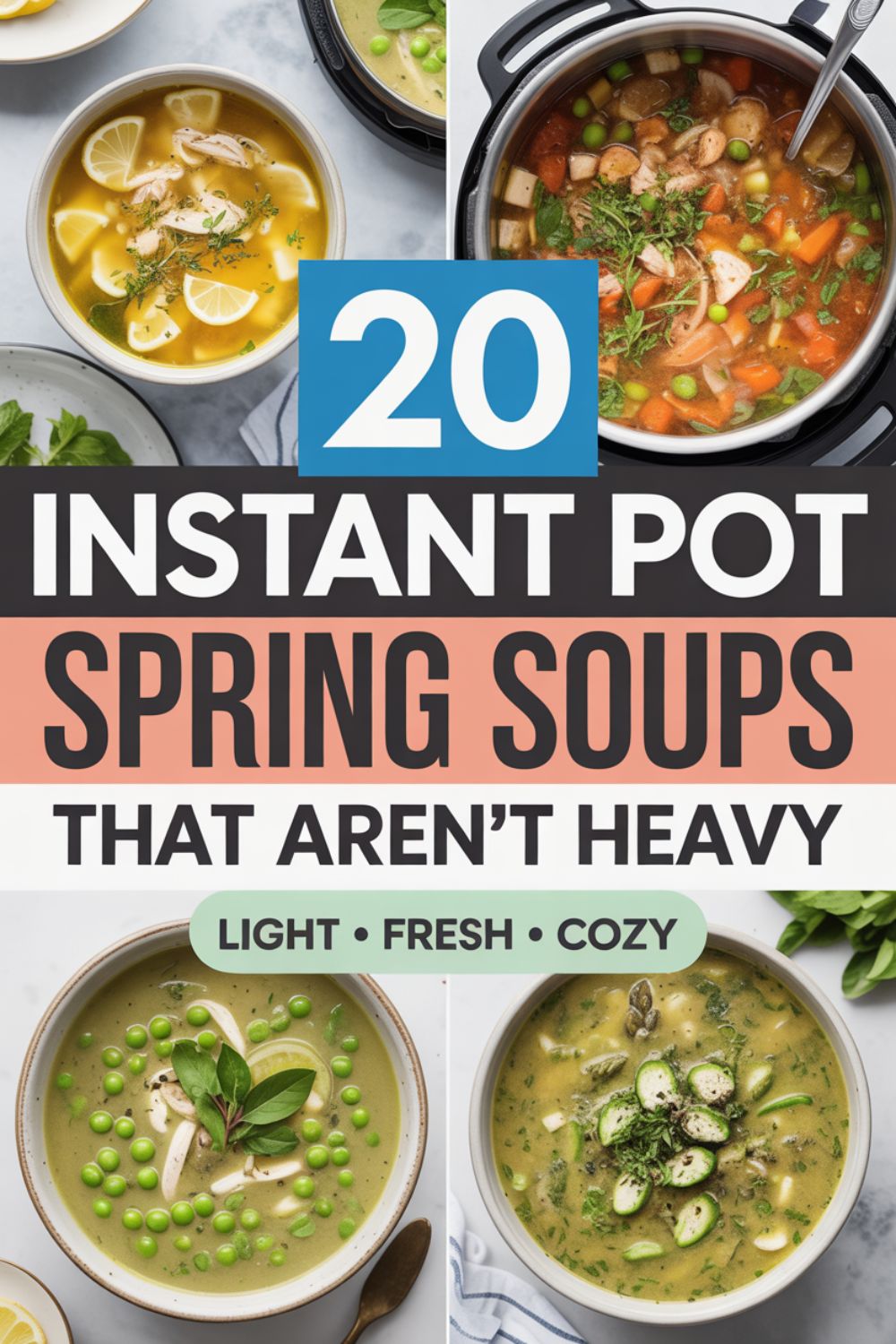
20 Instant Pot Spring Soups That Aren’t Heavy
I’ll admit, I was skeptical about making soup when the weather starts warming up. My brain associates soup with cozy sweaters and fireplaces, not sundresses and open windows. But then I realized I was thinking about it all wrong. Spring soups aren’t about comfort in the heavy sense—they’re about celebrating what’s fresh, what’s in season, and what makes your body feel good without weighing you down.
The Instant Pot makes this whole thing ridiculously easy. You’re not babysitting a pot on the stove for hours or worrying about burning the bottom. You toss in your ingredients, set it, and walk away. By the time you’ve folded that one load of laundry you’ve been avoiding, dinner’s ready.
Why Spring Soups Hit Different
Here’s what separates a spring soup from its winter cousin: the vegetables. We’re talking asparagus, peas, fresh herbs, baby carrots, spinach, and all those gorgeous green things that show up at the farmers market when the weather finally breaks. These ingredients don’t need to be cooked to death to taste good. In fact, they’re better when they retain a little bite.
Spring soups also tend to be broth-based rather than cream-based, which means you get all the flavor without feeling like you just ate a stick of butter. According to nutrition experts at Healthline, broth-based soups are packed with vitamins and minerals while keeping calories in check—exactly what you want when you’re trying to eat lighter as the temperatures rise.
And let’s talk about the Instant Pot for a second. This thing is basically magic for soup-making. The pressure cooking method locks in flavors and nutrients that would normally escape during traditional stovetop simmering. Plus, you’re not heating up your entire kitchen, which is a blessing when it’s already 75 degrees outside.
The Beauty of Light, Veggie-Forward Soups
One of my favorite things about spring soups is how they let vegetables be the star instead of just supporting actors. You’re not drowning everything in cream or cheese (though a little Parmesan never hurt anyone). Instead, you’re highlighting what makes spring produce special—that fresh, almost sweet flavor that only comes when vegetables are at their peak.
Take asparagus, for example. When it’s in season, it’s tender, slightly sweet, and doesn’t need much more than a good broth and some lemon to shine. Same goes for peas, which are naturally sweet and add this pop of bright green that makes your bowl look like something off a food blog. If you’re looking for more ways to use your Instant Pot for light meals, check out these minimal cleanup Instant Pot recipes—they’re perfect for busy weeknights when you don’t want to deal with a sink full of dishes.
The other brilliant thing about veggie-forward soups is how customizable they are. Don’t like zucchini? Swap it for bell peppers. Can’t find fresh peas? Frozen works just fine. The Instant Pot doesn’t judge, and neither does the soup.
Nutritional Benefits You Actually Care About
I’m not going to bore you with a dissertation on micronutrients, but it’s worth mentioning that spring vegetables are nutritional powerhouses. Asparagus is loaded with folate and vitamin K. Peas bring protein and fiber. Spinach gives you iron and antioxidants. When you combine all these in a soup, you’re getting a serious nutrient boost without even trying.
Harvard Health Publishing points out that soup is an easy way to “eat the rainbow” and vary your vegetable intake—something most of us don’t do enough of. The different colors in your bowl aren’t just pretty; they represent different phytonutrients that support everything from immune function to skin health.
Plus, the broth itself is hydrating, which is something we tend to forget about when we’re focused on eating our vegetables. You’re basically sneaking in extra water without having to force yourself to drink another boring glass of H2O.
20 Spring Soup Ideas That Won’t Weigh You Down
Alright, let’s get into the good stuff. These aren’t formal recipes with exact measurements—think of them more like blueprints you can riff on based on what you’ve got in your fridge and what sounds good to you. That’s the beauty of soup: it’s forgiving.
1. Asparagus and Lemon Soup
This one’s ridiculously simple. Sauté some onions and garlic in your Instant Pot, add chopped asparagus, vegetable broth, and a squeeze of lemon juice. Pressure cook for 8 minutes, then blend until smooth (or leave it chunky if that’s your vibe). The lemon brightens everything up and makes the asparagus flavor pop. Get Full Recipe
2. Spring Pea and Mint Soup
Frozen peas work perfectly here, which means you can make this year-round. Add fresh mint at the end for a flavor punch that screams spring. I like to use this immersion blender to puree it right in the pot—zero extra dishes to wash.
3. White Bean and Kale Soup
Hearty enough to keep you full but not so heavy that you’ll regret it an hour later. White beans add creaminess without actual cream, and kale holds up beautifully under pressure. Finish with a drizzle of good olive oil and some red pepper flakes. For more bean-based inspiration, these healthy slow cooker recipes are also worth checking out.
4. Carrot Ginger Soup
This is my go-to when I want something slightly sweet but still nutritious. The ginger adds warmth without making it a winter soup, and carrots blend into the silkiest texture. I always keep fresh ginger in my freezer so I can grate what I need without it going bad. Get Full Recipe
5. Chicken and Wild Rice Soup
A little more substantial than the others, but still lighter than your typical chicken soup. Wild rice has this nutty flavor that pairs perfectly with spring herbs like tarragon or thyme. Use rotisserie chicken to save time—no judgment here.
Speaking of chicken soups, if you’re looking for more protein-packed options, you might enjoy these slow cooker chicken recipes or check out these chicken variations that work beautifully in the Instant Pot too.
6. Tomato Basil with Chickpeas
Classic combo, but the chickpeas add protein and make it more filling. Use canned tomatoes (no shame), fresh basil, and a splash of balsamic vinegar for depth. This tastes way more expensive than it actually is.
7. Spinach and Lentil Soup
Red lentils cook down to nothing in the Instant Pot, creating this almost creamy base without any dairy. Spinach wilts right in at the end. Add cumin and coriander for a slightly Middle Eastern vibe that’s completely addictive.
8. Zucchini and Leek Soup
Zucchini gets a bad rap for being boring, but when you pair it with leeks and a good broth, it’s actually delicious. Blend it smooth and top with toasted pine nuts for texture. I use these storage containers to meal prep this soup for the entire week.
9. Thai-Inspired Coconut Vegetable Soup
Light coconut milk, curry paste, lime juice, and whatever vegetables you have on hand. The Instant Pot infuses all those flavors in like 10 minutes. Top with cilantro and crushed peanuts for that restaurant-quality finish.
10. Broccoli and White Cheddar Soup
Okay, this one has cheese, but it’s still lighter than traditional broccoli cheddar because you’re using way less cream. The pressure cooker makes the broccoli super tender, and a little sharp white cheddar goes a long way. Get Full Recipe
11. Mushroom Barley Soup
Earthy, satisfying, and perfect for those cool spring evenings. Use a mix of mushrooms if you can—shiitake, cremini, whatever’s on sale. Barley adds chew and keeps you full for hours. For another take on hearty grains, these pantry staple Instant Pot recipes have some great options.
12. Cauliflower and Turmeric Soup
Turmeric gives this a gorgeous golden color and some anti-inflammatory benefits (allegedly—I’m not a doctor, but it can’t hurt). Cauliflower blends into velvet and takes on whatever flavors you throw at it. I like adding a pinch of black pepper to help with turmeric absorption.
13. Green Goddess Soup
Basically every green vegetable you can find—spinach, zucchini, peas, green beans—all in one bowl. Blend until smooth, season generously, and feel like the healthiest version of yourself. My secret weapon for this? This high-powered blender that makes everything silky smooth.
14. Spring Minestrone
A lighter version of the classic Italian soup. Use seasonal vegetables, small pasta shapes, and finish with fresh parsley and Parmesan. This is one of those soups that tastes even better the next day when all the flavors have had time to meld.
15. Sweet Potato and Ginger Soup
Sweet potatoes aren’t just for fall. When you pair them with fresh ginger and a hint of lime, they become springy and bright instead of heavy and cloying. This one’s naturally creamy when blended—no dairy required.
16. Chicken Tortilla Soup (Light Version)
All the flavor, none of the guilt. Load it up with tomatoes, peppers, corn, and black beans. Top with baked tortilla strips instead of fried ones. If you’re making soups regularly, you’ll want this soup ladle set—makes serving so much easier.
17. Fennel and White Bean Soup
Fennel has this subtle licorice flavor that mellows out when cooked. Paired with white beans and a drizzle of olive oil, it’s elegant enough for company but easy enough for Tuesday night.
18. Cabbage and Sausage Soup
Use turkey or chicken sausage to keep it lighter. Cabbage is underrated—it’s cheap, holds up well, and adds great texture. This is one of those soups where leftovers are key for meal prep throughout the week.
19. Roasted Red Pepper Soup
You can roast the peppers yourself or cheat with jarred ones (I won’t tell). Either way, this soup is sweet, slightly smoky, and incredibly satisfying. A dollop of Greek yogurt on top adds creaminess without going overboard. Get Full Recipe
20. Spring Vegetable and Quinoa Soup
Quinoa makes this more of a complete meal situation—protein, fiber, and all those amino acids people are always talking about. Load it up with whatever spring vegetables look good at the store. This is the kind of soup that makes you feel virtuous without tasting like cardboard.
For more ways to incorporate quinoa and other whole grains into quick meals, check out these one-pot Instant Pot dinners that are ready in under 30 minutes.
Instant Pot Soup Essentials That Actually Make a Difference
Look, you don’t need a ton of fancy equipment to make great soup, but these items have genuinely made my soup game stronger. No fluff, just stuff I actually use.
8-Quart Instant Pot Duo
The 6-quart is fine for two people, but if you’re meal prepping or have a family, the 8-quart is a lifesaver. More soup = more leftovers = less cooking throughout the week.
Immersion Blender with Attachments
Saves you from the terrifying hot-soup-in-a-regular-blender situation. Blend right in the pot, rinse it off, done. I use mine at least three times a week.
Glass Storage Container Set
Plastic absorbs smells and stains—trust me, your tomato soup will haunt that Tupperware forever. These glass containers stack nicely and go straight from freezer to microwave.
Digital Food Scale
Not essential, but if you’re tracking portions or trying to be consistent with your meal prep, this makes life easier. Plus it’s weirdly satisfying to weigh ingredients.
Instant Pot Recipe eBook Bundle
A collection of 100+ Instant Pot soup recipes with actual photos and reviews from real people. Way more useful than random blogs with 47 ads and a life story before the recipe.
Spring Meal Prep Planner (Digital)
Printable meal planning sheets specifically designed for soup-based meal prep. Includes shopping lists, prep schedules, and storage tips. Makes Sunday meal prep so much less chaotic.
Making Instant Pot Soups Work for Real Life
Here’s the thing nobody tells you about making soup regularly: it’s less about following recipes and more about developing a system. Once you understand the basic formula—aromatics, liquid, vegetables, protein (optional), seasoning—you can improvise based on what’s in your fridge.
I’ve gotten to the point where I can throw together a soup without measuring anything. Eyeball the onions, dump in whatever vegetables are about to go bad, add enough broth to cover everything, and let the Instant Pot do its thing. It’s liberating, honestly.
The Meal Prep Angle
Spring soups are perfect for meal prep because they’re light enough that you won’t get sick of eating them four days in a row. Make a big batch on Sunday, portion it out, and you’ve got lunch sorted for the week. I usually make two different soups and alternate them so I don’t get bored.
The key is letting the soup cool completely before storing it. Hot soup in a closed container = condensation = soggy, weird texture when you reheat it. Patience pays off here. While you’re waiting for soup to cool, prep your other meals—these Instant Pot meal prep recipes are great for rounding out your weekly menu.
Seasoning Is Everything
This is where most people mess up. Vegetables and broth alone are fine, but they’re not exciting. You need acid (lemon juice, vinegar), fat (olive oil, butter), and salt to make flavors actually sing. Don’t be shy with the salt—especially if you’re using homemade or low-sodium broth.
Fresh herbs at the end are also non-negotiable. Dried herbs are great for cooking, but fresh herbs added right before serving bring a brightness that makes your soup taste like it came from a restaurant. Cilantro, parsley, basil, dill—pick your favorite and don’t skimp.
Common Mistakes to Avoid
Look, I’ve made every soup mistake in the book, so let me save you some trouble. First up: overcooking vegetables. The Instant Pot works fast, and delicate vegetables like spinach or peas only need a minute or two. If you pressure cook them for 15 minutes, you’ll end up with sad, mushy vegetables that have lost all their vibrant color.
Another mistake is using too much liquid. The Instant Pot doesn’t let steam escape like a regular pot, so you don’t need as much liquid as you think. If your soup ends up too watery, you can always simmer it on sauté mode with the lid off to reduce it. You can’t easily add more liquid once it’s reduced, so start conservative.
The Natural Release vs. Quick Release Debate
For most spring soups, quick release is fine. You’re not dealing with tough cuts of meat that need time to relax. Just make sure you point the steam valve away from your face—learned that one the hard way. If your soup has a lot of liquid and you’re worried about splattering, do a partial release by opening the valve in short bursts.
Don’t Skip the Sauté Step
I know it’s tempting to just dump everything in and hit start, but sautéing your aromatics first makes a massive difference. That caramelization on the onions and garlic builds a flavor foundation that you just can’t get from pressure cooking alone. It’s literally 5 extra minutes—worth it.
Why the Instant Pot Makes This Easier
I’ve made soup on the stovetop, in a slow cooker, and in the Instant Pot, and honestly, the Instant Pot wins every time for spring soups. The speed is part of it—you can have soup on the table in 30 minutes, which is faster than ordering delivery and waiting for it to arrive.
But it’s also about how the pressure cooking preserves nutrients and flavors. Research from Harvard Medical School suggests that pressure cooking can actually retain more vitamins compared to boiling, since you’re using less water and cooking for less time. Your vegetables stay vibrant and nutrient-dense instead of leaching everything into the cooking liquid (which you’re eating anyway, but still).
The set-it-and-forget-it aspect is also clutch for weeknight cooking. Once you close the lid and hit the button, you can walk away. No stirring, no watching, no burnt bottoms. Come back when the timer goes off, and dinner’s ready. For more hands-off cooking inspiration, these slow cooker meals for busy weeknights follow the same easy principle.
Flavor Development in Half the Time
Something magical happens under pressure. Flavors meld together way faster than they would on the stovetop. That soup that usually needs to simmer for an hour? Done in 15 minutes, and it tastes like it’s been cooking all day. IMO, this is the Instant Pot’s superpower.
The sealed environment also means you’re not losing moisture or aroma to evaporation. Everything stays in the pot, which is why Instant Pot soups often taste more concentrated and flavorful than their stovetop counterparts. If you’re into maximizing flavor while minimizing effort, you’ll also appreciate these life-changing Instant Pot recipes.
Adapting Soups to Your Dietary Needs
The beauty of soup is how adaptable it is. Need it vegan? Skip the chicken broth and use vegetable broth. Want more protein? Add beans, lentils, or shredded chicken. Trying to eat lower carb? Skip the grains and pasta, double up on vegetables.
I have friends who are gluten-free, dairy-free, and just generally picky, and soup is my go-to when I’m cooking for a group. You can make one base soup and let people customize their own bowls with toppings. Cheese for some, nutritional yeast for the vegans, extra hot sauce for the spice lovers. Everyone’s happy.
Vegan Spring Soup Options
Most of the soups on this list are naturally vegan or easily adaptable. Just swap vegetable broth for chicken broth and you’re good to go. The one thing I’d say is to be generous with fat—olive oil, coconut milk, tahini—because without any animal products, you need something to carry the flavors and make the soup feel satisfying. For more plant-based ideas, check out these Instant Pot vegan soups that actually deliver on flavor.
Adding More Protein
If you’re someone who needs more protein to feel full, spring soups can absolutely deliver. Chicken, white beans, chickpeas, lentils, and even tofu all work beautifully. I like adding protein at the end for things like shredded chicken or tofu so they don’t get overcooked and rubbery.
Greek yogurt stirred in at the end is another sneaky way to add protein and creaminess without dairy-based cream. Just make sure the soup isn’t boiling when you add it, or it’ll curdle. Ask me how I know.
Frequently Asked Questions
Can I freeze Instant Pot soups?
Absolutely. Most broth-based soups freeze beautifully for up to 3 months. Just let the soup cool completely before freezing, and leave some headspace in your containers since liquids expand when frozen. Soups with dairy or pasta might have texture changes after freezing, but they’re still totally edible. I usually freeze soup without pasta and add that fresh when reheating.
How long do these spring soups last in the fridge?
Generally, 4-5 days in an airtight container. If your soup has meat or dairy, lean toward the 3-4 day range to be safe. You’ll know it’s gone bad if it smells off or develops a weird film on top. When in doubt, throw it out—soup ingredients are cheap enough that it’s not worth the risk.
Do I need to thaw frozen soup before reheating?
Nope. You can actually put frozen soup directly into your Instant Pot and pressure cook it for about half the original cook time. Or microwave it in a bowl, stirring every minute or so until it’s heated through. I prefer the stovetop method—just put the frozen block of soup in a pot over medium-low heat and let it melt gradually.
Can I make these soups on the stovetop instead?
Sure, but you’ll need to adjust cooking times. What takes 10 minutes under pressure might take 30-40 minutes on the stovetop. You’ll also need more liquid since there’s evaporation happening. The flavors develop a little differently too—stovetop soups need longer simmering to achieve the same depth of flavor you get quickly with the Instant Pot.
What’s the best way to thicken a soup that turned out too watery?
A few options: blend part of the soup and stir it back in for natural thickness, make a cornstarch slurry (1 tablespoon cornstarch mixed with 2 tablespoons cold water) and stir it in while simmering, or add a can of white beans and blend them in. You can also just simmer the soup on sauté mode with the lid off to reduce the liquid. Each method works—just depends on what texture you’re going for.
Final Thoughts
Spring soups don’t get enough credit. We spend all winter making hearty, heavy soups and then forget that soup can actually be light, fresh, and energizing when you use the right ingredients. The Instant Pot makes this whole category of cooking accessible even on busy weeknights when you barely have time to think about dinner.
The best part? You don’t need to follow recipes to the letter. Once you understand the basic principles—good broth, fresh vegetables, proper seasoning—you can improvise based on what’s in season and what you’re in the mood for. That’s when cooking stops feeling like a chore and starts feeling creative.
So grab your Instant Pot, hit up the farmers market or produce section, and start playing around with spring vegetables. Your body will thank you, your wallet will thank you, and you’ll actually have something exciting to eat for lunch instead of sad desk salads.