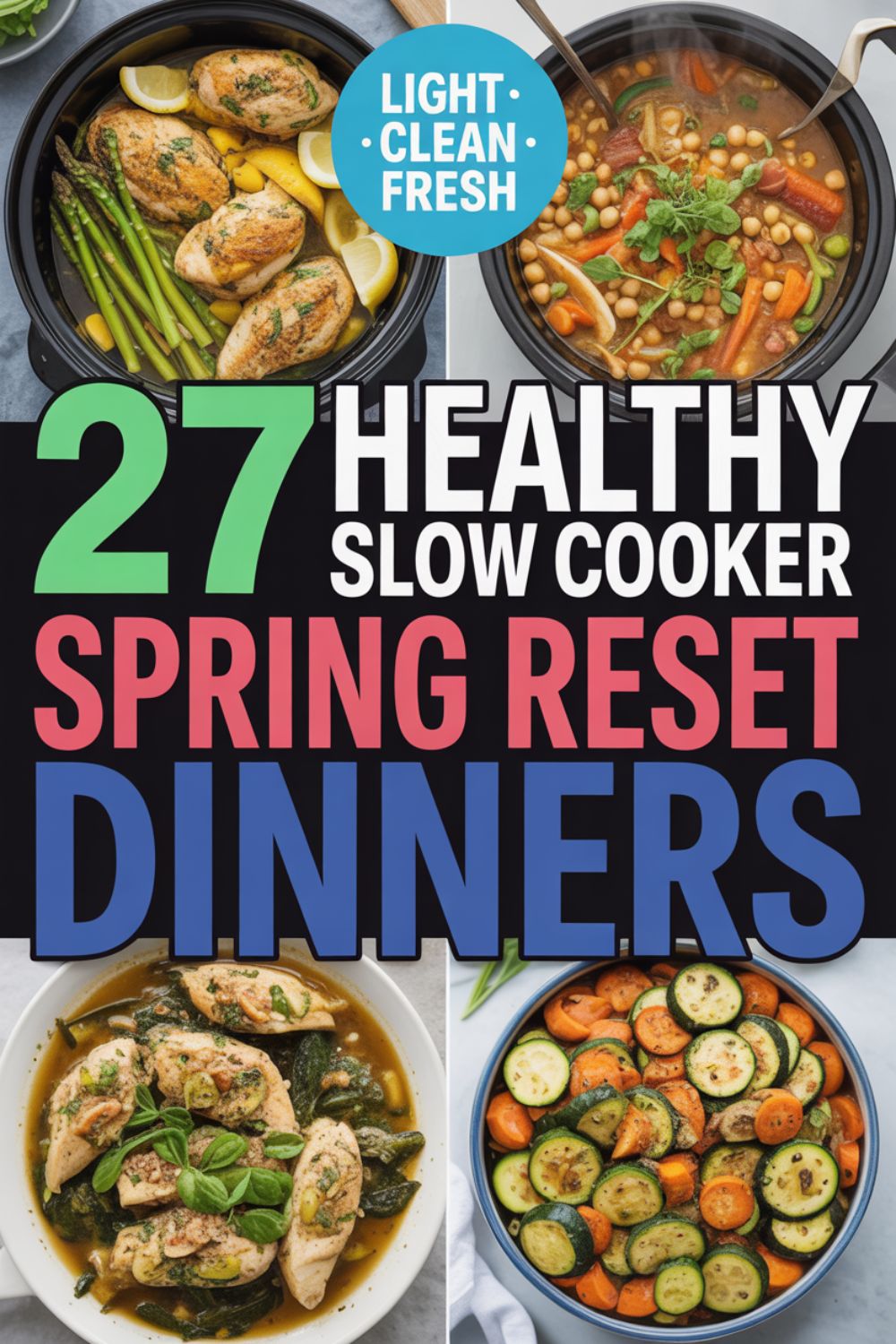
27 Healthy Slow Cooker Dinners for Your Spring Reset
Light, nourishing, and actually delicious — every single one dumps into a pot and handles itself while you do literally anything else.
Image Prompt: Overhead shot of a matte-finish sage green slow cooker on a weathered white oak butcher-block countertop, lid slightly ajar releasing a soft curl of steam. Inside, a vibrant lemon-herb chicken stew with bright green asparagus spears, golden chickpeas, and fresh dill scattered on top. Surrounding the pot: a small ramekin of sea salt flakes, a cut lemon with exposed citrus face, a bundle of fresh thyme tied with twine, a worn wooden spoon resting on a cream linen napkin. Warm late-morning spring light streams in from the left, casting soft golden shadows. Color palette: sage, cream, muted gold, and bright spring greens. Shot on a 50mm lens with shallow depth of field — food blog aesthetic, Pinterest-optimized, rustic but elevated.
There is something deeply satisfying about walking into your kitchen at 6pm, lifting a lid, and having dinner greet you with the kind of smell that makes your neighbors ask if you’ve taken up catering. The slow cooker does that. Every single time. And in spring, when you’re craving lighter meals but your evenings are still chaotic from everything the new season throws at you, it becomes your most underrated ally.
This collection of 27 healthy slow cooker dinners is built specifically for a spring reset — meaning we’re leaning into bright produce, cleaner proteins, herbaceous flavors, and meals that won’t leave you feeling like you need a nap afterward. Think lemon and asparagus over heavy stews. Think turmeric-spiced chicken broth over thick cream sauces. Think fresh herbs, spring peas, and zesty Mediterranean-style builds rather than the rich comfort food you were living on all winter.
And yes — all of this happens in one pot, mostly hands-off, while you do whatever you do between 8am and dinnertime. Let’s get into it.
Why Slow Cooking Actually Makes Sense for Spring
Most people think of slow cookers as a winter-only appliance, dragged out for beef stews and chili season. Fair enough. But here’s the thing: spring might actually be the best season to run your slow cooker hard. You’re still busy — maybe busier — and the produce coming into season right now is genuinely built for low-and-slow treatment.
Asparagus, peas, spring onions, lemon, artichokes, fresh garlic, and herbs like dill and tarragon all develop deeper, more complex flavor when given time to bloom in a slow-cooked broth. According to Healthline’s research on asparagus nutrition, this spring staple is packed with folate, vitamins A, C, E, and K, plus antioxidant compounds — and those nutrients hold up remarkably well in gentle, low-temperature cooking compared to high-heat methods.
There’s also a practical health angle here. Mayo Clinic Health System points out that spring vegetables like asparagus are among the most nutrient-dense, low-calorie options available — which makes them perfect for a reset-focused meal plan. Cooking them in a liquid-based slow cooker environment means fewer nutrients leach away, and you’re eating the broth, so nothing gets wasted.
On top of that, the slow cooker doesn’t heat up your kitchen like an oven does. Which, as anyone who’s had their AC running in April knows, actually matters more than you’d think.
Prep your spring vegetables — trim asparagus, shell peas, dice spring onions — on Sunday evening. Store them in separate containers in the fridge. Monday through Thursday dinner prep just became a four-minute job.
The Full List: 27 Healthy Spring Slow Cooker Dinners
Before we walk through categories and cooking notes, here’s a quick look at every recipe in this collection. IMO, having the full picture before you dive into a list like this just makes it easier to plan your week and figure out which ones you’re actually going to cook versus which ones you’ll bookmark and forget about (we all do it).
Lemon Herb Chicken with Asparagus and White Beans
Bright, clean, and deeply satisfying. A weeknight go-to that never feels boring.
Spring Pea and Mint Chicken Soup
Lighter than any other chicken soup you’ve made. The mint is not optional.
Turmeric Coconut Fish Stew
Golden, aromatic, and built around light white fish with spring vegetables.
Mediterranean Chickpea and Spinach Bowl
A fully plant-based powerhouse with olives, tomatoes, and a hit of lemon.
Shredded Lemon-Dill Salmon with Spring Greens
Yes, salmon in a slow cooker. Gentle heat keeps it perfectly flaky.
Turkey and Artichoke Heart Stew
Uses canned artichoke hearts — still excellent — with lean ground turkey and herbs.
Garlic White Bean Soup with Kale and Lemon Zest
Protein-rich, fiber-forward, and takes about 8 minutes of active prep.
Slow Cooker Spring Green Minestrone
Loaded with peas, zucchini, green beans, and whole grain pasta.
Harissa Chicken Thighs with Roasted Carrots
North African warmth meets spring produce. A crowd-pleaser every time.
Ginger Miso Pork Tenderloin
Surprisingly light for pork. The miso broth is absolutely drinkable on its own.
Creamy White Wine Chicken with Spring Onions
Dairy-free if you use coconut cream. Tastes like a French bistro made a house call.
Spring Vegetable Lentil Dal
Red lentils cook down into the silkiest, most comforting base for spring veg.
Slow-Cooked Herb-Crusted Lamb Shoulder
Reserve this one for Sunday. Worth every minute of the cook time.
Sesame Ginger Chicken with Sugar Snap Peas
Asian-inspired and light. Serve over cauliflower rice or buckwheat noodles.
Slow Cooker Spring Ratatouille
Classic Provencal flavors, no oven required. Great with crusty bread or grains.
Lemon Pepper Turkey Breast with Zucchini
Lean protein done right. The lemon pepper combination is genuinely addictive.
Thai Green Curry with Asparagus and Shrimp
Light coconut milk base, spring asparagus, and a lime squeeze at the end.
Balsamic Chicken Thighs with Strawberry and Spinach
Slightly unexpected but the balsamic-strawberry combination is genuinely brilliant.
Black Bean and Sweet Potato Chili Verde
Built around tomatillos and green chiles. Lighter than red chili, just as satisfying.
Slow Cooker Stuffed Bell Peppers with Quinoa
Stuffed with quinoa, black beans, corn, and spring herbs. No brown rice required.
Dill and Lemon Chicken Broth Bowl with Egg Ribbons
A homemade broth bowl that doubles as actual medicine when you’re feeling rough.
Spring Pesto White Bean Stew
Stir a generous spoon of pesto in at the end. The color alone is worth it.
Moroccan Spiced Salmon with Couscous and Apricot
Ras el hanout, lemon, and plump dried apricots. Unexpected and completely wonderful.
Chicken Piccata Soup
All the brightness of chicken piccata but in a form that feeds six with zero effort.
Slow Cooker Cauliflower and Chickpea Tikka Masala
A lighter take on tikka that doesn’t sacrifice any of the warmth or depth.
Spring Asparagus and Leek Chicken Bisque
Creamy but light, thanks to pureed asparagus thickening the broth naturally.
Herbed Pork and White Bean Cassoulet
A simplified French cassoulet that your Tuesday night will actually allow for.
The Spring Produce Stars That Make These Recipes Work
A spring reset only works if you’re actually using spring produce — not the dead-of-winter carrots and frozen corn situation you’ve been doing since November. Here’s what you want to stock up on, and why these particular ingredients pull so much weight in a slow cooker context.
Asparagus
The unofficial mascot of spring cooking. Asparagus is naturally diuretic, genuinely anti-inflammatory, and absolutely loaded with folate. The trick with slow cookers is timing: always add asparagus in the last 30–45 minutes of cooking to keep it from turning into green mush. When treated right, it absorbs the surrounding broth flavors beautifully while retaining some texture. Pair it with lemon and white wine for maximum spring energy.
Fresh Peas and Sugar Snap Peas
Both varieties bring natural sweetness and a pop of color that makes everything feel less like a meal and more like an occasion. Peas are a solid source of plant-based protein — nearly 9 grams per cup — plus fiber, vitamins A, C, and K. Like asparagus, they go in late in the cook. Frozen peas work perfectly here if fresh aren’t available; just stir them in during the final 15 minutes.
Spring Onions and Leeks
These bring a milder, sweeter allium flavor than regular onions and they soften into silky sweetness over a long slow cook. They’re especially good in broths and bisques where you want subtle depth without the bite of yellow onion. Leeks and chicken together in a slow cooker is one of those simple combinations that sounds unassuming but tastes absolutely luxurious.
Lemon (and Lots of It)
One of the smartest things you can do for spring slow cooker cooking is use both the juice and the zest. Add zest at the beginning to infuse the dish; add the juice in the last 15 minutes to keep the brightness vivid. Acid added too early in a long cook tends to mellow out — which isn’t always what you want in a spring recipe built on fresh, lively flavors.
How to Run Your Slow Cooker Like Someone Who Knows What They’re Doing
Look, you don’t need a master class. But there are a handful of things that separate genuinely good slow cooker meals from the sad, waterlogged versions that give the appliance a bad reputation.
Liquid levels matter more than people think. Spring recipes call for lighter broths and less liquid overall. Vegetables release a lot of moisture as they cook, so unless you’re making a soup intentionally, start with less liquid than you think you need. You can always add more; you can’t take it back out without getting creative.
Layering is everything. Dense root vegetables go on the bottom (they cook slower). Proteins go in the middle. Delicate greens, herbs, and spring vegetables go in last, or right on top in the final stretch. This isn’t fussy — it’s just the difference between a meal that’s properly cooked and one that’s simultaneously overcooked and undercooked at the same time, which is genuinely impressive to achieve but not in a good way.
Finish with fresh herbs. A slow cooker is not kind to delicate herbs like dill, tarragon, mint, and basil over a long cook. Use hearty herbs like thyme and rosemary for the main cooking period. Save the fresh dill and mint for the last ten minutes or to scatter directly over the bowl before serving. The difference in flavor is not subtle.
If you’re still cooking with a basic old model from a decade ago and wondering why the temperatures seem off, a 6-quart programmable slow cooker with a built-in thermometer and keep-warm function genuinely changes the experience — particularly for spring recipes where precise timing on delicate produce matters more than it does for a beef stew.
Use a silicone slow cooker liner bag inside your insert before cooking. Cleanup takes about twelve seconds. Your Sunday self will thank your Wednesday self.
I started using the lemon herb chicken from this collection as my Sunday meal prep anchor in March. By the third week, my husband asked if I’d hired someone. I had not. I had a slow cooker and forty minutes on Sunday morning.
Five Recipes Worth Putting on Repeat This Season
Out of these 27, a handful stand out as the ones you’ll come back to every week — the ones that hit the right balance of easy, genuinely nutritious, and actually exciting to eat. Here they are, with some detail on why they work so well.
1. Lemon Herb Chicken with Asparagus and White Beans
This is the anchor recipe of the whole collection, and it deserves the title. You start with chicken thighs (bone-in, skin-on gives the best flavor but boneless works fine), low-sodium chicken broth, whole garlic cloves, white beans, thyme, and lemon zest. Cook on low for 6 hours. Add asparagus tips in the last 40 minutes. Squeeze in fresh lemon juice before serving, scatter dill, done.
The white beans absorb the lemony broth and turn into something that’s simultaneously creamy and light. It doesn’t feel heavy. It feels like someone made you dinner who actually cares about how you feel after eating. Get Full Recipe
For storing leftovers, I use a set of glass meal prep containers with airtight snap lids — they go straight from fridge to microwave, and the broth doesn’t leak. Small thing, but it makes the whole “eat this again on Wednesday” plan actually happen.
2. Spring Pea and Mint Chicken Soup
This one is so much better than it has any right to be for how little effort it requires. Chicken breast or thigh, celery, carrot, onion, low-sodium broth, fresh mint added in the final 20 minutes, and a whole lot of frozen peas stirred in right before serving. The mint is non-negotiable — without it you have a very fine but unremarkable chicken soup. With it, you have something that genuinely tastes like spring in a bowl.
FYI, this also freezes exceptionally well if you leave the peas and mint out and add them fresh when reheating. The base soup on its own holds up for three months in the freezer without any flavor loss. Get Full Recipe
3. Mediterranean Chickpea and Spinach Bowl
Fully plant-based and one of the most genuinely satisfying meatless dinners in this collection. Canned chickpeas, diced tomatoes, Kalamata olives, red onion, garlic, vegetable broth, cumin, smoked paprika, and a finish of fresh lemon juice and baby spinach. The whole thing cooks in 4 hours on low or 2 on high. Serve over farro, freekeh, or just with warm flatbread and be genuinely happy about dinner.
4. Thai Green Curry with Asparagus and Shrimp
Shrimp in a slow cooker has to be handled carefully because it overcooks fast, but with a good green curry base doing its thing on low heat, you add the shrimp in the final 20 minutes and they turn out perfectly tender every time. The asparagus goes in at the same point. Light coconut milk keeps the calorie count reasonable without sacrificing any of that creamy curry texture. A squeeze of lime and a scattering of torn basil at the end, and you have a dinner that would cost you $18 at a Thai restaurant.
5. Balsamic Chicken Thighs with Strawberry and Spinach
This one raises eyebrows until people taste it. Fresh strawberries break down in the balsamic base and create a sweet-tart sauce that clings to the chicken in a way that feels decidedly un-slow-cooker. It’s the recipe I recommend most when people tell me they’re bored with their weekly rotation. Serve it over arugula for a warm salad situation, or just spoon it over brown rice.
Meal Prep Essentials for These Spring Recipes
A friend-to-friend rundown of what genuinely makes the process easier. No hard sells — just stuff worth knowing about.
Physical Tools
6-Quart Programmable Slow Cooker with Locking Lid
The locking lid is a game-changer for transporting soups and stews to work. The programmable timer means dinner doesn’t turn into mush if you’re stuck in traffic.
OXO Good Grips Prep & Go Container Set
These are the containers I actually reach for when prepping spring vegetables ahead. Separate, labeled, ready to go. The difference between a Sunday prep habit and just a good intention.
High-Carbon Stainless Steel Chef’s Knife (7-inch)
Trimming asparagus, slicing leeks, breaking down a whole spring onion bunch — a good knife makes all of this take half the time. You will notice the difference immediately.
Digital Resources
The Complete Healthy Slow Cooker Guide (Digital Download)
A solid reference for conversion charts, timing guidelines for different proteins and vegetables, and a beginner cheat sheet that takes the guesswork out of the process.
Spring Meal Prep Planner Template (Printable PDF)
A fillable weekly planner specifically designed for slow cooker batching — includes a shopping list section, prep day timeline, and a freezer log. Genuinely useful if you’re trying to make the Sunday prep thing a habit.
Seasonal Ingredient Swap Guide (Spring Edition, PDF)
When the recipe calls for asparagus and the store is sold out, this guide tells you the best swaps — with flavor matching notes so you don’t accidentally ruin something good.
How to Turn These Dinners Into an Actual Reset (Not Just a Meal Plan)
A “spring reset” sounds like marketing language — and honestly, it often is. But if you approach these 27 dinners with a bit of intention, they can function as a genuine nutritional reboot rather than just a recipe collection you use twice and forget.
The key is anchoring your week around two or three of these recipes instead of trying to cook all 27. Pick a protein-forward recipe for Monday (the lemon herb chicken or the sesame ginger chicken are ideal), a plant-based one for midweek (the chickpea spinach bowl or the spring pesto white bean stew), and something lighter for Friday when your energy is lower and you want dinner to be a gift rather than a project.
Batch cooking two recipes on Sunday sets you up for the whole week with almost no additional effort. The lentil dal, for example, makes six portions and freezes perfectly. The spring minestrone keeps for five days in the refrigerator. A Sunday afternoon slow cooker session — which requires about 20 minutes of active work — can genuinely handle the majority of your weeknight protein and vegetable intake.
For those focused on weight management or metabolic health, the combination of lean protein, legumes, and spring vegetables in these recipes aligns closely with what nutrition research consistently points to as most effective: high fiber, adequate protein, moderate calorie density, and meals that are satisfying enough that you don’t find yourself raiding the pantry at 9pm. These aren’t diet meals. They’re just well-built food that happens to be good for you. There’s a difference.
If you want to take the batch-cooking approach further, the batch-cook spring recipe collection here pairs really well with this list, especially if you’re working with limited fridge and freezer space.
Three weeks into using this spring collection for meal prep and I’ve stopped ordering takeout on Wednesdays. That’s the real win. The food is actually good enough that I look forward to the leftovers, which I never thought I’d say about slow cooker chicken.
Making These Work for Your Dietary Needs
One of the things that makes slow cooker cooking genuinely flexible is how easy it is to adapt. Most of these 27 recipes can be adjusted for common dietary needs without much effort.
Gluten-Free
The vast majority of these recipes are naturally gluten-free or easily made so. The main watch-outs are store-bought broths (some contain wheat-based thickeners — check the label), miso paste (use certified GF varieties), and any recipe calling for soy sauce (swap for tamari or coconut aminos). Everything else is generally safe.
Dairy-Free
Every recipe in this collection either contains no dairy or offers a straight swap. Full-fat coconut cream replaces heavy cream one-to-one and adds a subtle richness that honestly works better in most spring recipes anyway. Nutritional yeast can replace Parmesan finishes with a comparable savory, umami note.
Higher Protein Adjustments
If you’re focusing on protein intake — say, 35-40g per meal — the easiest upgrade is to add a cup of cooked white beans or lentils to any of the chicken or vegetable recipes. Both options bring 15+ grams of plant protein per cup and blend into the existing flavor profile of almost any broth-based slow cooker dish without changing the character of the recipe. This is particularly useful for the purely vegetable-based recipes like the ratatouille and the spring minestrone, which are nutritious but lighter on protein by default.
Make a double batch of the spring pea and mint chicken soup base on Sunday, divide it into two portions, and stir in completely different finishes: mint and lemon for the first, curry paste and coconut milk for the second. Two distinct dinners from one cook session.
A Few Tools That Actually Help Beyond the Slow Cooker Itself
Look, the slow cooker does most of the work. But a couple of supporting tools make the setup genuinely easier, and I’d be leaving out something useful if I didn’t mention them.
A good fat separator pitcher with a fine mesh strainer is useful for any of the longer-cooking chicken recipes where you want to skim excess fat from the broth before serving. It takes about 45 seconds and the difference in both texture and flavor is real. A digital instant-read thermometer is also quietly essential — particularly for pork and chicken dishes where you want to confirm doneness without overcooking. The slow cooker is generally safe but individual models vary in temperature calibration, and a quick check gives you confidence without guesswork.
For the recipes that finish with fresh herb garnishes, a countertop herb keeper with a water reservoir keeps your fresh dill, mint, tarragon, and basil alive for up to two weeks in the fridge. If you’re doing this kind of cooking regularly, it saves you the Sunday frustration of reaching for dill and finding a sad brown bunch instead.
Frequently Asked Questions
Can I use frozen vegetables in these spring slow cooker recipes?
Yes, and for many ingredients like peas and green beans, frozen is perfectly fine — especially when you’re adding them in the final 15–30 minutes. Fresh asparagus does hold up better texturally than frozen, but frozen works in a pinch for soups and stews where texture is less critical. Just reduce cooking time slightly for frozen veg since they release more moisture than fresh.
How long can I leave a slow cooker meal cooking unattended?
Most of these recipes are designed for a 6–8 hour low-heat cook, which suits a standard workday. A programmable slow cooker with a keep-warm function is ideal here — it switches automatically after the set cook time so dinner doesn’t overcook by an hour or two. For shorter recipes (3–4 hours on low), it’s better to be around or set a timer.
Are these recipes genuinely healthy, or just called healthy?
They’re built around whole food ingredients — lean proteins, legumes, spring vegetables, low-sodium broths, and healthy fats. None of them rely on cream soups, processed sauces, or excess sodium the way a lot of traditional slow cooker recipes do. That said, “healthy” is contextual — portion sizes, individual dietary needs, and overall diet patterns matter more than any single meal.
Can I adapt slow cooker recipes for an Instant Pot?
Absolutely. For most of these recipes, the slow cooker function on an Instant Pot works identically. If you want to speed things up, use the pressure cooker setting and reduce cook times significantly — chicken thighs that take 6 hours on slow cook in about 15–20 minutes under pressure. You’ll want to look at a dedicated conversion guide for specific timing. The 15 one-pot Instant Pot dinners resource here is a solid starting point.
How do I keep spring vegetables from getting mushy in a slow cooker?
Timing is everything. Add dense vegetables like carrots and parsnips at the start. Add medium-density vegetables like zucchini and bell peppers in the last 1–2 hours. Add delicate spring vegetables like asparagus, peas, spinach, and snap peas in the final 20–40 minutes. The cooker doesn’t stop cooking just because you lifted the lid — so adding soft veg too early is the number one cause of mushy textures.
Your Spring Reset Starts Tonight
A slow cooker, a handful of spring vegetables, a decent broth, and twenty minutes of prep — that’s all it takes to build the kind of weeknight dinner situation that actually makes you feel good. Not just about the food, but about the fact that you fed yourself well on a Wednesday without any meaningful suffering.
These 27 recipes are designed to be used, not admired from a bookmarks folder. Pick two or three for this week. Cook once, eat multiple times. Let spring do what spring does best — bring color, brightness, and a genuine reason to open the refrigerator with enthusiasm.
The slow cooker is ready when you are.