7-Day Low Calorie Meal Prep Plan (Cook Sunday, Eat All Week!)
7-Day Low Calorie Meal Prep Plan (Cook Sunday, Eat All Week!)
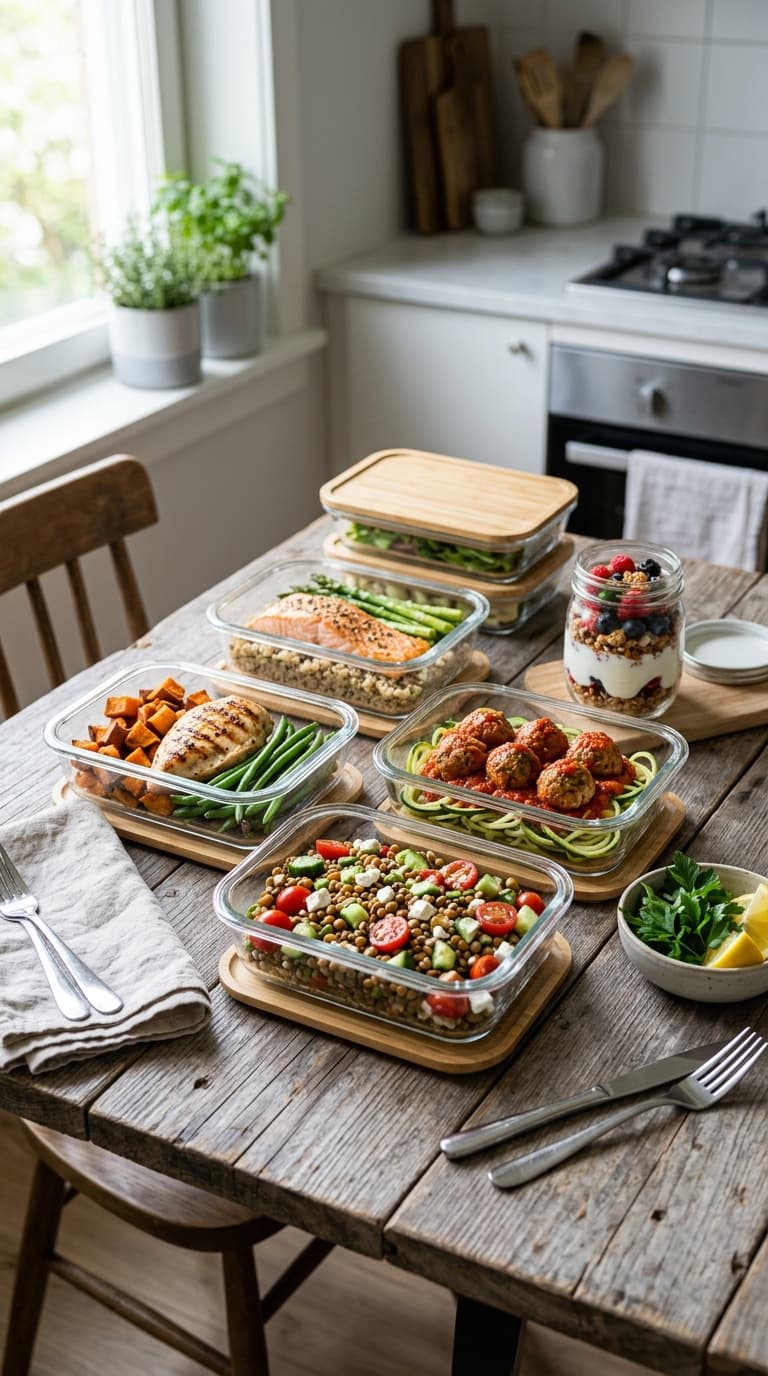
Sunday used to be my laziest day. Then I realized I was spending $60 a week on sad desk lunches that didn’t even taste good. That’s when meal prepping changed everything for me — and honestly, it can do the same for you.
The idea is simple: cook once, eat all week, and actually know what’s going into your body. If you’ve been staring at your fridge every morning wondering what to eat, this 7-day low calorie meal prep plan is exactly what you need.
Why Low Calorie Meal Prep Actually Works
Let me be honest with you — most diets fail because they’re inconvenient. When you’re tired at 7pm and dinner isn’t ready, you’re ordering pizza. That’s just the truth. Meal prepping removes that decision entirely.
When everything is already portioned, cooked, and sitting in your fridge, you eat what you planned. No impulse snacking, no random drive-throughs. Just clean, intentional eating that supports your goals without making you miserable.
Low calorie doesn’t mean low volume either. The trick is building meals around high-fiber vegetables, lean proteins, and slow-digesting carbs that actually keep you full. You eat more food, fewer calories, and feel genuinely satisfied. Win-win.
What You Need Before You Start
Before you spend Sunday cooking, get your setup right. You don’t need a fancy kitchen — you need a plan and the right containers.
Here’s your basic prep checklist:
- Meal prep containers — glass ones are worth the investment, FYI
- A large sheet pan for roasting vegetables
- A big pot for grains and soups
- A non-stick skillet for proteins
- A sharp knife and a decent cutting board
Also, write your grocery list before you shop. Sounds obvious, but most people wing it and end up buying three types of cheese and forgetting chicken. Plan your meals first, then build your list around them.
The Grocery List for the Week
This list covers all 7 days of meals for one person. Scale it up if you’re prepping for two.
Proteins:
- 2 lbs boneless, skinless chicken breast
- 1 lb ground turkey (93% lean)
- 1 dozen eggs
- 1 can of chickpeas
- 1 block of firm tofu (optional swap for plant-based days)
Carbs & Grains:
- 2 cups dry brown rice or quinoa
- 1 bag of sweet potatoes (about 4 medium)
- 1 can of black beans
Vegetables:
- 2 heads of broccoli
- 1 large bag of spinach
- 2 zucchinis
- 1 bag of shredded cabbage (for slaws)
- 1 bag of bell peppers (mixed)
- 2 cucumbers
- Cherry tomatoes
Fats & Flavor:
- Olive oil
- Avocados (buy 3–4, let them ripen throughout the week)
- Low-sodium soy sauce
- Garlic (fresh cloves, always)
- Lemon juice, cumin, paprika, chili flakes
This list keeps you under 1,400–1,600 calories per day depending on your portion sizes. That’s a solid calorie deficit for most people without feeling like you’re starving.
Sunday Prep: Your Game Plan
Set aside about 2.5 to 3 hours on Sunday. Put on a podcast, open a window, and get into it. Here’s the order I follow to keep things efficient.
Step 1: Start the Grains First
Rice and quinoa take the longest. Get them cooking first so they’re done by the time everything else is ready. Cook 2 cups dry — it’ll yield about 6 cups cooked, which covers your whole week.
Step 2: Roast the Vegetables
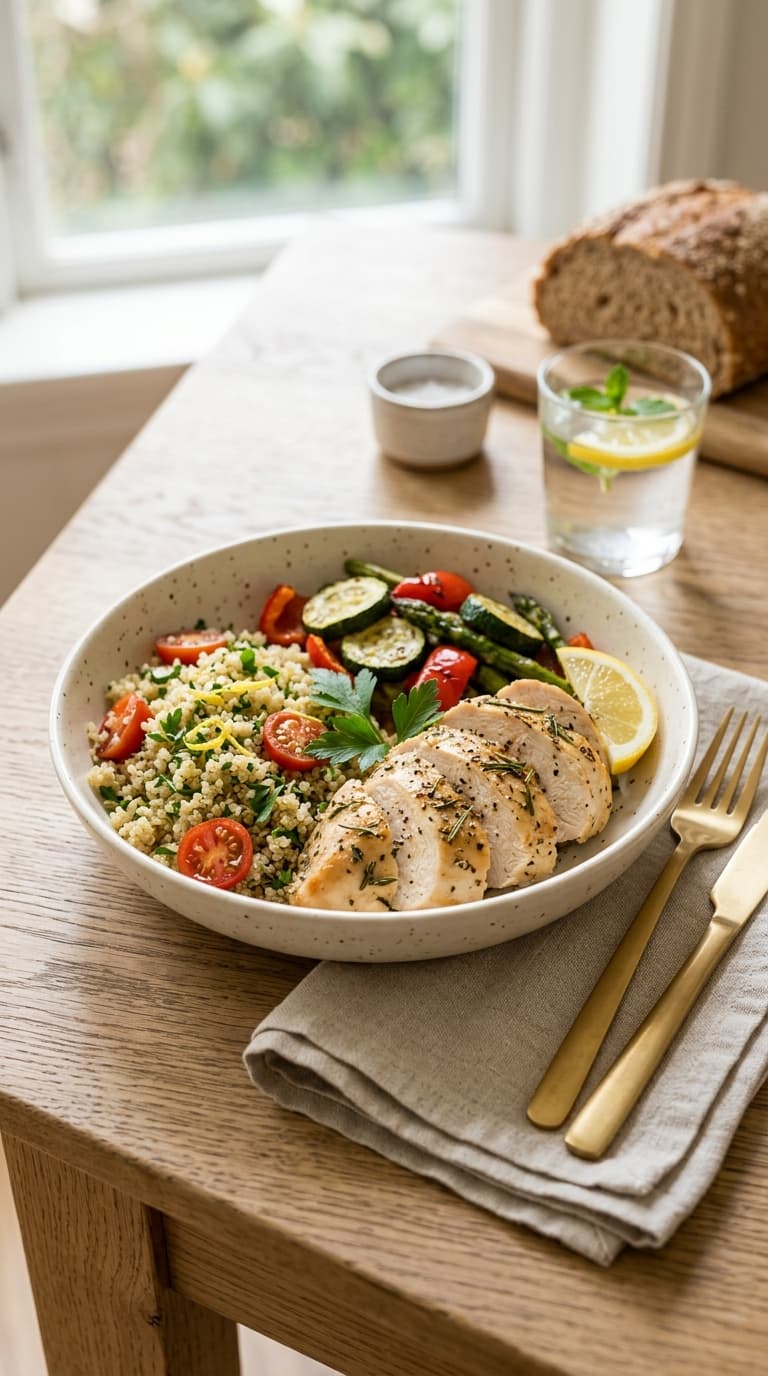
Chop your broccoli, bell peppers, and zucchini. Toss them with olive oil, salt, pepper, and paprika. Spread them across a large sheet pan and roast at 400°F for 25–30 minutes. Roasted veggies hold up incredibly well in the fridge and taste great cold or reheated.
Step 3: Cook Your Proteins
While the veggies roast, cook your chicken and ground turkey separately. Season the chicken simply — garlic, lemon, salt, and pepper. Bake it alongside the veggies if your oven has space, or pan-sear it. Shred the chicken after cooking so it’s easy to add to salads, wraps, and bowls throughout the week.
Brown the ground turkey with cumin, chili flakes, and garlic. This becomes the base for taco bowls and stuffed peppers later in the week.
Step 4: Bake the Sweet Potatoes
Poke them with a fork and throw them in the oven for 45 minutes at 400°F. Sweet potatoes are one of the best low-calorie carb sources you can eat — high in fiber, naturally sweet, and incredibly filling.
Step 5: Boil the Eggs
Hard-boil 6–8 eggs for quick breakfasts and snacks. Done. Easy. Moving on.
The 7-Day Meal Plan Breakdown
Now here’s where it gets fun. Every day is different enough to stay interesting, but uses the same prepped ingredients so you’re not cooking from scratch. That’s the beauty of it.
Day 1 — Monday: Fresh Start Energy
Breakfast: Two scrambled eggs with spinach and cherry tomatoes (about 250 calories)
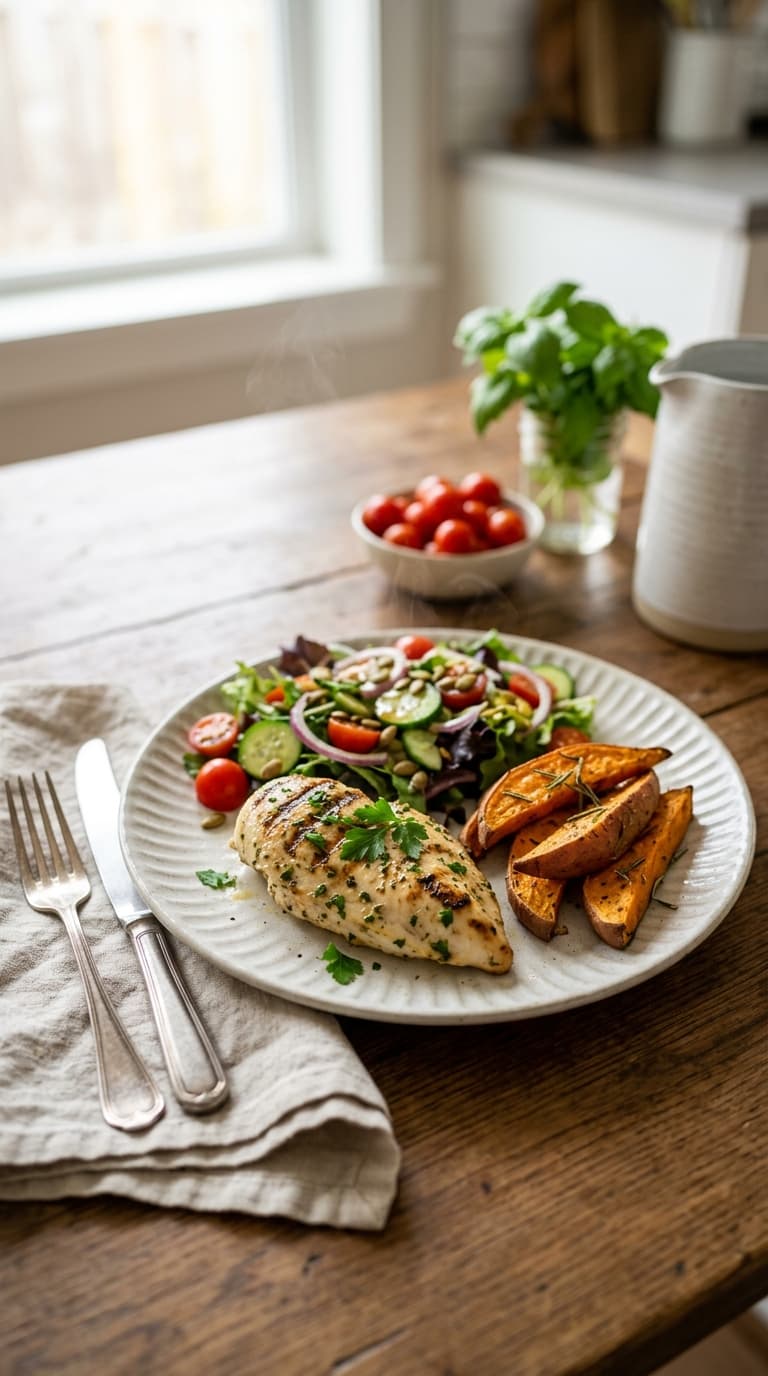
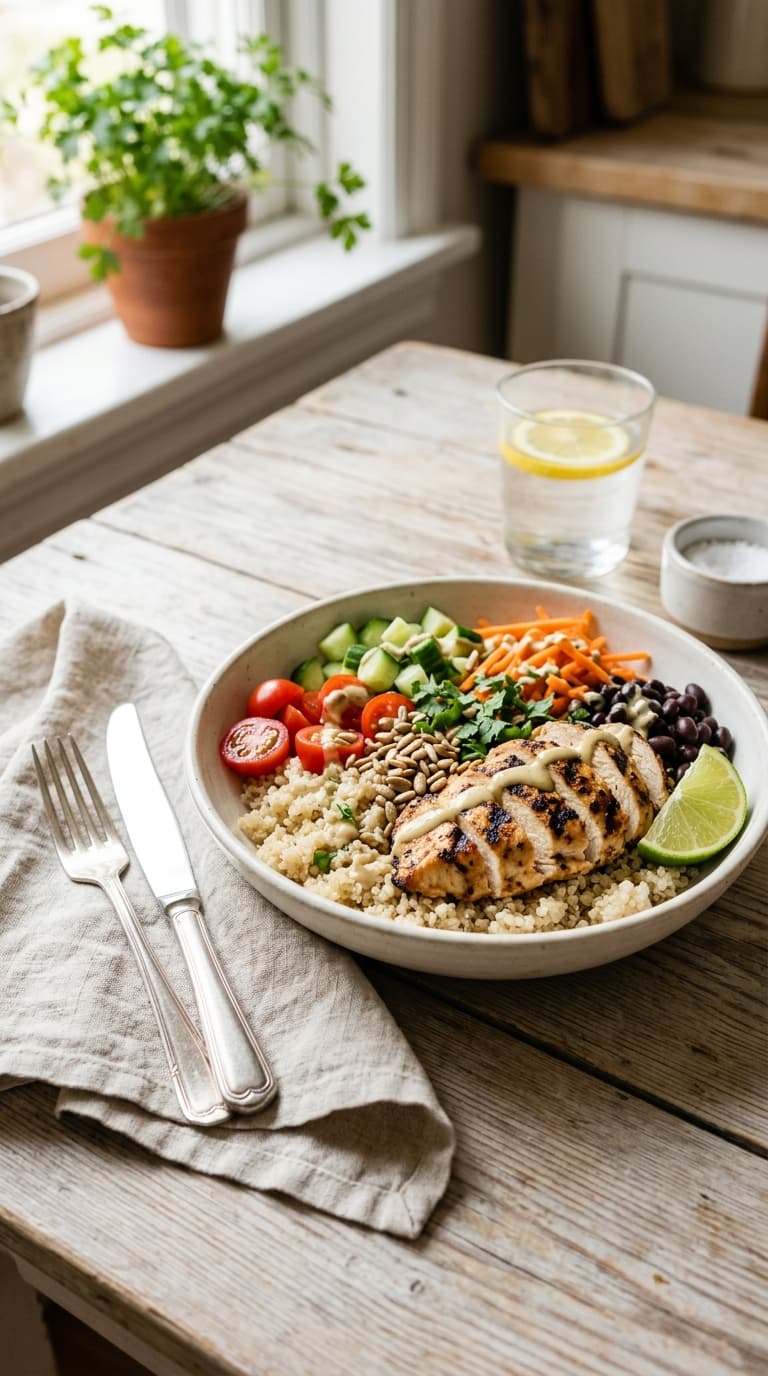
Lunch: Shredded chicken rice bowl with roasted broccoli and a drizzle of soy-garlic sauce (around 430 calories)
Dinner: Ground turkey taco bowl with black beans, shredded cabbage, avocado slices, and brown rice (around 500 calories)
Snack: A hard-boiled egg + a handful of cherry tomatoes (100 calories)
Day 2 — Tuesday: Keep the Momentum
Breakfast: Overnight oats you prepped Sunday night — oats, almond milk, a banana, and cinnamon (300 calories)
Lunch: Big spinach salad with chickpeas, cucumber, bell peppers, lemon juice, and olive oil (350 calories)
Dinner: Baked sweet potato topped with ground turkey and a side of roasted veggies (480 calories)
Snack: Sliced cucumber with hummus (120 calories)
Day 3 — Wednesday: Midweek Reset
Let’s be real — Wednesday is when meal prep motivation slightly dips. But your fridge is still stocked, so you’ve got no excuses. 🙂
Breakfast: Two hard-boiled eggs with a side of sliced avocado and cherry tomatoes (280 calories)
Lunch: Shredded chicken wrap using a low-calorie tortilla, cabbage slaw, and mustard (400 calories)
Dinner: Zucchini stir-fry with tofu or chicken, brown rice, and soy sauce (450 calories)
Snack: A small handful of almonds (160 calories)
Day 4 — Thursday: Protein Power Day
Breakfast: Egg white scramble (3 egg whites + 1 whole egg) with sautéed bell peppers and spinach (220 calories)
Lunch: Ground turkey and black bean bowl with quinoa and shredded cabbage (470 calories)
Dinner: Sheet pan chicken with roasted broccoli and sweet potato (490 calories)
Snack: Greek yogurt (plain, low-fat) with a drizzle of honey (130 calories)
Day 5 — Friday: Treat Yourself (Within Reason)
Breakfast: Smoothie with spinach, frozen banana, almond milk, and a scoop of protein powder (280 calories)
Lunch: Chickpea and roasted veggie bowl with quinoa and lemon-tahini drizzle (420 calories)
Dinner: IMO, Friday calls for something fun — turkey-stuffed bell peppers using your leftover ground turkey and rice (500 calories)
Snack: Hard-boiled egg + a piece of fruit (150 calories)
Day 6 — Saturday: Wind Down the Week
Breakfast: Two-egg omelette with whatever veggies you have left — bell peppers, spinach, anything (260 calories)
Lunch: Big salad with shredded chicken, chickpeas, cucumber, tomatoes, and olive oil dressing (400 calories)
Dinner: Simple brown rice bowl with tofu or chicken, soy sauce, sesame seeds, and leftover roasted vegetables (470 calories)
Snack: Sliced avocado with a pinch of salt and chili flakes (150 calories)
Day 7 — Sunday: Prep Day Eve
Breakfast: Smoothie bowl — blended frozen fruit and spinach, topped with a tablespoon of granola and fresh berries (300 calories)
Lunch: Use up your remaining prepped ingredients — a mix-and-match bowl works perfectly here (400 calories)
Dinner: Keep it light — chicken broth-based vegetable soup using leftover veggies, black beans, and a handful of quinoa (380 calories)
Snack: Greek yogurt with cinnamon (120 calories)
Storage Tips That Actually Matter
Good prep means nothing if your food goes bad by Wednesday. Here’s how to store everything properly.
- Cooked chicken and turkey: Store in airtight containers, good for 4–5 days in the fridge
- Hard-boiled eggs: Keep in their shells until you’re ready to eat them — they last up to a week
- Roasted vegetables: Use within 4–5 days, keep them uncovered for the first 10 minutes after storing so condensation doesn’t make them soggy
- Brown rice and quinoa: Lasts up to 5 days in the fridge; you can freeze portions too
- Sweet potatoes: Store whole or halved, good for 4–5 days
- Fresh avocado: Only cut when you’re ready to eat — keep them whole until needed
If you want food to last the full 7 days safely, freeze your Day 6 and 7 meals on Sunday and pull them out mid-week to thaw overnight. This is especially helpful for proteins.
Common Mistakes to Avoid
A lot of first-time meal preppers make the same errors. Here’s what not to do.
Don’t prep everything at 100% doneness. Vegetables that will be reheated should be slightly undercooked on Sunday — they’ll finish cooking when you reheat them. Mushy broccoli is depressing :/
Don’t skip the seasoning. Low calorie food has a reputation for being bland, and that reputation comes from people who forget that garlic, lemon, herbs, and spices cost zero calories. Use them generously.
Don’t portion everything into identical meals. Life happens — some days you’ll be hungrier, some days you’ll eat out. Keep some ingredients unpacked so you can build flexible portions.
How to Adjust Calories for Your Goals
This plan sits around 1,400–1,600 calories per day, which works for many people looking to lose weight at a moderate pace. But everyone’s different.
- Want to go lower? Reduce your grain portions by half and load up on more vegetables
- Need more calories? Add an extra serving of brown rice or throw in a small handful of nuts
- Maintaining weight? Increase protein portions slightly — more chicken, more eggs
The key is tracking loosely at first, then adjusting based on how you feel after Week 1. Most people are surprised by how full they feel on these meals despite the calorie count.
Conclusion
You just mapped out an entire week of healthy eating in one read. That’s genuinely it — one focused Sunday session, and your weekday food stress basically disappears.
The hardest part is starting. Most people spend years thinking about eating better instead of just setting aside three hours on a Sunday to make it happen. Don’t be that person.
Pick up those groceries this weekend, clear your Sunday afternoon, and give this plan a real shot. By Wednesday, you’ll wonder why you didn’t start sooner — and by the following Sunday, you’ll be doing it all again without even thinking about it.
That’s the whole point. Make it a habit, not a project.