7-Day Vegan Keto Meal Plan (Yes, It’s Possible!)
7-Day Vegan Keto Meal Plan (Yes, It’s Possible!)
Okay, I know what you’re thinking. “Vegan AND keto? At the same time?” Yes, my friend. Both. Together. In one lifestyle. And no, it’s not some cruel joke the internet decided to play on health enthusiasts. A vegan keto diet is 100% real, doable, and honestly pretty delicious once you get the hang of it.
I won’t lie — when I first heard about vegan keto, I thought someone had made a typo. Keto screams bacon and butter. Veganism screams oats and bananas. Put them together and… what exactly do you eat? Turns out, quite a lot. The trick is leaning hard into low-carb plant foods, healthy fats, and plant-based proteins — and this 7-day meal plan is going to walk you through exactly that.
What Even Is Vegan Keto?
Before we get into the actual meal plan, let’s get on the same page. Standard keto means keeping your carbs extremely low (typically under 20–50g net carbs per day) so your body enters a metabolic state called ketosis, where it burns fat for fuel instead of glucose. Pretty cool, right?
Vegan keto follows the same macronutrient framework — high fat, moderate protein, very low carbs — but eliminates all animal products. No meat, no dairy, no eggs, nothing from an animal. That means your fat sources shift to avocados, coconut oil, nuts, and seeds. Your proteins come from tofu, tempeh, seitan (if you tolerate gluten), and legumes in small amounts.
The biggest challenge? Most vegan staples are carb-heavy. Rice, lentils, chickpeas, sweet potatoes — all delicious, all off the table (or at least severely limited). But don’t panic. This meal plan has you covered.
The Macros You’re Aiming For
Here’s a quick breakdown of what your daily macros should look like on a vegan keto diet:
- Fat: 65–75% of total calories
- Protein: 20–25% of total calories
- Net Carbs: 5–10% of total calories (under 30g per day, ideally)
IMO, tracking your macros for the first week is genuinely worth it. Apps like Cronometer are fantastic for this because they break down your nutrients in detail — which matters on a vegan diet where micronutrient gaps can sneak up on you.
Foods You Can Eat (and Actually Enjoy)
Let’s talk pantry basics before we get to the meal plan. Stock up on these and you’ll have a much smoother week:
Fats:
- Avocados and avocado oil
- Coconut oil and full-fat coconut milk
- Olive oil
- Nuts (macadamia, walnuts, almonds, pecans)
- Seeds (chia, flax, hemp, pumpkin)
- Nut butters (almond, macadamia — watch for added sugar)
Proteins:
- Firm and extra-firm tofu
- Tempeh
- Seitan (wheat gluten — high protein, low carb)
- Edamame (in moderation)
- Nutritional yeast
Low-Carb Vegetables:
- Leafy greens (spinach, kale, arugula, romaine)
- Zucchini, cauliflower, broccoli
- Bell peppers, mushrooms, celery
- Asparagus, green beans, cucumbers
Flavor Boosters:
- Coconut aminos, tamari (low-sodium soy sauce)
- Apple cider vinegar, lemon juice
- Garlic, ginger, herbs and spices
Day 1: Getting Comfortable
Breakfast
Start strong with a chia pudding bowl. Mix 3 tablespoons of chia seeds with full-fat coconut milk and let it sit overnight. Top it with a small handful of walnuts and a few fresh raspberries in the morning. It’s creamy, filling, and requires zero effort at 7am — which is exactly what we need.
Lunch
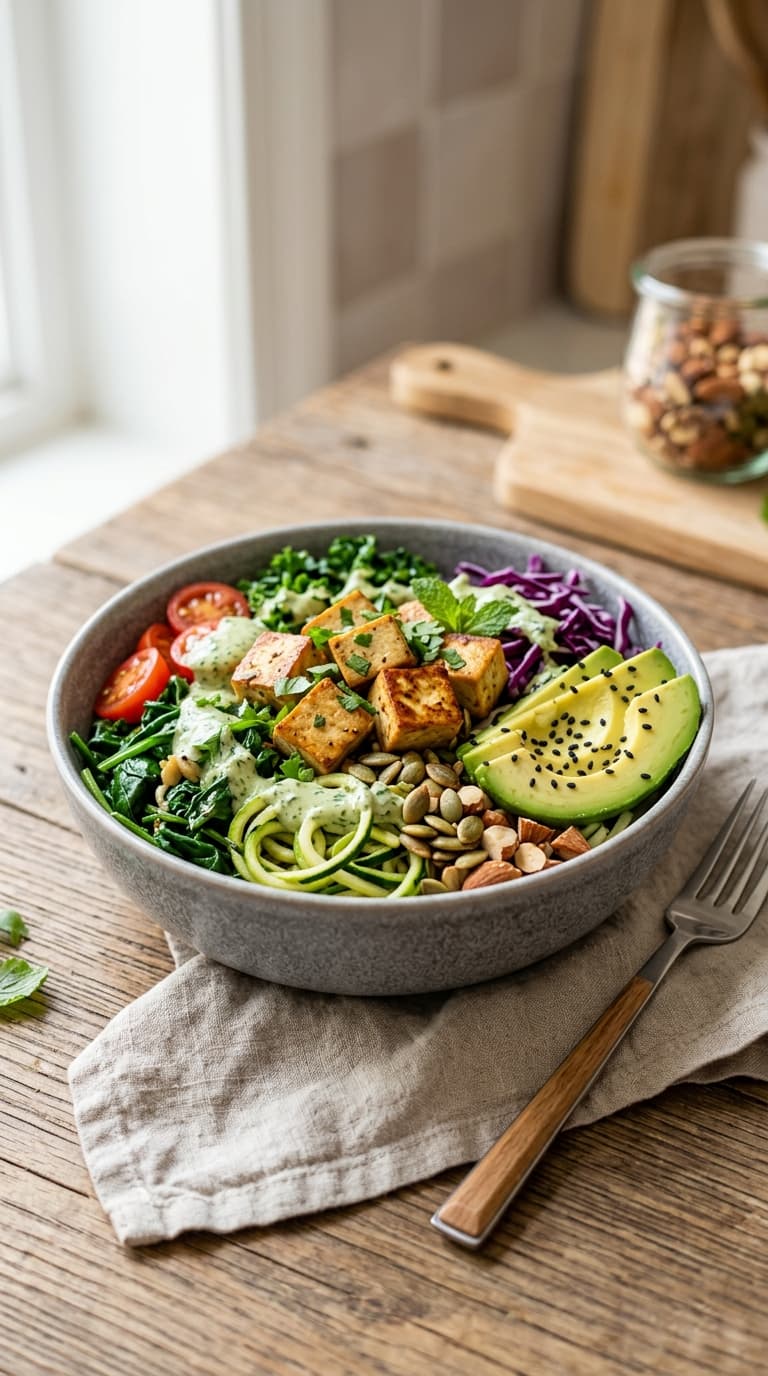
Whip up a big leafy green salad with sliced avocado, hemp seeds, cucumber, and a tahini-lemon dressing. Throw in some pan-fried tofu cubes for protein. Drizzle generously with olive oil. Don’t be shy with the fat here — that’s literally the point.
Dinner
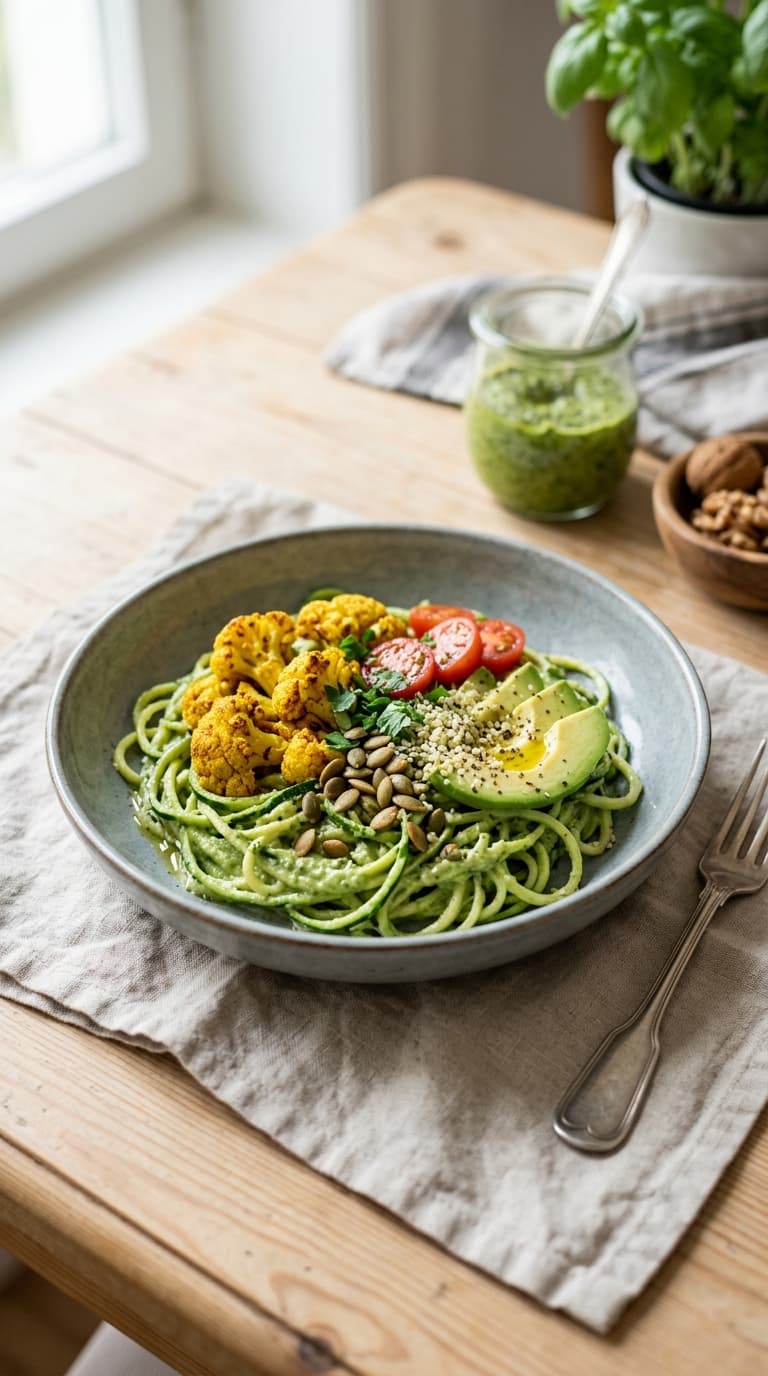
Zucchini noodles with walnut pesto. Blend basil, garlic, walnuts, nutritional yeast, olive oil, and lemon juice into a rich pesto. Toss with spiralized zucchini and top with toasted pine nuts. It tastes indulgent and comes in well under 15g net carbs.
Day 2: Finding Your Rhythm
Breakfast
Coconut milk smoothie with unsweetened almond butter, a small handful of spinach, chia seeds, and a few frozen raspberries. Blend it up, drink it fast, feel like you have your life together.
Lunch
Tempeh lettuce wraps. Crumble and pan-fry tempeh with tamari, garlic, and a pinch of chili flakes. Serve in large romaine leaves with sliced avocado and a squeeze of lime. These are genuinely fun to eat — and easy to meal prep in batches.
Dinner
Cauliflower fried “rice.” Pulse cauliflower in a food processor until rice-sized. Sauté with coconut oil, garlic, ginger, green onions, and edamame. Add tamari and sesame oil at the end. If you’ve never tried cauliflower rice before, you’ll be surprised how satisfying it actually is.
Day 3: Midweek Momentum
Breakfast
Keto vegan “cream cheese” on flaxseed crackers. Blend soaked cashews with lemon juice, nutritional yeast, garlic, and salt to make a thick, spreadable cream. Pair with sliced cucumber on flaxseed or almond flour crackers. Fancy enough for a brunch, easy enough for a Tuesday.
Lunch
Avocado and spinach soup. Blend ripe avocado with warm vegetable broth, spinach, garlic, lime, and coconut cream. Serve chilled or warm — both work. It sounds weird, tastes amazing. Trust the process.
Dinner
Seitan stir-fry with broccoli, bok choy, mushrooms, and bell peppers in a savory sauce of tamari, sesame oil, garlic, and ginger. Serve over cauliflower rice. This dinner hits hard on both flavor and protein.
Day 4: Keeping the Engine Running
By now your body might be going through some adjustments — maybe mild fatigue or cravings. This is normal. Make sure you’re drinking enough water and getting enough electrolytes (sodium, potassium, magnesium). Add a pinch of sea salt to your water or sip on some vegetable broth. It genuinely helps.
Breakfast
Almond flour pancakes made with almond flour, flaxseed meal, coconut milk, and a pinch of baking powder. Top with almond butter and a few blueberries. Yes, keto pancakes exist. Yes, they actually taste good. 🙂
Lunch
Kale and avocado salad with toasted pumpkin seeds, cherry tomatoes, and a lemon-tahini dressing. Massage the kale with olive oil first — it softens the leaves and makes it so much better.
Dinner
Stuffed mushrooms. Fill large portobello caps with a mixture of sautéed spinach, sun-dried tomatoes, garlic, and cashew cheese. Roast at 400°F until golden and juicy. These make a genuinely impressive dinner with minimal effort.
Day 5: Flavor Exploration
Breakfast
Hemp seed yogurt bowl. Mix hemp seeds with full-fat coconut yogurt, a drizzle of almond butter, and a sprinkle of cinnamon. Simple, fast, loaded with healthy fats and protein.
Lunch
Tofu and veggie skewers. Marinate cubed firm tofu in olive oil, smoked paprika, garlic, and lemon juice. Thread onto skewers with zucchini, peppers, and mushrooms. Grill or bake until slightly charred. Pair with a tahini dipping sauce.
Dinner
Vegan keto Thai coconut soup (a spin on Tom Kha). Simmer coconut milk with vegetable broth, lemongrass, galangal or ginger, lime juice, mushrooms, and tofu. Finish with fresh cilantro and chili. It’s rich, comforting, and incredibly fragrant.
Day 6: Weekend Vibes
Weekends are a great time to experiment a little more in the kitchen. FYI — this is also a smart day to meal prep some basics for the coming week, like a big batch of cauliflower rice or marinated tofu.
Breakfast
Savory avocado bowl. Halve an avocado and top each half with everything bagel seasoning, hemp seeds, and a drizzle of olive oil. Serve with flaxseed crackers on the side. Takes about 3 minutes. Looks like it took 20.
Lunch
Zucchini and walnut salad with arugula, shaved radish, lemon zest, and a simple olive oil vinaigrette. Light but satisfying — perfect for midday when you don’t want to feel weighed down.
Dinner
Vegan keto “chili” made with walnuts (pulsed to a meat-like texture), diced tomatoes, cumin, chili powder, garlic, and just a small amount of black soybeans (lower in carbs than regular beans). Serve topped with avocado slices and fresh cilantro. This one’s a crowd-pleaser.
Day 7: Finishing Strong
Breakfast
Coconut chia smoothie bowl. Blend coconut milk, chia seeds, frozen spinach, and macadamia nuts into a thick base. Top with flaked coconut, a few raspberries, and crushed walnuts. It looks beautiful and tastes even better.
Lunch
Lettuce-wrapped seitan tacos. Season seitan strips with cumin, smoked paprika, garlic, and lime. Sauté until slightly crispy and serve in romaine leaves with shredded cabbage, avocado, and a dairy-free chipotle sauce made from blended cashews and chipotle peppers.
Dinner
Roasted veggie platter with tahini herb sauce. Roast asparagus, broccoli, cauliflower, and zucchini with olive oil and seasoning. Serve with a big dollop of tahini sauce (tahini, lemon, garlic, water, parsley). End week one on a high note — clean, simple, and genuinely satisfying.
Supplements Worth Considering
Here’s the honest truth: a vegan keto diet can create some nutritional gaps if you’re not careful. These are worth thinking about:
- Vitamin B12 — almost impossible to get on a fully plant-based diet; supplement it
- Vitamin D3 — look for vegan D3 derived from lichen
- Omega-3s — algae-based DHA/EPA supplements are your best bet
- Iron and Zinc — monitor your levels, especially if you feel fatigued
- Iodine — easy to miss without dairy or seafood; use iodized salt or a supplement
Common Mistakes to Avoid
Going vegan keto without a plan leads to frustration fast. Here are the traps most people fall into:
- Eating too much protein and not enough fat — protein can convert to glucose if you overdo it :/
- Ignoring hidden carbs in sauces, dressings, and packaged foods
- Not eating enough calories — fat is calorie-dense, but you still need to hit your targets
- Skipping electrolytes — especially in the first week when your body sheds water weight
- Giving up too soon — the first 3–5 days are the hardest; after that, most people report more energy and mental clarity
Is Vegan Keto Right for You?
Vegan keto isn’t for everyone — and that’s completely okay. It requires more planning than either vegan or keto alone, and the food variety is genuinely more limited. But for people who want to explore ketosis without animal products, or who want to reduce inflammation while maintaining their ethical values, it’s a seriously compelling approach.
The key is treating it as a tool, not a life sentence. Try it for 7 days. See how your body responds. Adjust from there.
Wrapping It Up
So there you have it — a full week of vegan keto eating that doesn’t rely on sad salads or endless avocado toast. The food is flavorful, the macros are solid, and the approach is sustainable if you go in prepared.
Stock your pantry before day one. Track your macros for the first few days. Drink your water, get your electrolytes, and don’t stress if it takes a little adjustment. The results — more energy, mental clarity, and feeling genuinely good in your body — are absolutely worth the initial learning curve.
Give it a real shot this week. You might just surprise yourself.