7-Day Mediterranean Diet Plan: Lose Weight Without Ever Feeling Hungry
7-Day Mediterranean Diet Plan: Lose Weight Without Ever Feeling Hungry
Let’s be honest — most diets make you miserable. You count every calorie, stare longingly at bread baskets, and spend your evenings dreaming about cheese. The Mediterranean diet? It laughs at that approach. This is a way of eating that actually makes you look forward to meals — and yes, you can still lose weight while doing it.
I stumbled onto the Mediterranean diet after years of trying every restrictive plan imaginable. What hooked me wasn’t just the results — it was the fact that I never once went to bed hungry. That alone felt revolutionary.
Why the Mediterranean Diet Actually Works for Weight Loss
Here’s the thing most people get wrong about weight loss: they think suffering is a requirement. The Mediterranean diet proves otherwise. It focuses on whole, nutrient-dense foods that keep you full, satisfied, and energized — not depleted and cranky.
The science backs this up too. Research consistently shows that people following a Mediterranean-style eating pattern lose weight steadily and — more importantly — keep it off. No dramatic rebound. No binge cycles. Just real, sustainable progress.
What Makes It Different From Other Diets?
- Healthy fats are celebrated, not demonized (hello, olive oil and avocado)
- Protein comes from varied sources — fish, legumes, eggs, and lean meats
- Fiber is abundant through vegetables, fruits, and whole grains
- Processed food gets sidelined without you even really noticing
- Eating is a pleasure, not a punishment
That last point matters more than people realize. When you actually enjoy your food, you stop obsessing over it. And when you stop obsessing, you naturally eat less. IMO, that’s the real secret weapon here.
The Core Principles Before We Get to the Plan
Before we jump into the 7-day breakdown, let’s get clear on what you’re actually working with. The Mediterranean diet isn’t a rigid rulebook — it’s more of a philosophy. Think of it as a lifestyle upgrade rather than a temporary fix.
The foundational foods you’ll be leaning on include:
- Extra virgin olive oil — your primary fat source
- Vegetables — lots of them, especially leafy greens, tomatoes, peppers, and zucchini
- Legumes — lentils, chickpeas, and beans (protein-packed and incredibly filling)
- Whole grains — think farro, bulgur, whole wheat pita, and oats
- Fish and seafood — aim for at least two servings per week
- Fresh fruit — your go-to for sweetness
- Nuts and seeds — perfect for snacking without the guilt
- Moderate dairy — mainly Greek yogurt and small amounts of cheese
- Lean protein — chicken and eggs in reasonable amounts
- Red wine — occasionally, if you enjoy it (yes, really)
What you’ll be cutting back on: processed snacks, refined sugar, white bread, sugary drinks, and red meat more than a couple times a week. Nothing is completely off the table, which is why this plan feels so livable.
Your 7-Day Mediterranean Diet Plan
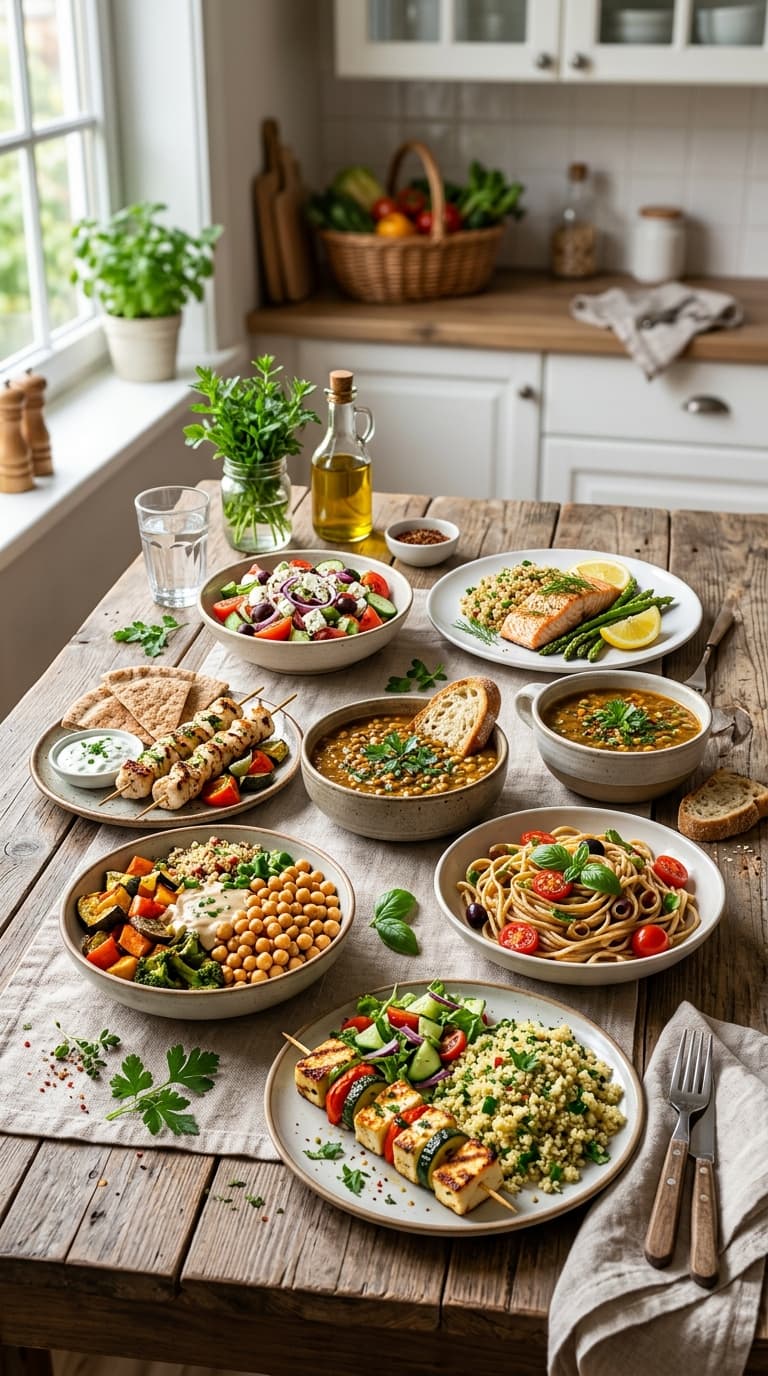
Let’s get into the good stuff. This plan gives you a realistic, delicious roadmap for the week. Each day targets around 1,400–1,700 calories, which creates a gentle calorie deficit without sending your body into panic mode.
Day 1: Fresh Start, Strong Foundation
Breakfast: Greek yogurt with fresh berries, a drizzle of honey, and a handful of walnuts. Simple, filling, and takes about three minutes to put together.
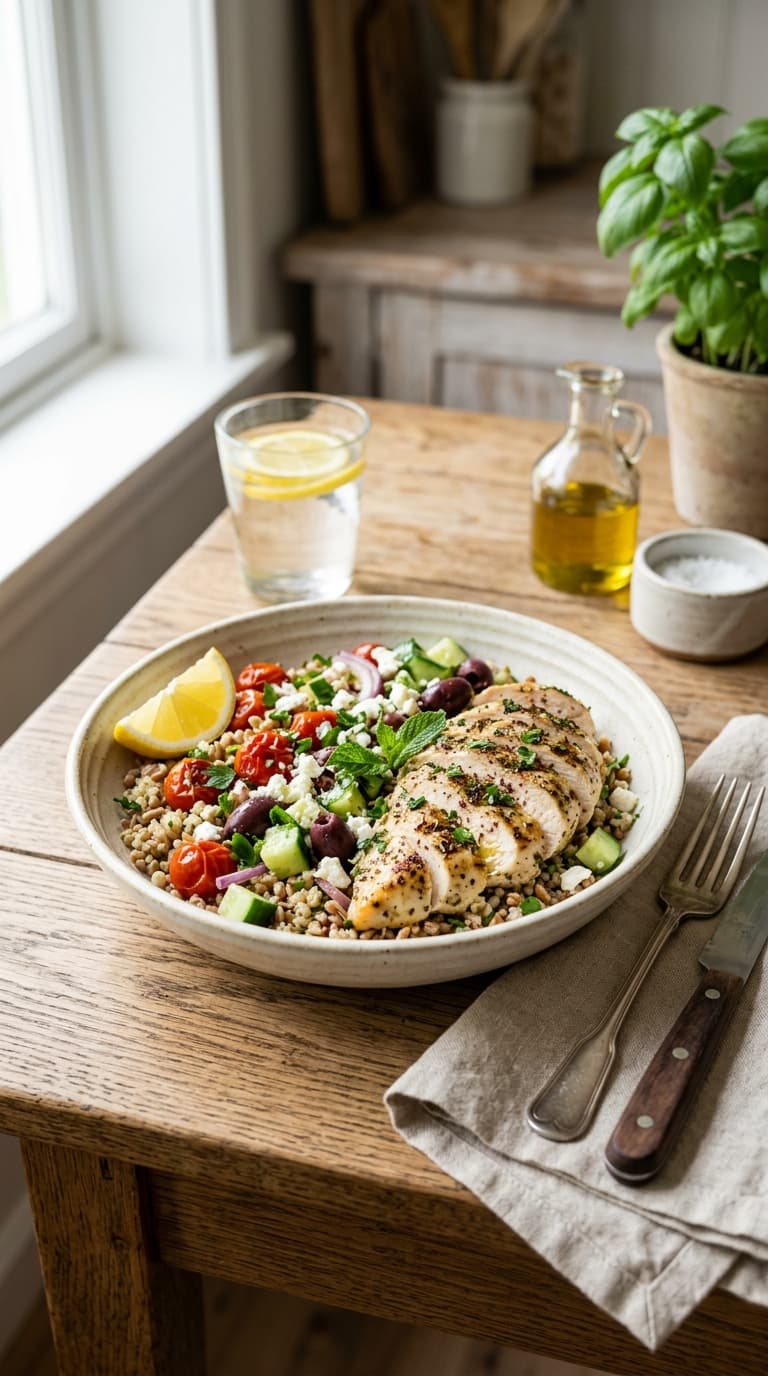
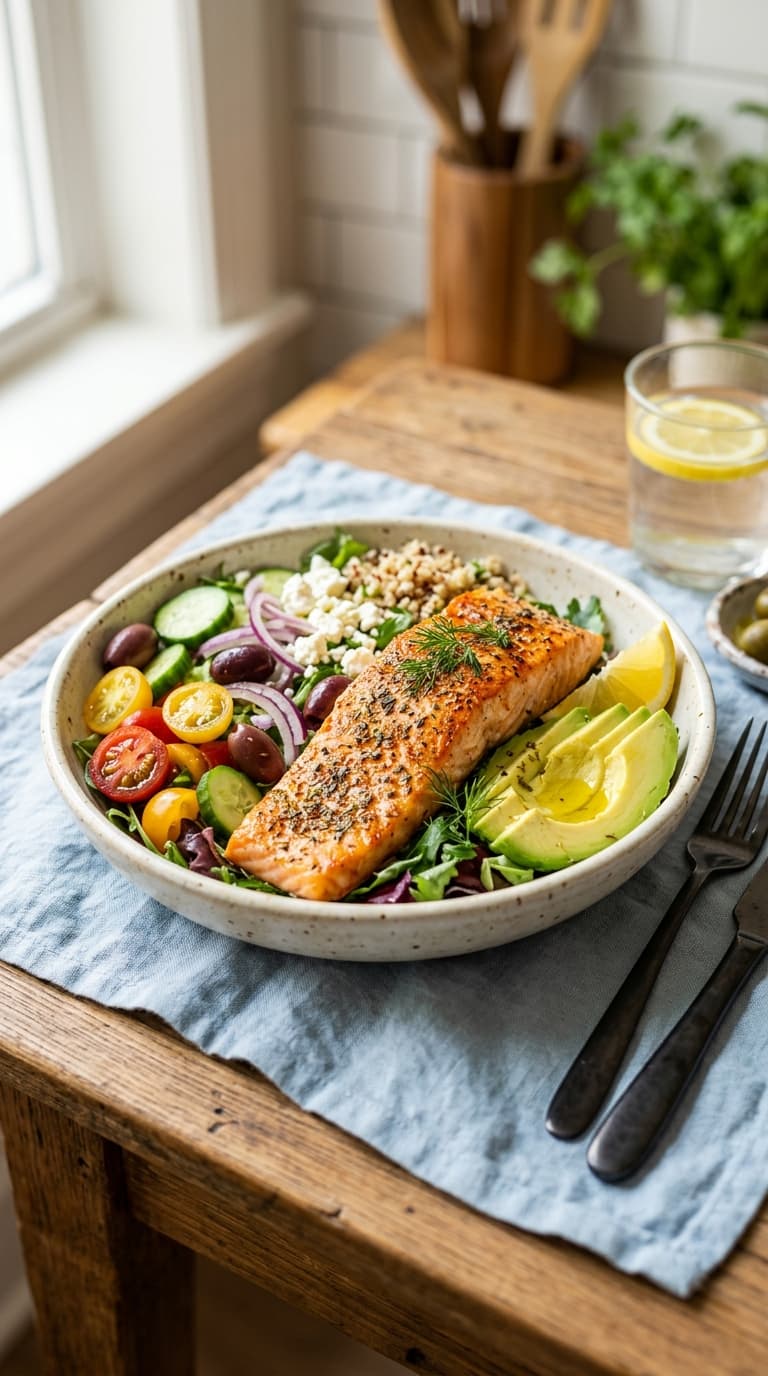
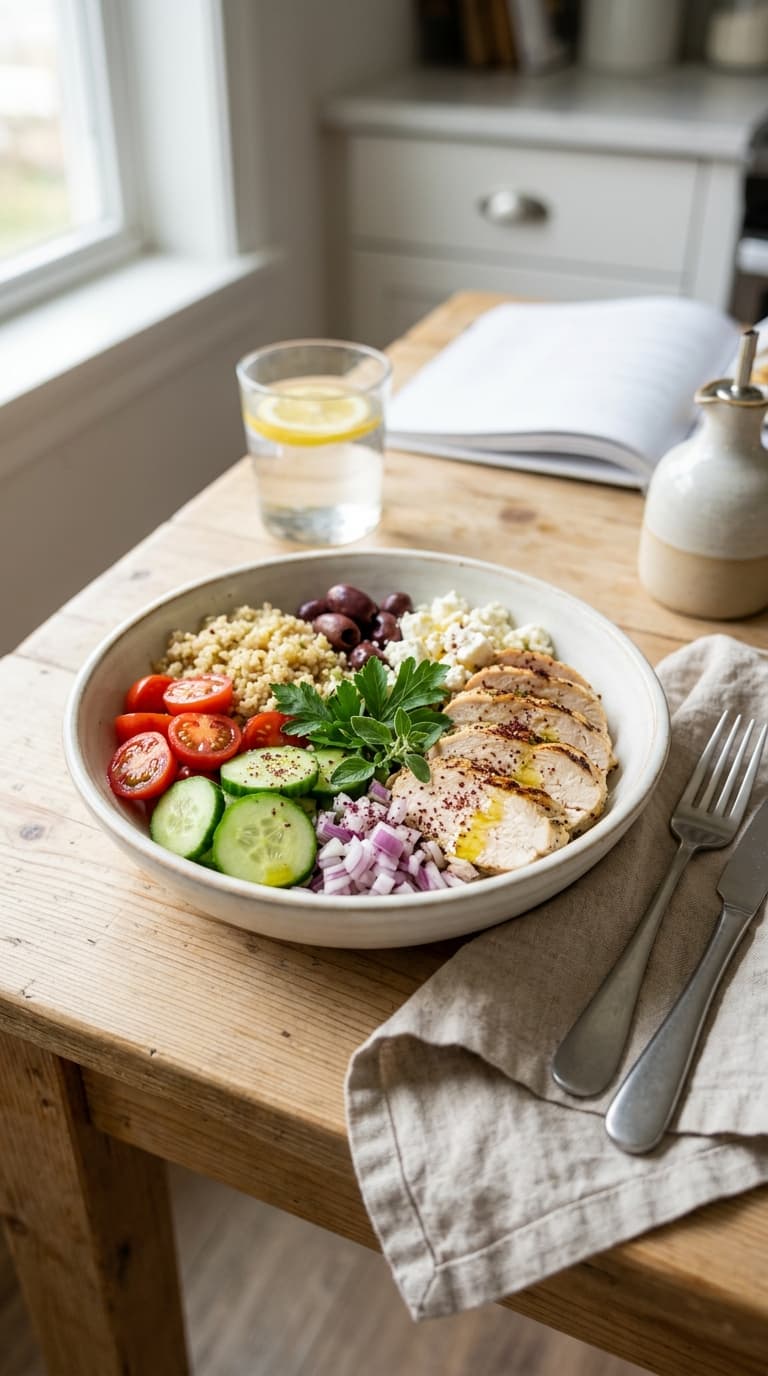
Lunch: A big Greek salad with cucumber, tomatoes, olives, red onion, and feta — topped with grilled chicken and dressed with olive oil and lemon juice.
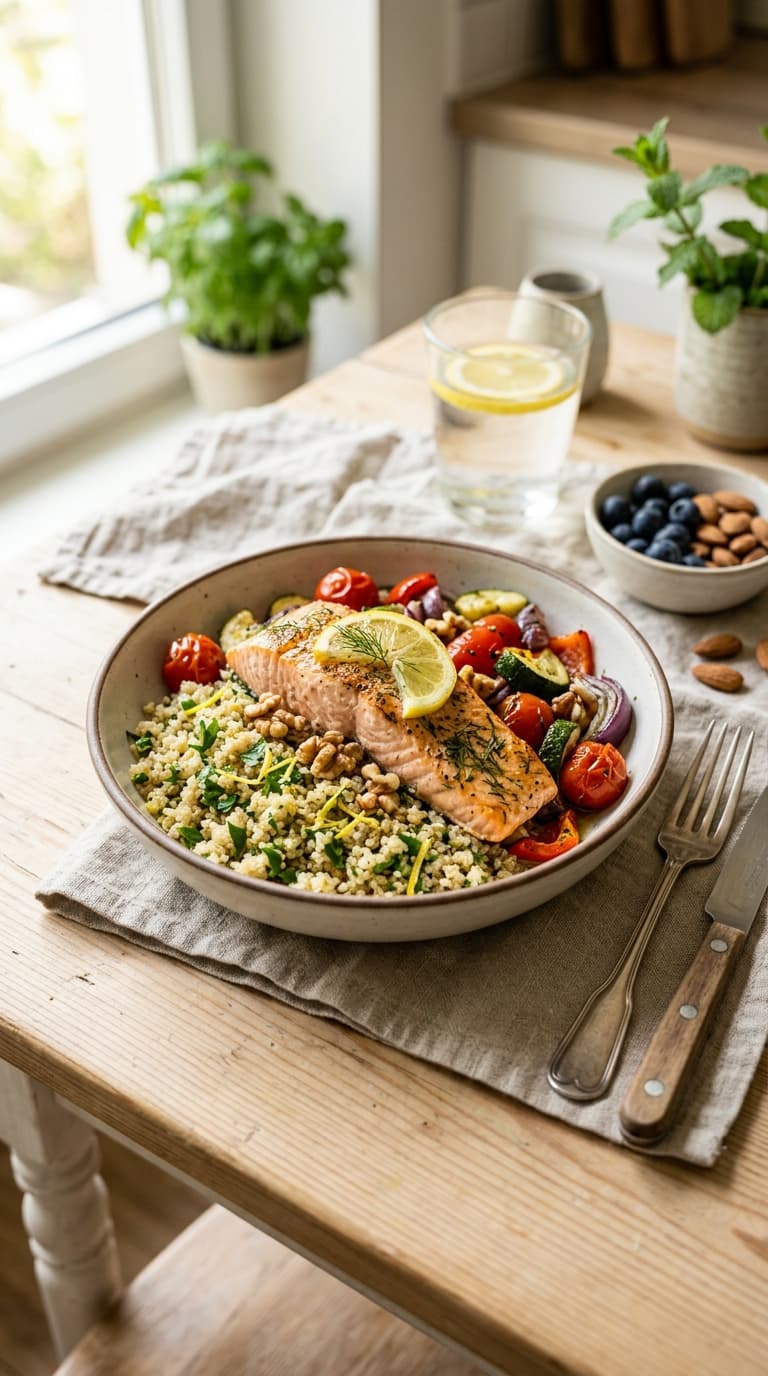
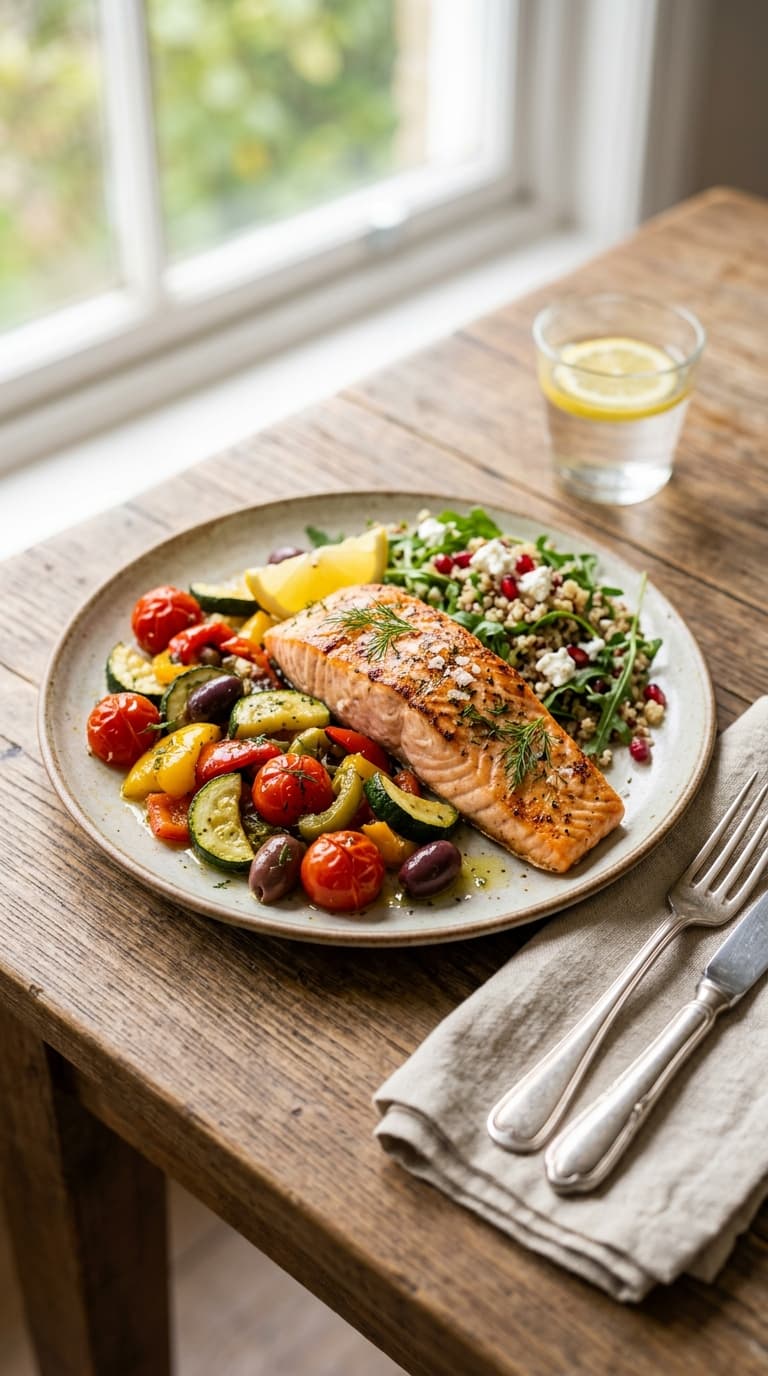
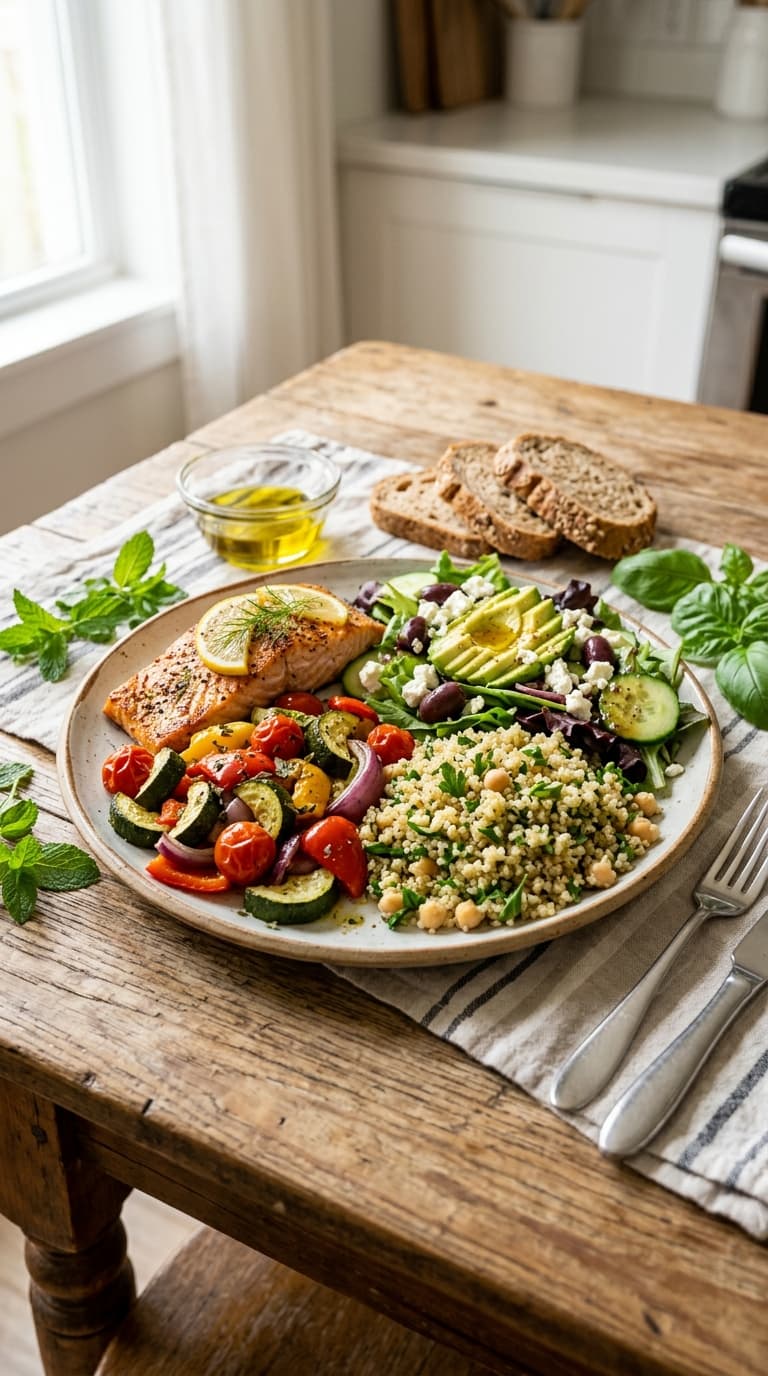
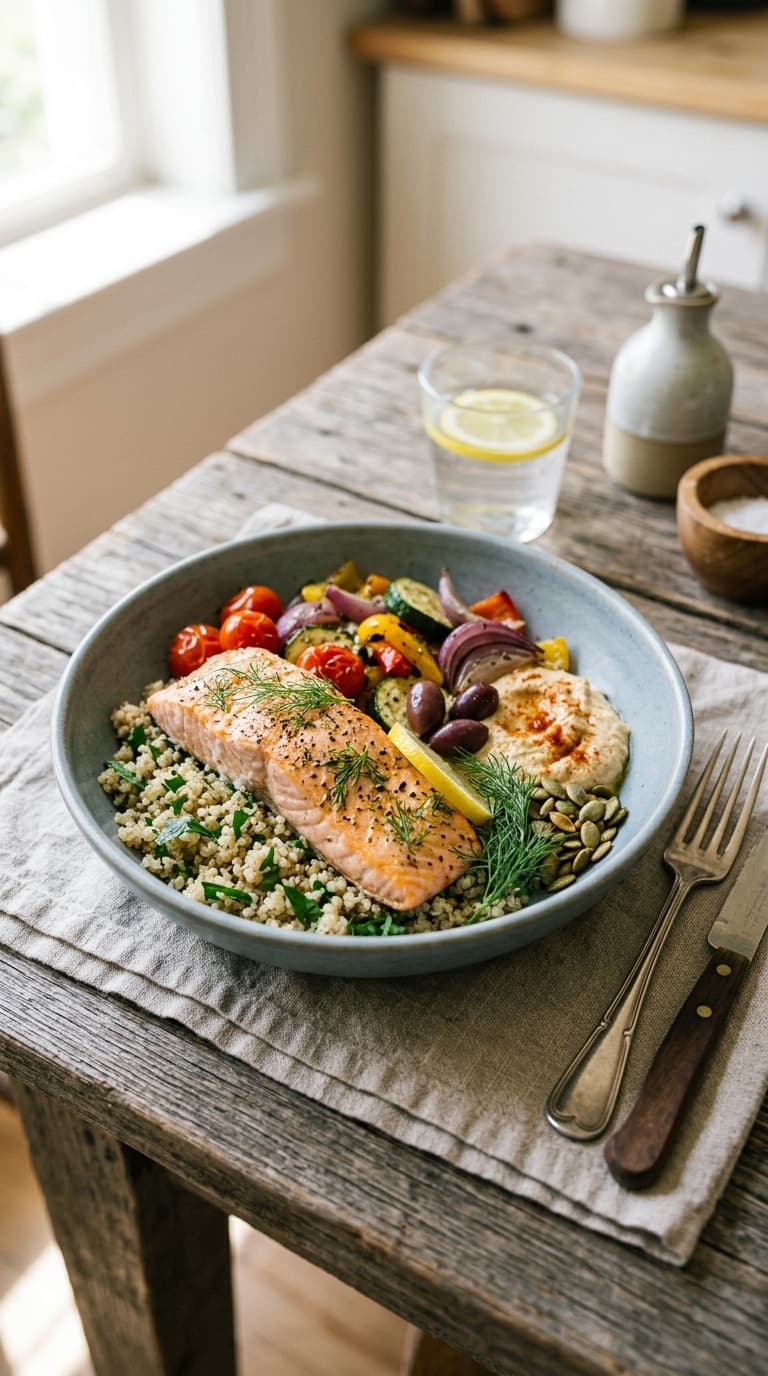
Dinner: Baked salmon with roasted asparagus and a side of quinoa. Season the salmon with garlic, lemon, and fresh dill. The whole thing comes together in under 30 minutes.
Snack: A small handful of almonds and an apple.
Day 2: Plant Power Day
Breakfast: Whole grain toast with mashed avocado, two poached eggs, and a sprinkle of red pepper flakes.
Lunch: Lentil soup with crusty whole grain bread. Don’t knock lentil soup until you’ve had a good one — it’s hearty, warming, and surprisingly satisfying.
Dinner: Stuffed bell peppers with a filling of brown rice, chickpeas, diced tomatoes, and fresh herbs. Top with a little crumbled feta before baking.
Snack: Hummus with sliced cucumbers and carrots.
Ever notice how plant-based meals leave you full for longer? That’s the fiber doing its job — and the Mediterranean diet is absolutely loaded with it.
Day 3: Midweek Mediterranean Magic
Breakfast: Overnight oats made with rolled oats, almond milk, chia seeds, and sliced banana. Prep it the night before and wake up to breakfast already waiting for you. 🙂
Lunch: Tuna-stuffed whole grain pita with mixed greens, tomatoes, and a light lemon-tahini dressing.
Dinner: Shrimp stir-fried with garlic, cherry tomatoes, spinach, and whole grain pasta. Finish with a generous squeeze of lemon and fresh parsley.
Snack: A small orange and a few walnuts.
Day 4: Comfort Without the Guilt
Breakfast: Two-egg veggie omelette with spinach, mushrooms, and a sprinkle of feta.
Lunch: Chickpea and vegetable stew over bulgur wheat. This one is so filling you might not even want the snack.
Dinner: Grilled chicken thighs marinated in olive oil, garlic, oregano, and lemon — served with roasted sweet potato and a simple cucumber-tomato salad.
Snack: Greek yogurt with a drizzle of honey and a few pistachios.
Day 5: Keep the Momentum Going
Breakfast: Smoothie made with spinach, frozen mango, Greek yogurt, almond milk, and a tablespoon of ground flaxseed. Sounds too healthy to be good — it’s not. It’s genuinely delicious.
Lunch: Whole grain wrap with hummus, roasted vegetables, arugula, and sliced turkey.
Dinner: Baked cod with a herb-and-olive crust, served alongside roasted zucchini and a cup of farro.
Snack: A small pear and a handful of mixed nuts.
Day 6: Weekend Vibes, Mediterranean Style
Breakfast: Shakshuka — eggs poached in a spiced tomato-pepper sauce, served with whole grain toast for dipping. If you haven’t made this yet, this is your sign.
Lunch: Large mixed greens salad with sardines, kalamata olives, roasted red peppers, and a red wine vinegar dressing.
Dinner: Lamb and vegetable kebabs grilled to perfection, served with whole grain pita and a side of tzatziki.
Snack: Fresh fruit with a small square of dark chocolate. Because weekends deserve a little treat.
Day 7: Finish Strong
Breakfast: Whole grain pancakes topped with fresh strawberries and a dollop of Greek yogurt instead of syrup.
Lunch: Tomato-based white bean soup with kale and a side of crusty bread.
Dinner: Herb-roasted chicken with caramelized onions, olives, and lemon — served with roasted root vegetables and a green salad.
Snack: Celery with almond butter and a small handful of grapes.
You just made it through a full week. Not so bad, right?
Tips to Make This Plan Work in Real Life
A 7-day plan looks great on paper, but real life has a way of complicating things. FYI, here are the strategies that actually help you stick to this without losing your mind:
Meal Prep Is Your Best Friend
Spend 1–2 hours on Sunday preparing the basics. Cook a big batch of grains, roast a tray of vegetables, and prep a protein or two. The rest of the week becomes so much easier when the building blocks are already done.
Keep Your Pantry Stocked
You can’t cook Mediterranean food if you don’t have the ingredients. Stock your kitchen with these staples:
- Extra virgin olive oil (get a good quality one — it makes a real difference)
- Canned chickpeas, lentils, and white beans
- Whole grain pasta, quinoa, and farro
- Canned diced tomatoes
- A good collection of dried herbs — oregano, thyme, cumin, paprika
- Nuts and seeds for easy snacking
Don’t Fear Healthy Fat
This trips people up constantly. Olive oil, avocado, nuts, and fatty fish are your friends — not your enemies. Healthy fats keep you full, support brain function, and help your body absorb fat-soluble vitamins. Don’t ration your olive oil like it’s liquid gold.
Eat Slowly and Actually Taste Your Food
Mediterranean culture treats meals as a social, unhurried experience. Eating slower gives your body time to register fullness, which means you naturally eat less without trying. Put the phone down. Chew your food. Revolutionary concept, I know.
What to Expect During Your First Week
Let’s keep this real — the first few days might feel a little different if you’re coming off a heavily processed diet. You might notice:
- More energy after meals instead of the usual afternoon crash
- Less bloating as your gut adjusts to more fiber and whole foods
- Occasional cravings for sugar or refined carbs — these pass after a few days
- Steady fullness that lasts between meals
Weight loss during week one is often noticeable — some people drop 2–4 pounds, mostly from water weight as they reduce processed food and sodium. After that, expect a steady, healthy loss of 0.5–1.5 pounds per week depending on your starting point and activity level.
The Long Game: Why This Beats Every Fad Diet
Here’s where I’ll drop a little honest opinion: fad diets work short-term because they create a dramatic calorie deficit. But they also make you miserable, mess with your metabolism, and set you up for rebound weight gain. :/
The Mediterranean diet doesn’t play that game. It’s one of the most studied, most consistently recommended eating patterns in the world — backed by decades of research linking it to reduced risk of heart disease, type 2 diabetes, cognitive decline, and yes, obesity.
You’re not just losing weight. You’re building a relationship with food that can actually last.
Final Thoughts
Seven days is just the beginning. What makes the Mediterranean diet genuinely different is that after a week, most people don’t want to stop — because the food is too good, the hunger is too manageable, and the results are too real.
Start with this plan, let yourself enjoy it, and then keep going. Tweak it to suit your tastes, swap proteins, experiment with new vegetables, explore different grains. The framework is solid — the rest is yours to play with.
You don’t have to white-knuckle your way through a diet to lose weight. Turns out, you just have to eat like someone who lives near the Mediterranean Sea. Not the worst prescription, honestly.