7-Day Mediterranean Diet Plan for Beginners: Easy, Fresh & Delicious
7-Day Mediterranean Diet Plan for Beginners: Easy, Fresh & Delicious
So you’ve heard everyone raving about the Mediterranean diet, and now you’re curious. Maybe your doctor mentioned it, maybe you saw it trending online, or maybe — like me — you just got tired of diets that make you feel like you’re being punished for existing. Whatever brought you here, you’re in the right place.
The Mediterranean diet isn’t a “diet” in the miserable, calorie-counting, rabbit-food sense. It’s more of a lifestyle borrowed from the sun-soaked coasts of Greece, Italy, and Spain — places where people eat well, live long, and somehow manage to look relaxed while doing it. Honestly, the audacity. 🙂
This 7-day plan is designed specifically for beginners. No fancy ingredients you can’t pronounce. No meal prep that takes up your entire Sunday. Just fresh, simple, genuinely delicious food that your body will actually thank you for.
Why the Mediterranean Diet Actually Works
Let’s skip the lecture and get real for a second. Most diets fail because they’re built around restriction. Cut this, avoid that, never touch carbs again. The Mediterranean approach flips the script entirely.
Instead of eliminating food groups, this way of eating focuses on adding good stuff. More vegetables, more whole grains, more healthy fats, more flavor. When you eat foods this satisfying, you naturally crowd out the junk — not because someone told you to, but because you genuinely don’t crave it as much anymore.
Research consistently backs this up. The Mediterranean diet links to reduced risk of heart disease, improved brain function, better blood sugar control, and lower inflammation. These aren’t small wins — they’re life-changing.
IMO, the biggest selling point is sustainability. You can actually eat this way forever. Can you say the same about keto?
What You’ll Actually Be Eating
Before we get to the day-by-day plan, let’s paint a clear picture of what fills your plate on this diet.
The Staples You’ll Lean On
- Olive oil — your new best friend and primary cooking fat
- Vegetables of every variety, especially leafy greens, tomatoes, cucumbers, and peppers
- Legumes like chickpeas, lentils, and white beans
- Whole grains including whole wheat bread, farro, bulgur, and brown rice
- Fresh fruit for snacking and natural sweetness
- Fish and seafood, ideally two to three times per week
- Nuts and seeds for healthy fats and crunch
- Herbs and spices — garlic, oregano, basil, cumin, and more
What You’ll Eat Less Of
- Red meat (a couple times a month is fine)
- Processed foods and fast food
- Added sugars and sugary drinks
- Refined carbs like white bread and pastries
Notice how the “eat less” list doesn’t say “never.” That’s the beauty of this approach. Nobody’s taking your birthday cake.
Your 7-Day Mediterranean Meal Plan
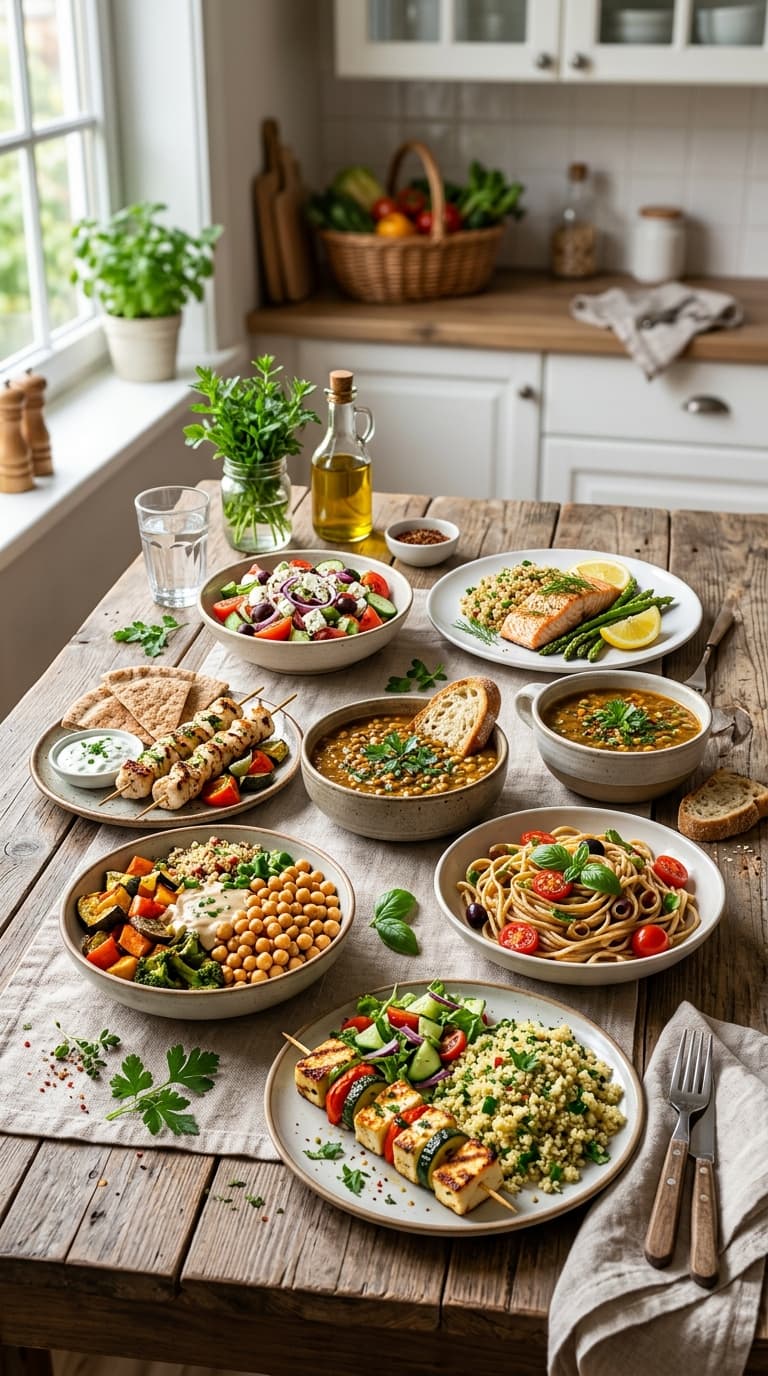
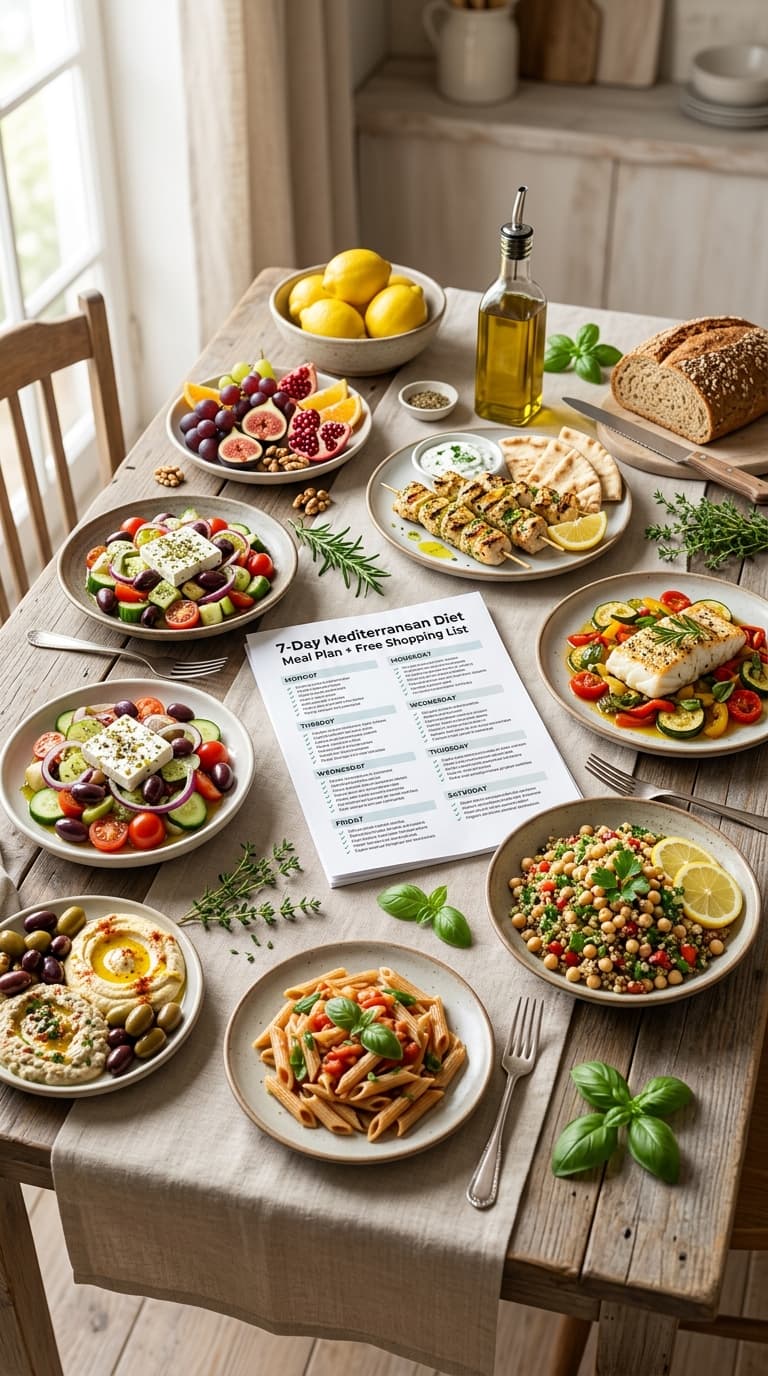
Here’s a full week of meals to get you started. Everything here uses simple ingredients, and most recipes take under 30 minutes. Let’s go.
Day 1: Ease Into It
Breakfast
Start with Greek yogurt topped with honey, walnuts, and fresh berries. It takes five minutes and tastes like dessert for breakfast, which is a perfectly acceptable way to start Monday.
Lunch
Make a simple chickpea salad with diced cucumber, cherry tomatoes, red onion, parsley, lemon juice, and olive oil. Toss it together, eat it straight from the bowl. No cooking required.
Dinner
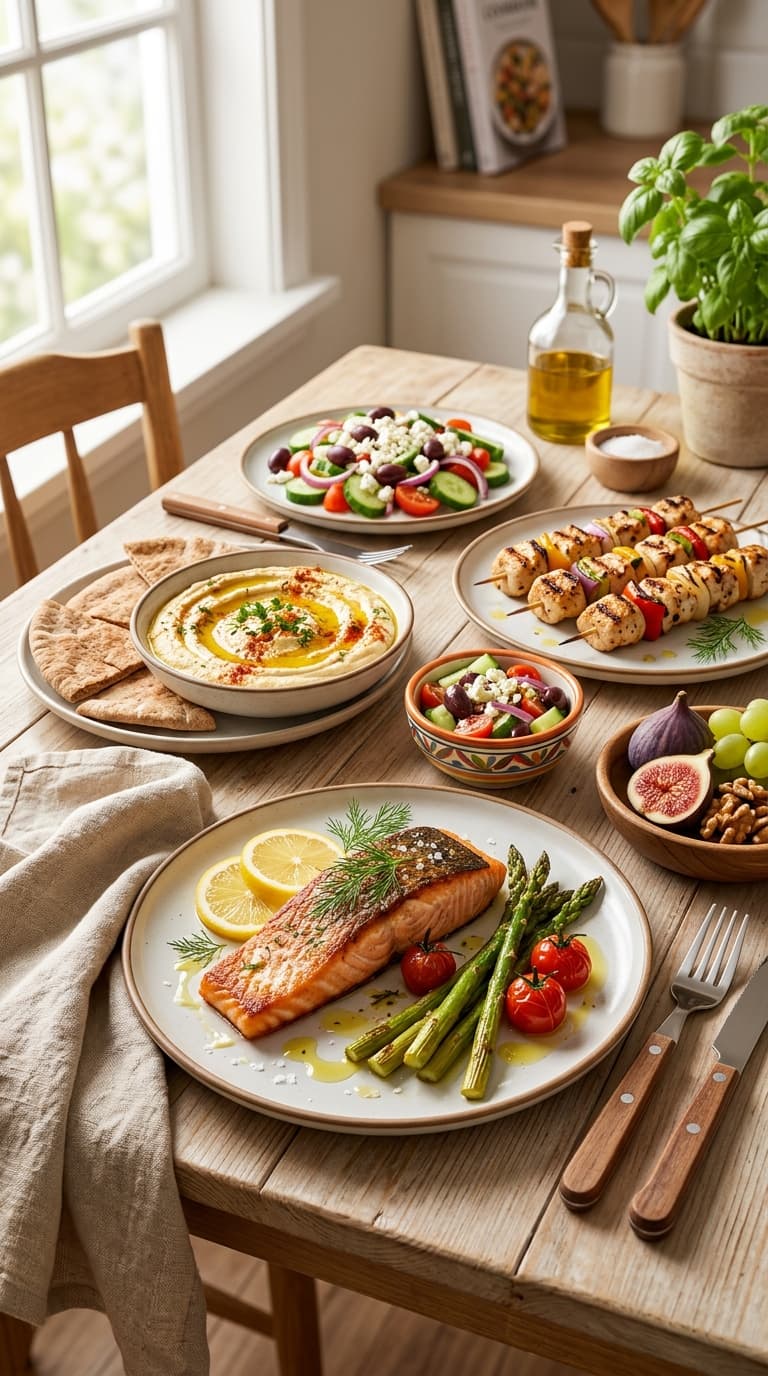
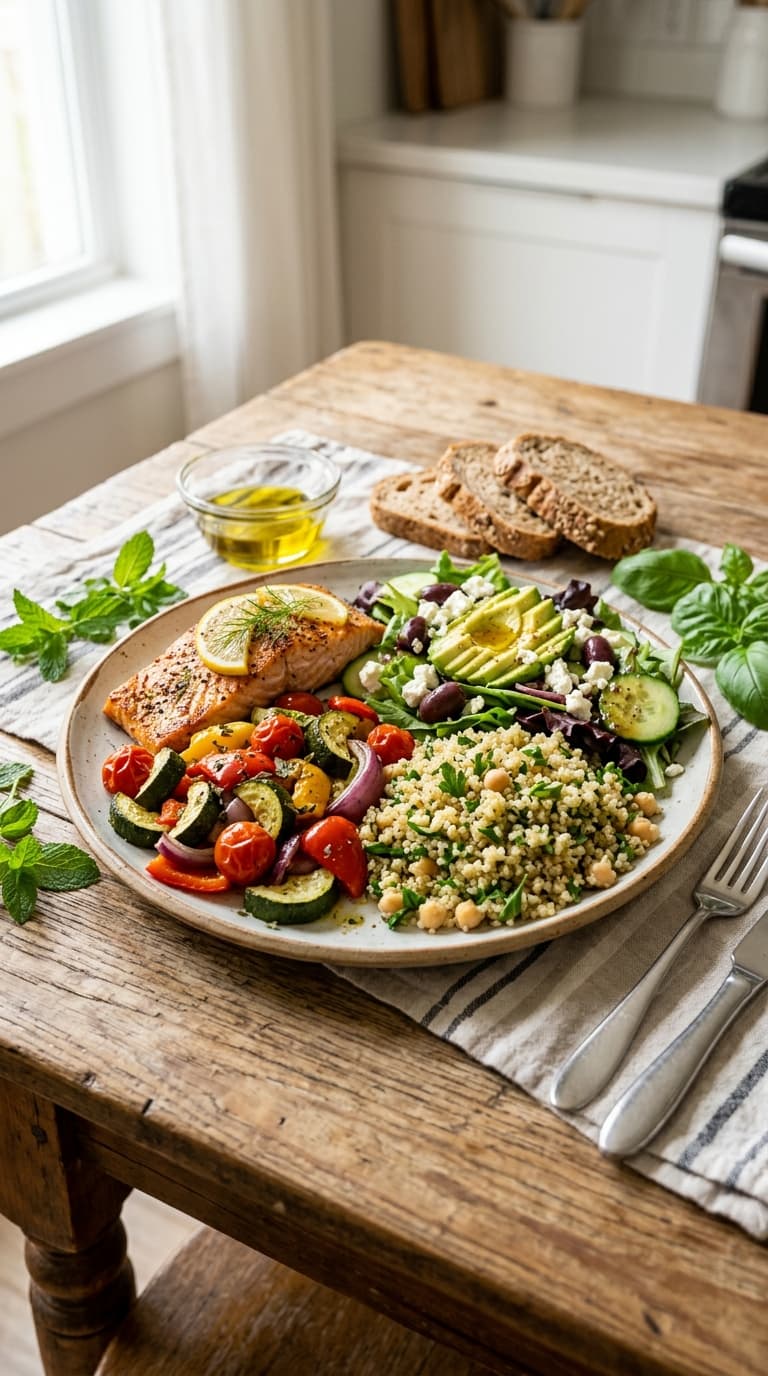
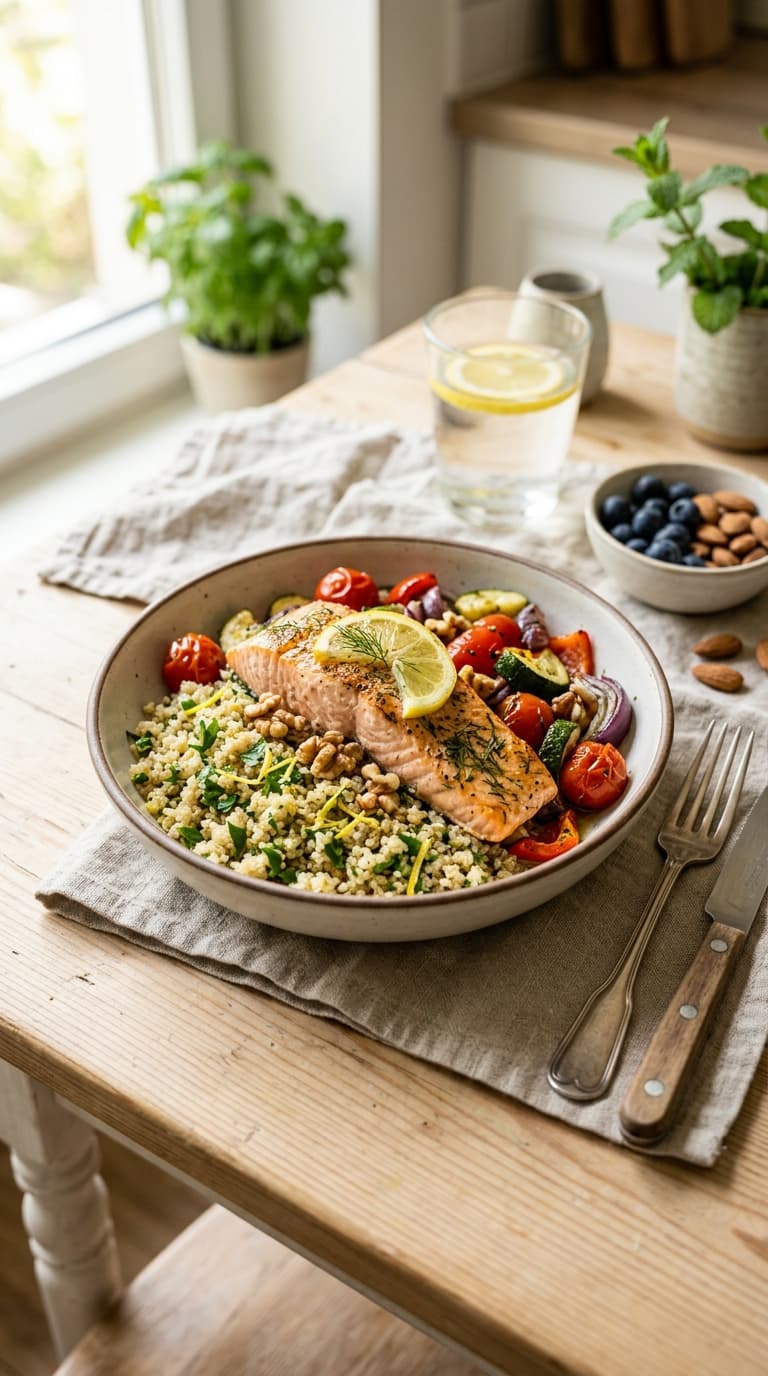
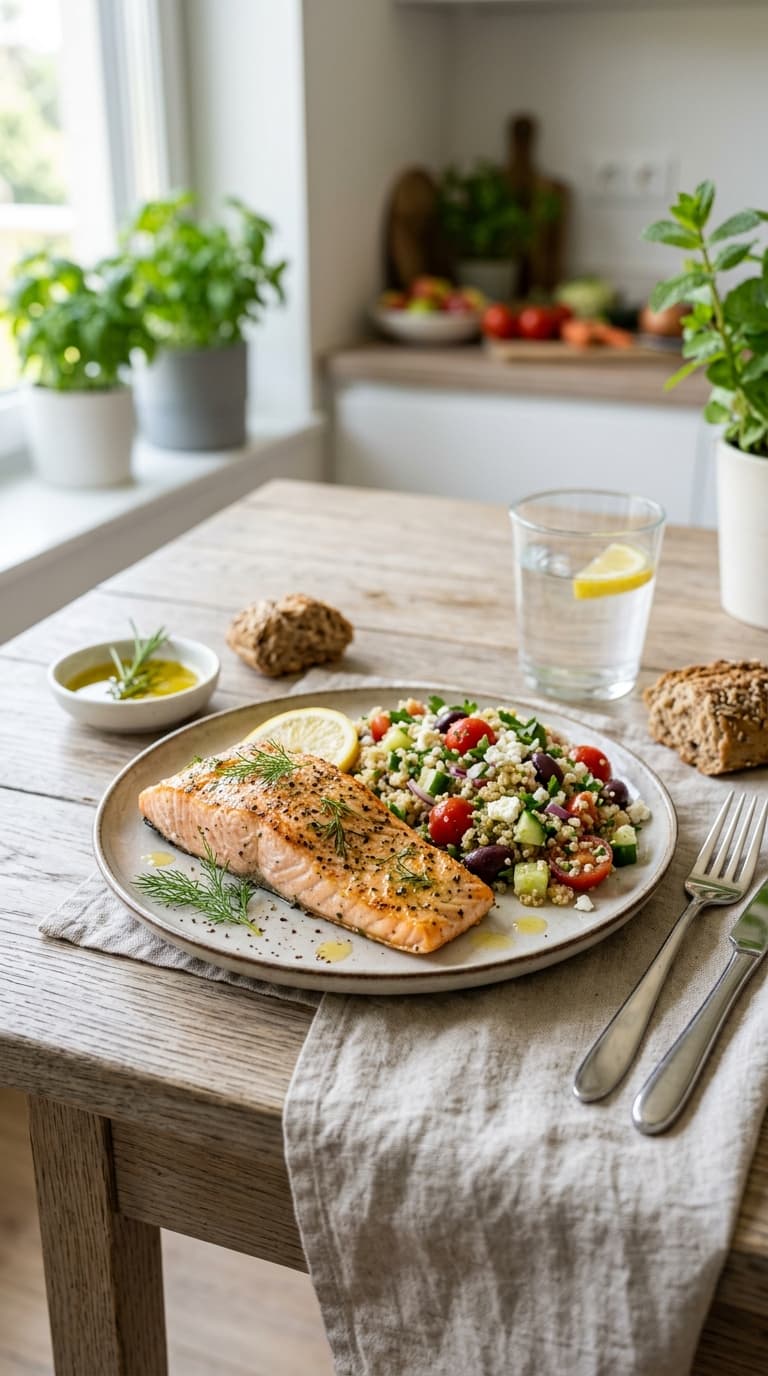
Baked lemon herb salmon with roasted zucchini and a side of whole wheat pita. Season the salmon with garlic, lemon zest, oregano, and olive oil, then roast at 400°F for 15–18 minutes. Done.
Snack
A small handful of mixed nuts or a piece of fruit.
Day 2: Getting Comfortable
Breakfast
Whole grain toast with mashed avocado, a drizzle of olive oil, and a sprinkle of red pepper flakes. Yes, avocado toast earns its Mediterranean credentials — avocados are loaded with healthy monounsaturated fats.
Lunch
Lentil soup with crusty whole grain bread. You can make a big batch on Day 1 and refrigerate it. Mediterranean cooking loves a good leftover situation.
Dinner
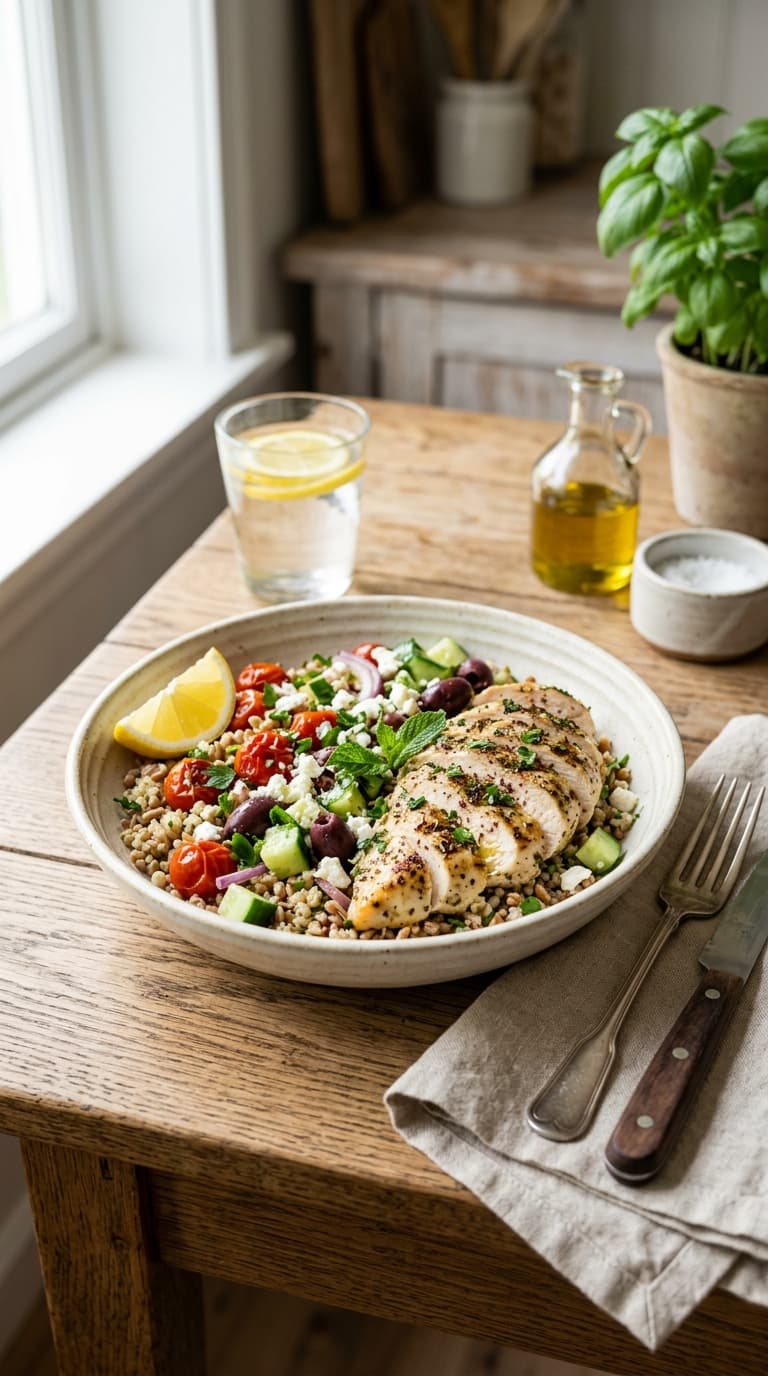
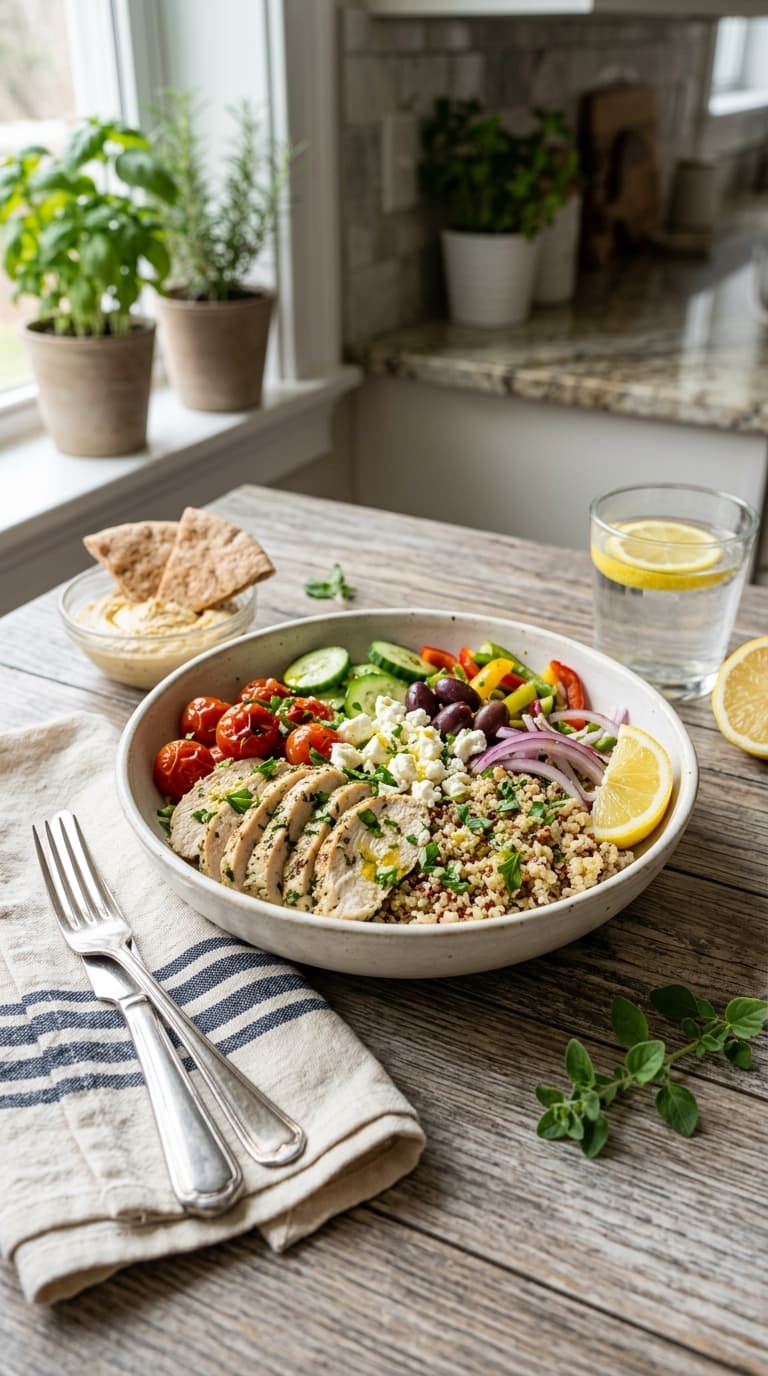
Chicken souvlaki — marinate chicken thighs in olive oil, lemon, garlic, and oregano, then grill or pan-cook them. Serve with a fresh tomato-cucumber salad and tzatziki on the side.
Snack
Hummus with sliced bell peppers or carrot sticks.
Day 3: Finding Your Rhythm
Ever notice how by Day 3 of any diet, you either want to quit or you’ve started genuinely enjoying it? With Mediterranean eating, most people land in the second camp — and that’s no accident.
Breakfast
Shakshuka — eggs poached in a spiced tomato and pepper sauce. This sounds fancy but takes about 20 minutes and uses pantry staples. It’s also one of those meals that impresses guests without requiring any actual culinary talent.
Lunch
Whole wheat pasta salad with olives, sun-dried tomatoes, artichoke hearts, feta, and a red wine vinegar dressing. Make a big batch and eat it over two days.
Dinner
Baked cod with a herb crust, roasted cherry tomatoes, and steamed green beans drizzled with olive oil and lemon. Light, satisfying, and genuinely beautiful on the plate.
Snack
Fresh fruit with a small chunk of cheese — a proper Mediterranean snack moment.
Day 4: Midweek Momentum
Breakfast
Oatmeal with sliced almonds, cinnamon, and fresh figs or dates. Warming, filling, and it keeps you going until lunch without that mid-morning energy crash.
Lunch
Stuffed whole wheat wrap with grilled vegetables, hummus, and crumbled feta. Use whatever vegetables you have roasted or leftover from earlier in the week. Zero waste, maximum flavor.
Dinner
Mediterranean lamb meatballs in a simple tomato sauce, served over whole wheat couscous. Lamb sounds intimidating but ground lamb is incredibly easy to work with — season it well and it does all the heavy lifting. The Mediterranean diet’s emphasis on whole grains and legumes is what makes it so nutritionally complete.
Snack
A small bowl of mixed olives. If you haven’t become an olive person yet, Day 4 is your turning point. Trust the process.
Day 5: Keep the Momentum Going
Breakfast
Vegetable frittata made with eggs, spinach, cherry tomatoes, and feta. You can bake it in a skillet or muffin tin and keep leftovers in the fridge for tomorrow morning — efficiency unlocked.
Lunch
Greek lentil soup (fakes soupa) — another classic that’s budget-friendly, filling, and packed with plant-based protein. Add a splash of red wine vinegar at the end; it transforms the whole thing.
Dinner
Grilled sea bass or branzino with roasted potatoes tossed in olive oil, garlic, and rosemary, plus a simple arugula salad on the side. FYI, this is the kind of dinner you’d pay a lot for at a restaurant, and you just made it at home in 35 minutes.
Snack
Whole grain crackers with a thin spread of almond butter, or a banana with walnuts.
Day 6: Weekend Mode
Weekends are when Mediterranean eating really shines. Slow mornings, longer meals, more time to actually enjoy what you’re eating. Sound good?
Breakfast
Mediterranean-style eggs scrambled slowly with olive oil, crumbled feta, fresh herbs, and ripe tomatoes. Pair with a thick slice of whole grain sourdough. Take your time. The emails can wait.
Lunch
A proper mezze spread — assemble a board with hummus, tzatziki, pita triangles, olives, stuffed grape leaves, sliced vegetables, and a few cubes of feta. This is Mediterranean eating at its most social and its most joyful.
Dinner
Slow-roasted chicken thighs with lemon, garlic, and preserved lemon if you can find it, served alongside roasted root vegetables and a green salad. This one fills your kitchen with a smell so good it could fix a bad day.
Snack
Fresh watermelon or sliced peaches with a handful of pistachios.
Day 7: Finish Strong
Breakfast
Whole grain pancakes topped with Greek yogurt and a drizzle of pomegranate molasses or honey. Yes, pancakes can absolutely fit into the Mediterranean diet — just skip the syrup lake and go for quality toppings.
Lunch
Big hearty salad with romaine, tuna, boiled egg, cherry tomatoes, olives, capers, and a Dijon-lemon dressing. Think Niçoise vibes, Mediterranean execution.
Dinner
Vegetable paella or a simple ratatouille served over farro. A plant-forward finish to the week feels good, and ratatouille is one of those recipes that actually improves as it sits in the pan. Let it go a little longer than you think you need to. 🙂
Snack
Dark chocolate — yes, really. A couple of squares of good-quality dark chocolate (70% cacao or higher) absolutely has a place in Mediterranean eating.
Tips for Making This Week a Success
Now that you’ve got the plan, here are a few practical things that’ll make your week dramatically smoother.
Batch Cook on Sunday
Roast a big tray of vegetables, cook a pot of lentils or chickpeas, and make a grain salad base. Having components ready in the fridge means you can assemble meals in minutes instead of starting from scratch every time.
Keep Your Pantry Stocked
The Mediterranean diet lives and dies by a well-stocked pantry. Always keep these on hand:
- Extra virgin olive oil (a good one — it makes a difference)
- Canned tomatoes, chickpeas, and lentils
- Whole wheat pasta, couscous, and farro
- Dried herbs and spices — oregano, cumin, paprika, cinnamon
- A good vinegar: red wine or apple cider
- Capers, olives, and sun-dried tomatoes
Don’t Skip the Herbs
One of the biggest reasons Mediterranean food tastes so good is the generous use of fresh and dried herbs. Garlic alone can transform a basic dish. Don’t be shy with the seasoning — it’s not indulgent, it’s essential. Understanding the role of olive oil and fresh herbs in Mediterranean cooking helps you appreciate why this eating pattern is so satisfying long-term.
Eat Slowly and Enjoy It
This sounds obvious but it’s actually a core principle of Mediterranean culture. Meals are meant to be enjoyed, not rushed. If you can sit down, put your phone away, and actually taste what you’re eating, you’ll feel more satisfied with less — and that’s a genuine superpower in a world that glorifies eating lunch at your desk.
Common Beginner Mistakes to Avoid
Even with the best plan, a few pitfalls trip people up in the first week.
- Using too little olive oil out of calorie fear — olive oil is the point, not the problem
- Ignoring legumes because they seem boring — season them properly and they’re incredible
- Over-complicating things — Mediterranean cooking is peasant food elevated by quality ingredients, not by complexity
- Drinking juice instead of eating fruit — always choose whole fruit for the fiber
- Skipping fish because cooking it feels intimidating — start with canned tuna or salmon and work your way up
The Bigger Picture
One week on the Mediterranean diet won’t transform your health overnight — and anyone who tells you otherwise is selling something. But one week can absolutely shift your relationship with food. You might discover that you love lentils, that olive oil makes everything taste better, and that eating vegetables doesn’t have to feel like a sacrifice.
The long-term health benefits of the Mediterranean diet are well-documented and genuinely impressive. But beyond the science, the real reason people stick with it is simpler: the food is actually good. Really, genuinely, look-forward-to-every-meal good.
After this first week, you don’t need to follow a rigid plan anymore. You’ll have the building blocks — the pantry staples, the cooking techniques, the flavor profiles — to improvise and make it your own.
Wrapping Up
So there you have it — a full week of Mediterranean eating that’s realistic, flexible, and actually enjoyable. No suffering required.
Start with Day 1, take it one meal at a time, and don’t stress if you swap things around or adjust based on what’s in your fridge. The Mediterranean diet is forgiving like that. It meets you where you are.
The hardest part isn’t the food — it’s unlearning the idea that healthy eating has to be hard. Once you get past that, you might find this becomes the easiest “diet” you’ve ever followed. Mostly because it doesn’t really feel like a diet at all.
Now go buy some olive oil, grab a lemon, and let’s eat well.