7-Day Vegan Meal Plan for Beginners (Whole Foods, No Processed Junk!)
7-Day Vegan Meal Plan for Beginners (Whole Foods, No Processed Junk!)
So you’ve decided to try going vegan — or at least dip your toes in — and now you’re staring at your kitchen wondering what on earth you’re supposed to eat. Been there. The good news? You don’t need fancy ingredients, expensive superfoods, or a culinary degree to eat well on a plant-based diet. You just need a solid plan, a few pantry staples, and the willingness to actually cook something. This 7-day vegan meal plan keeps things simple, satisfying, and built entirely around whole foods — because nobody needs another “vegan” plan that’s secretly just processed fake meat and flavored chips.
Why Whole Foods Veganism Actually Works
Let’s be real — the internet is full of vegan meal plans that swap out chicken nuggets for “chick’n” nuggets and call it a transformation. That’s not what we’re doing here. Whole foods plant-based eating means you’re building meals around vegetables, legumes, whole grains, nuts, seeds, and fruit — ingredients that come from the earth, not a factory.
This approach works because your body recognizes real food. Your digestion improves, your energy stabilizes, and you stop riding the blood sugar rollercoaster that comes with processed snacks. IMO, it’s the most sustainable way to go vegan without feeling deprived after week one.
You’ll also save money. Lentils, oats, beans, and sweet potatoes are some of the cheapest ingredients on the planet. Eating whole foods isn’t a luxury — it’s actually the budget-friendly option once you stop buying overpriced vegan “alternatives.”
What to Stock Before Day One
Before we get into the meal plan, let’s talk about your pantry. You don’t need 40 ingredients — you need the right ones. Here’s what to have on hand:
Whole grains:
- Brown rice
- Rolled oats
- Quinoa
- Whole wheat pasta
Legumes:
- Chickpeas (canned or dried)
- Black beans
- Red lentils
- Green lentils
Vegetables (fresh or frozen):
- Spinach, kale, or mixed greens
- Sweet potatoes
- Broccoli
- Bell peppers
- Zucchini
- Tomatoes
Nuts and seeds:
- Almonds
- Walnuts
- Chia seeds
- Flaxseeds
- Tahini
Flavor builders:
- Garlic, onion, ginger
- Cumin, turmeric, smoked paprika, coriander
- Soy sauce or tamari
- Nutritional yeast (trust the process on this one — it’s amazing)
- Olive oil, lemon juice, apple cider vinegar
With these basics stocked, you can build almost every meal in this plan without a last-minute grocery run.
Day 1: Ease Into It
Breakfast — Overnight Oats with Chia and Berries
Start simple. Mix rolled oats, chia seeds, plant milk (oat or almond works great), a mashed banana, and a handful of frozen berries. Let it sit overnight in the fridge and breakfast is waiting for you in the morning. Zero excuses for skipping it.
Lunch — Big Leafy Green Salad with Chickpeas
Toss together spinach, cucumber, cherry tomatoes, shredded carrots, and a can of rinsed chickpeas. Dress it with lemon juice, olive oil, garlic, and a pinch of cumin. This isn’t a sad desk salad — it’s genuinely filling because chickpeas bring serious protein and fiber.
Dinner — Red Lentil Dal with Brown Rice
Red lentil dal is the beginner’s best friend. Sauté onion, garlic, and ginger, add canned tomatoes and red lentils, pour in vegetable broth, season with turmeric, cumin, and coriander, and simmer for 20 minutes. Serve over brown rice. This dish is warming, hearty, and so good you’ll want to make a double batch.
Day 2: Building Momentum
Breakfast — Smoothie Bowl
Blend frozen banana, frozen mango, and a handful of spinach with just enough plant milk to make it thick. Pour into a bowl and top with sliced banana, granola, chia seeds, and a drizzle of almond butter. Yes, it looks like those Instagram photos. No, it’s not hard to make.
Lunch — Lentil Soup
Use leftover dal or make a fresh pot of green lentil soup with carrots, celery, onion, and a squeeze of lemon at the end. Pair it with a slice of whole grain bread. Simple, filling, and genuinely delicious.
Dinner — Stir-Fried Tofu with Broccoli and Brown Rice
Press firm tofu, cube it, and pan-fry until golden. Add broccoli, bell peppers, and a sauce made from soy sauce, garlic, ginger, sesame oil, and a tiny bit of maple syrup. Serve over brown rice. This is the kind of meal that converts skeptics.
Day 3: Finding Your Rhythm
Breakfast — Banana Oat Pancakes
Mash two ripe bananas with one cup of rolled oats, a splash of plant milk, and a pinch of cinnamon. Cook on a non-stick pan over medium heat. These come out thick and naturally sweet — no syrup required, though nobody’s judging you if you add some 🙂
Lunch — Hummus Wrap with Roasted Veggies
Roast bell peppers, zucchini, and red onion with olive oil and smoked paprika. Spread generous hummus on a whole wheat wrap, pile in the veggies, add some spinach, and roll it up. This is the kind of lunch that makes your coworkers ask what you’re eating.
Dinner — Black Bean Tacos
Sauté black beans with onion, garlic, cumin, and smoked paprika. Serve in warm corn tortillas with sliced avocado, shredded cabbage, salsa, and a squeeze of lime. Use corn tortillas to keep things whole food — flour tortillas are fine too, but corn wins on texture every time.
Day 4: Halfway There — Don’t Quit Now
Breakfast — Chia Pudding with Mango
Combine 3 tablespoons of chia seeds with one cup of plant milk and a bit of maple syrup. Stir well, refrigerate overnight, and top with fresh or frozen mango in the morning. It takes five minutes to prep and feels like dessert for breakfast.
Lunch — Quinoa Buddha Bowl
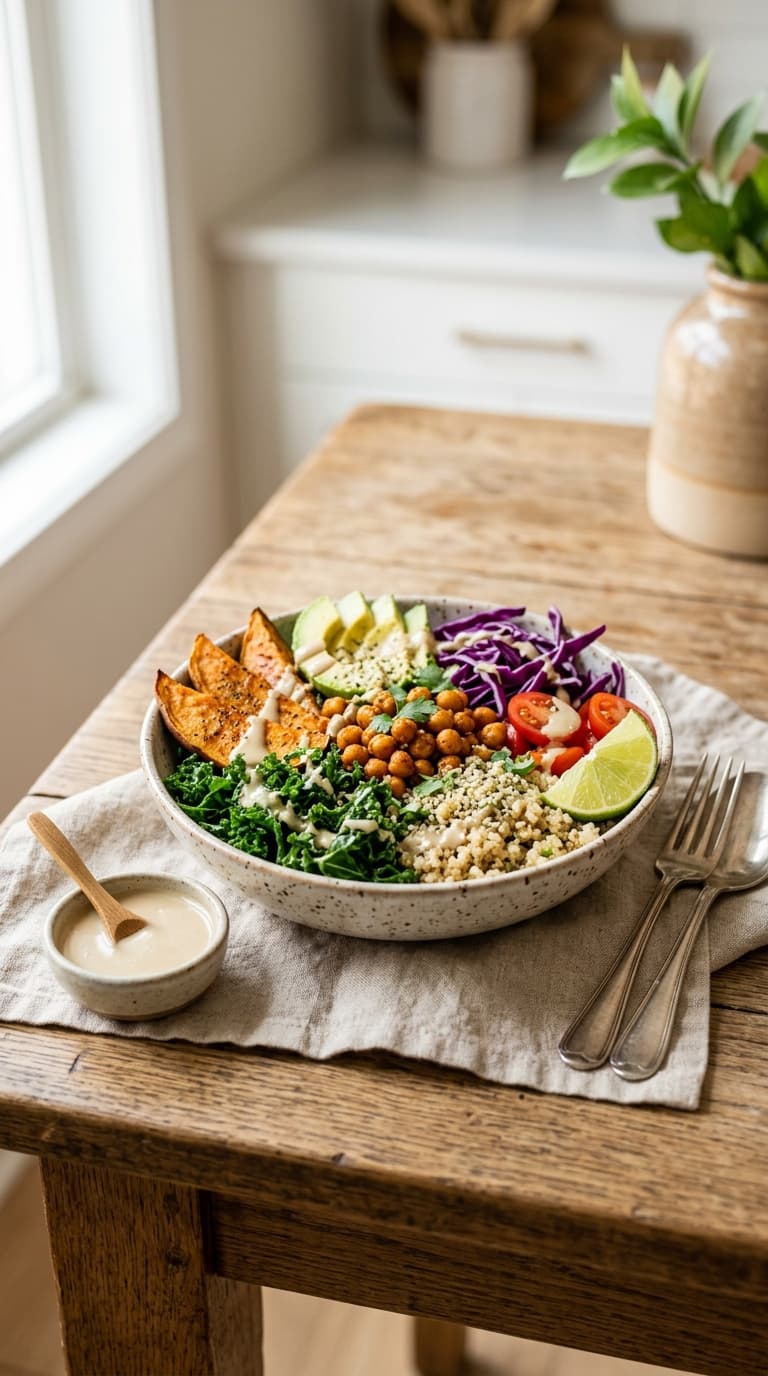
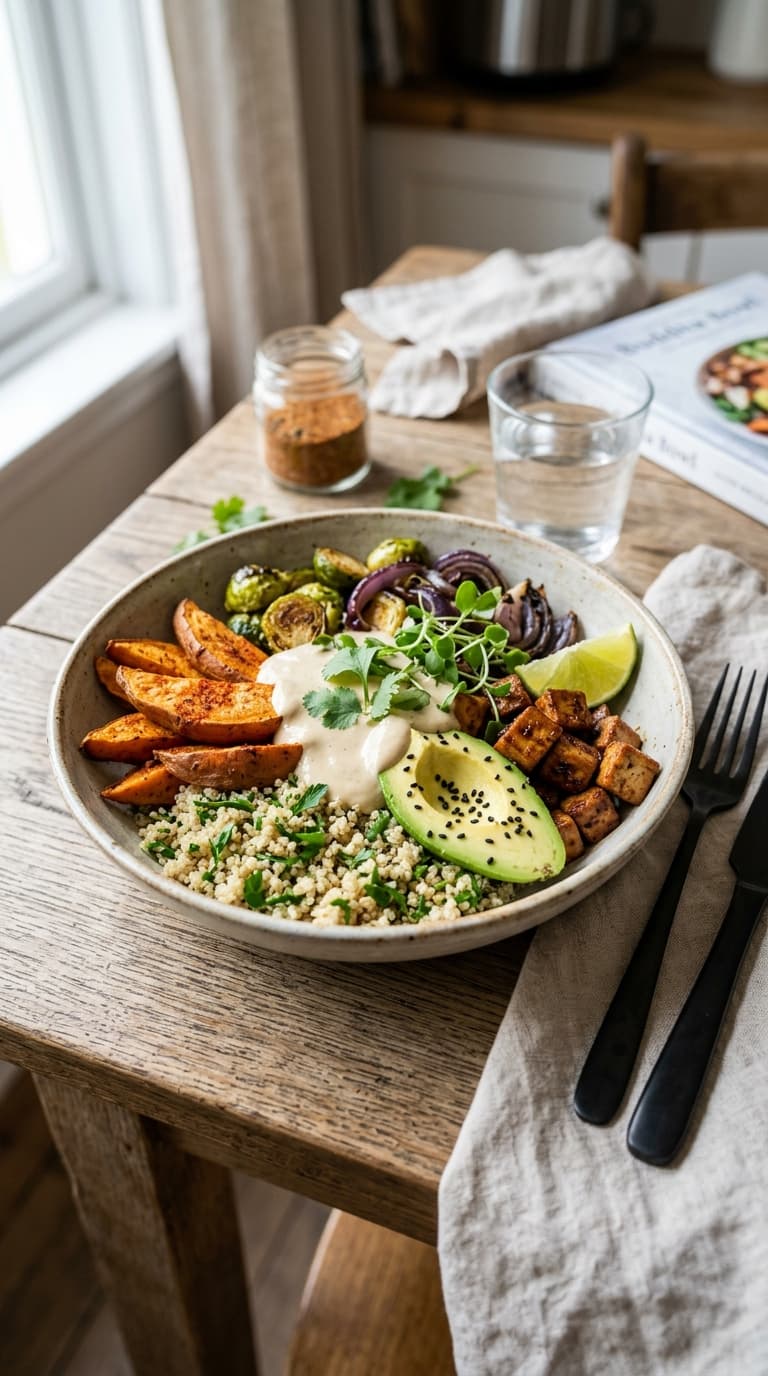
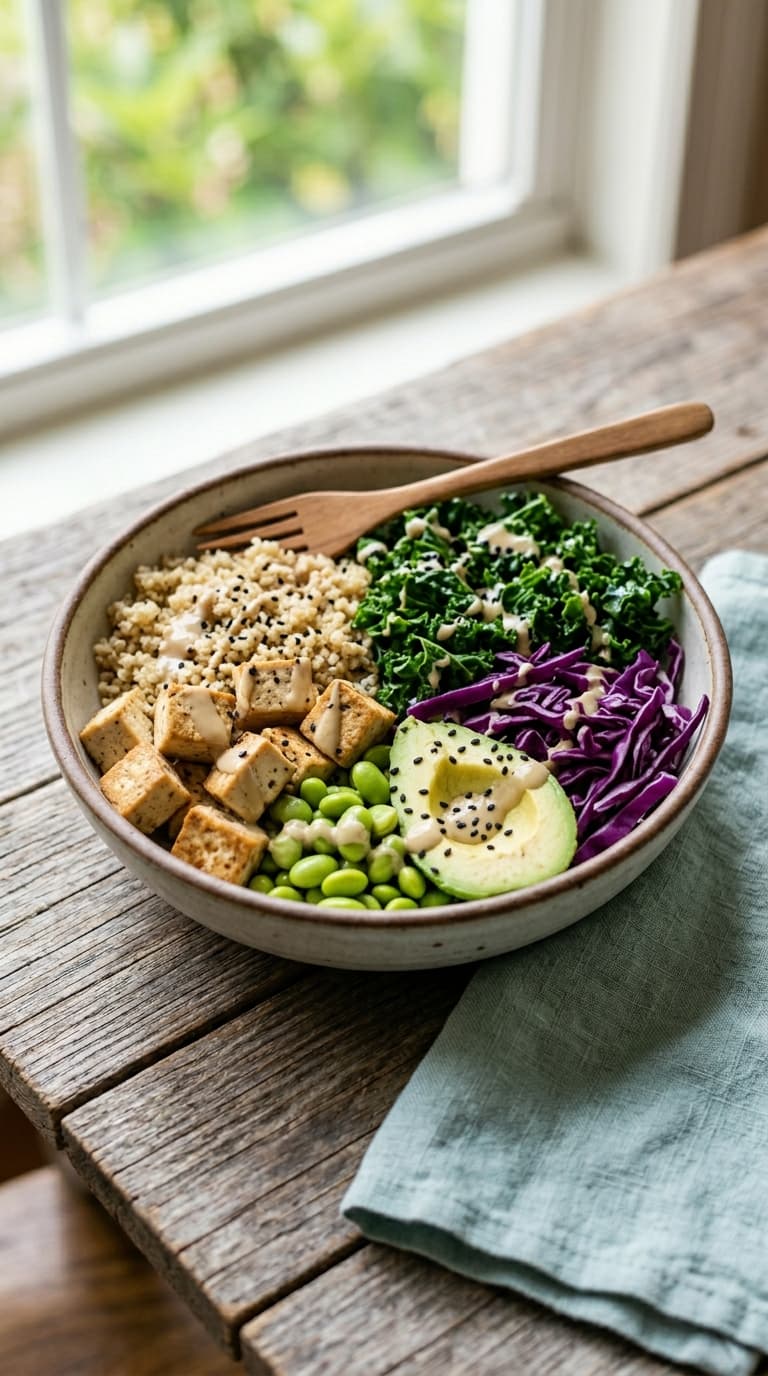
Cook quinoa and load a bowl with it alongside roasted sweet potato, steamed kale, sliced avocado, and cucumber. Drizzle with tahini dressing — tahini, lemon juice, garlic, and water blended together. Buddha bowls are wildly flexible, so use whatever vegetables you have on hand.
Dinner — Vegetable Curry with Chickpeas
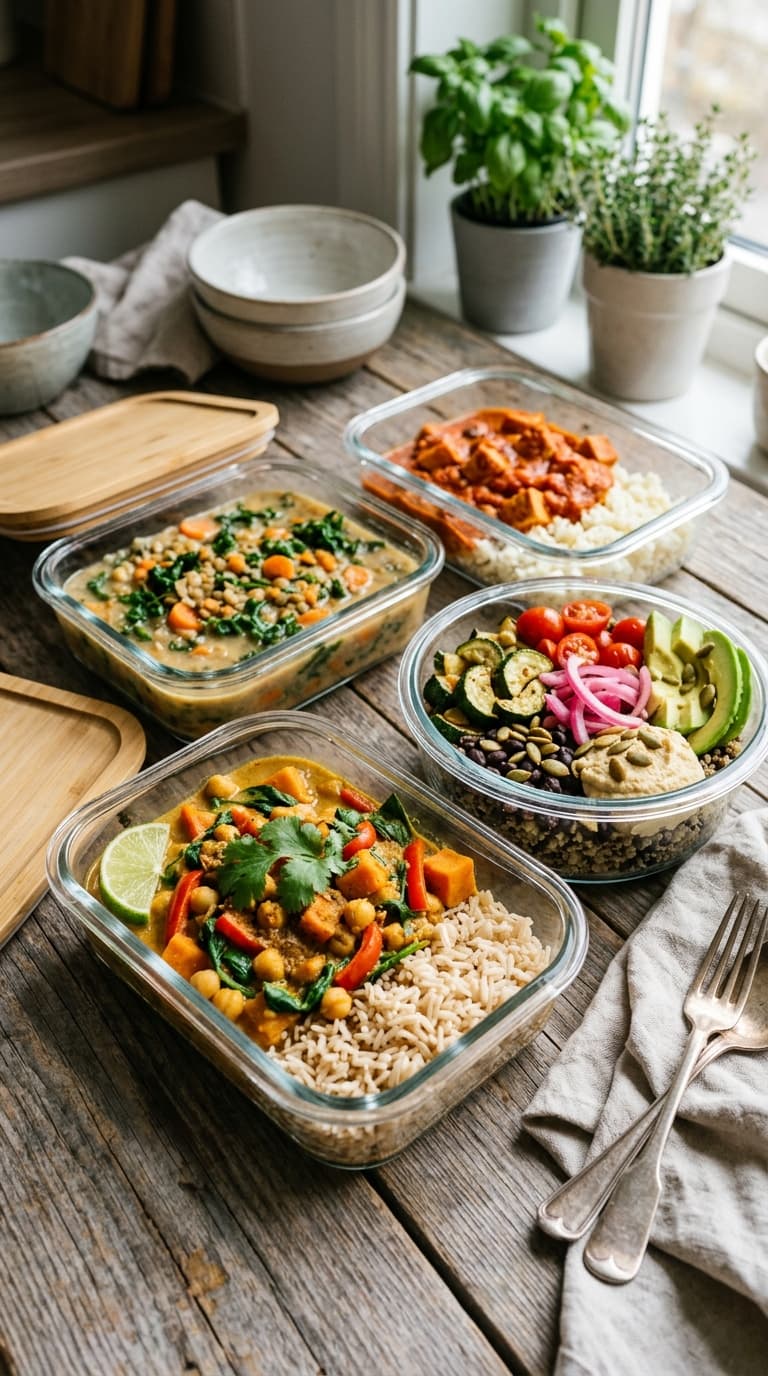
Sauté onion, garlic, and ginger, then add curry powder, canned tomatoes, coconut milk, chickpeas, and a bag of frozen spinach. Simmer for 15 minutes and serve over brown rice. FYI — this recipe tastes even better the next day, so make extra for lunch.
Day 5: Getting Creative
Breakfast — Avocado Toast with Seeds
Toast two slices of whole grain bread, mash a ripe avocado on top, season with salt, pepper, red pepper flakes, and lemon juice, then sprinkle with chia or hemp seeds. Add sliced tomato if you want. Classic for a reason.
Lunch — Leftover Curry Bowl
This is where meal prepping pays off. Reheat yesterday’s curry, maybe add some fresh greens, and lunch is done in three minutes. Efficient cooking is smart cooking.
Dinner — Stuffed Bell Peppers
Halve and deseed bell peppers. Fill them with a mixture of cooked brown rice, black beans, diced tomatoes, corn, cumin, and garlic. Bake at 375°F for 25–30 minutes until the peppers are tender. Top with salsa or a squeeze of lime. These look impressive and taste even better.
Day 6: Weekend Vibes
Breakfast — Tofu Scramble
Crumble firm tofu into a pan with olive oil, diced onion, bell pepper, and spinach. Season with turmeric (for color), nutritional yeast, garlic powder, and soy sauce. Cook until slightly golden. This is the vegan answer to scrambled eggs and it genuinely hits different on a weekend morning.
Lunch — Big Grain Bowl with Roasted Vegetables
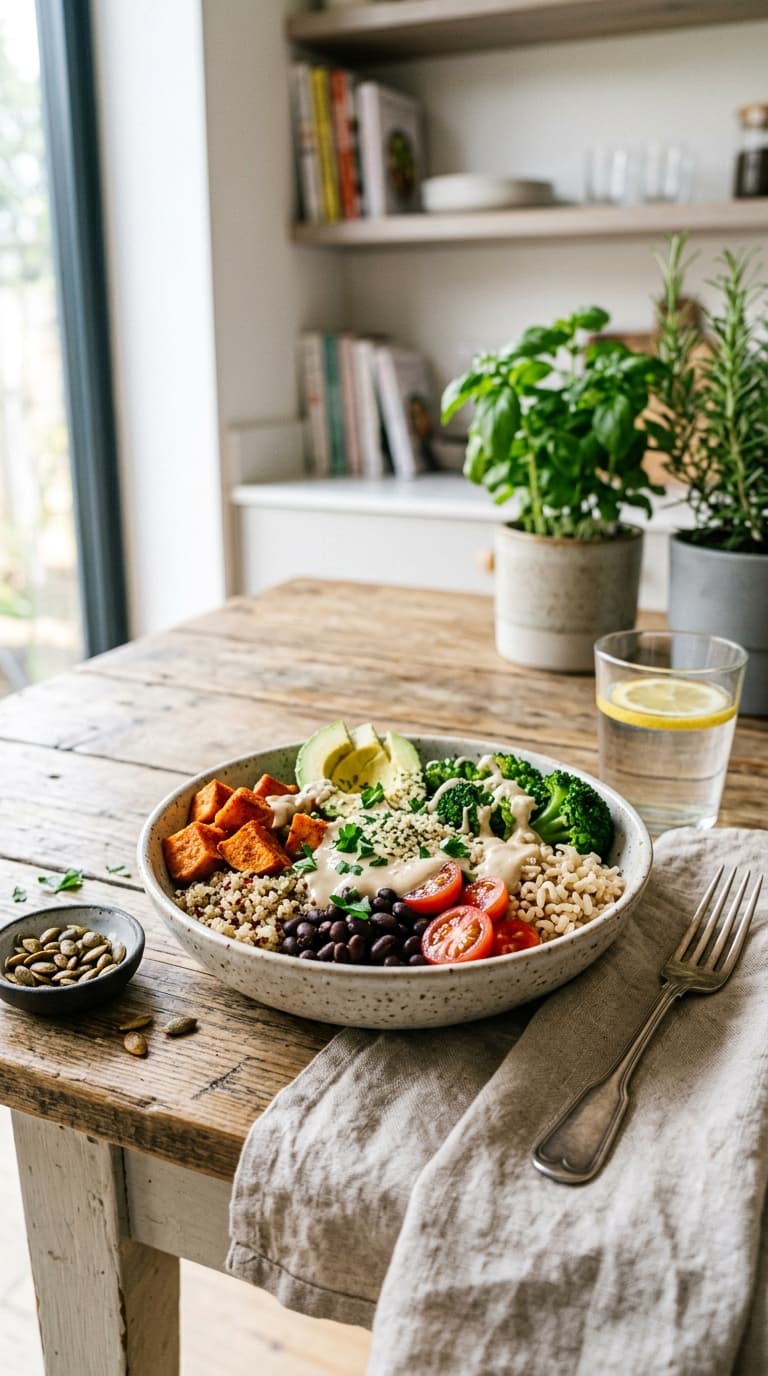
Roast whatever vegetables you have — sweet potato, broccoli, zucchini, red onion — and serve over quinoa or brown rice with a drizzle of tahini dressing and a handful of pumpkin seeds. Grain bowls are endlessly customizable, which makes them perfect for cleaning out the fridge.
Dinner — Pasta with White Beans and Greens
Cook whole wheat pasta and toss it with sautéed garlic, white beans, kale, cherry tomatoes, and a splash of vegetable broth with nutritional yeast stirred through. It’s creamy without being heavy, and it comes together in under 20 minutes. This one earns a permanent spot in your rotation.
Day 7: Finishing Strong
Breakfast — Warm Oatmeal with Walnuts and Apple
Cook rolled oats in plant milk, top with diced apple, cinnamon, walnuts, and a drizzle of almond butter. It’s cozy, filling, and about as wholesome as breakfast gets.
Lunch — Lentil and Vegetable Soup
Make a big pot of soup with green lentils, carrots, celery, potato, onion, garlic, and diced tomatoes. Season with smoked paprika and thyme. This is the kind of soup that makes you feel looked after. Serve with whole grain bread and appreciate how far you’ve come in seven days.
Dinner — Celebration Veggie Bowl
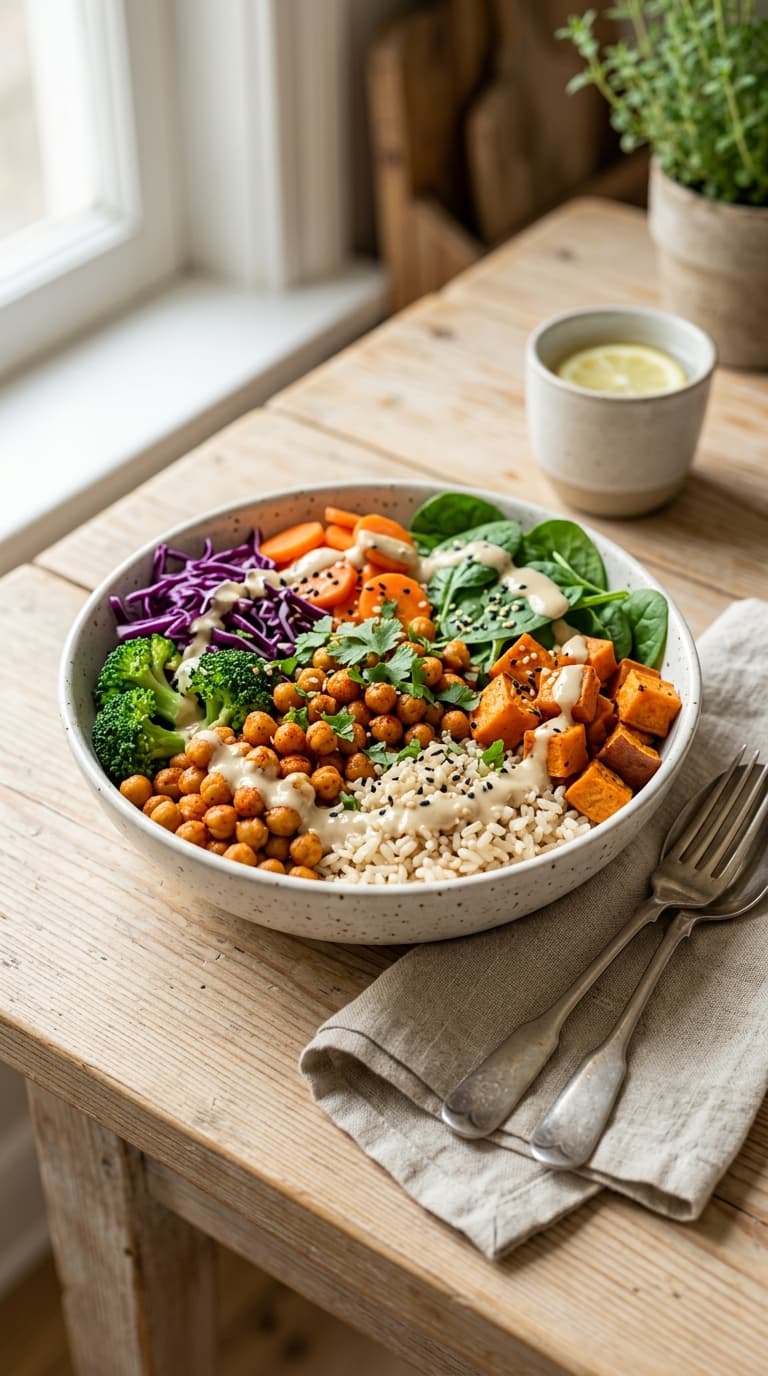
You made it through a whole week — celebrate with something colorful. Build a bowl with brown rice, roasted sweet potato, crispy chickpeas (roast canned chickpeas with olive oil and smoked paprika until crunchy), avocado, cucumber, shredded red cabbage, and your favorite dressing. Take a moment to appreciate that this meal is genuinely delicious and happens to be 100% plant-based.
Nutrients to Pay Attention To
Going vegan doesn’t mean you automatically get healthy — you still need to think about a few key nutrients. Here’s what to keep on your radar:
- Protein: Beans, lentils, tofu, tempeh, quinoa, and edamame all deliver solid protein. Combine different sources throughout the day and you’re covered.
- Iron: Lentils, chickpeas, spinach, and pumpkin seeds are great sources. Pair them with vitamin C-rich foods (lemon juice, bell peppers, tomatoes) to boost absorption.
- Calcium: Fortified plant milks, tofu made with calcium sulfate, almonds, and kale all contribute to your daily calcium intake.
- Vitamin B12: This is the one you genuinely can’t get reliably from whole plant foods alone. Take a B12 supplement — no exceptions, no workarounds. It’s non-negotiable for long-term vegan health.
- Omega-3s: Flaxseeds, chia seeds, walnuts, and hemp seeds provide ALA, the plant form of omega-3s. Consider an algae-based DHA/EPA supplement for more complete coverage.
Tips to Actually Stick With It
Here’s the thing — knowing what to eat is step one. Actually doing it consistently is step two. A few habits that make plant-based eating feel effortless:
- Batch cook on Sundays. Make a big pot of grains, a pot of legumes, and roast a tray of vegetables. Weekday meals become assembly projects, not cooking projects.
- Keep snacks simple. Apple with almond butter, a handful of nuts, hummus with carrot sticks — whole food snacks don’t need to be complicated.
- Season boldly. Bland vegan food is a cooking problem, not a vegan problem. Spices, acids (lemon, vinegar), and aromatics (garlic, ginger) transform simple ingredients.
- Don’t aim for perfect. If day three doesn’t go as planned, day four is right there waiting. This plan is a starting point, not a rigid prescription.
The Honest Truth About Week One
Your body might feel a little different during the first few days — some people notice more energy, others feel slightly bloated as their gut adjusts to more fiber. Both are normal. Drink plenty of water and give your digestive system a week to adapt before you judge how you feel.
What most people find after seven days :/? They miss the simplicity. Real food cooked from scratch is genuinely satisfying in a way that processed food never quite manages. And once you’ve made dal, curry, and a buddha bowl from scratch, you realize that vegan cooking isn’t restrictive — it’s actually incredibly creative.
Wrapping It Up
Seven days of whole food, plant-based eating isn’t a sacrifice — it’s an education. You learn what real food tastes like, how to season and layer flavors, and how much your body actually thrives when you feed it ingredients it recognizes. This meal plan gives you a foundation, not a life sentence. Use it, adapt it, swap ingredients based on what you love, and make it yours.
The best vegan meal plan isn’t the most complicated one — it’s the one you’ll actually stick to. Now go make that dal. You won’t regret it.