Doctor-Recommended 7-Day DASH Diet Plan (Cardiologist’s Pick!)
Doctor-Recommended 7-Day DASH Diet Plan (Cardiologist’s Pick!)
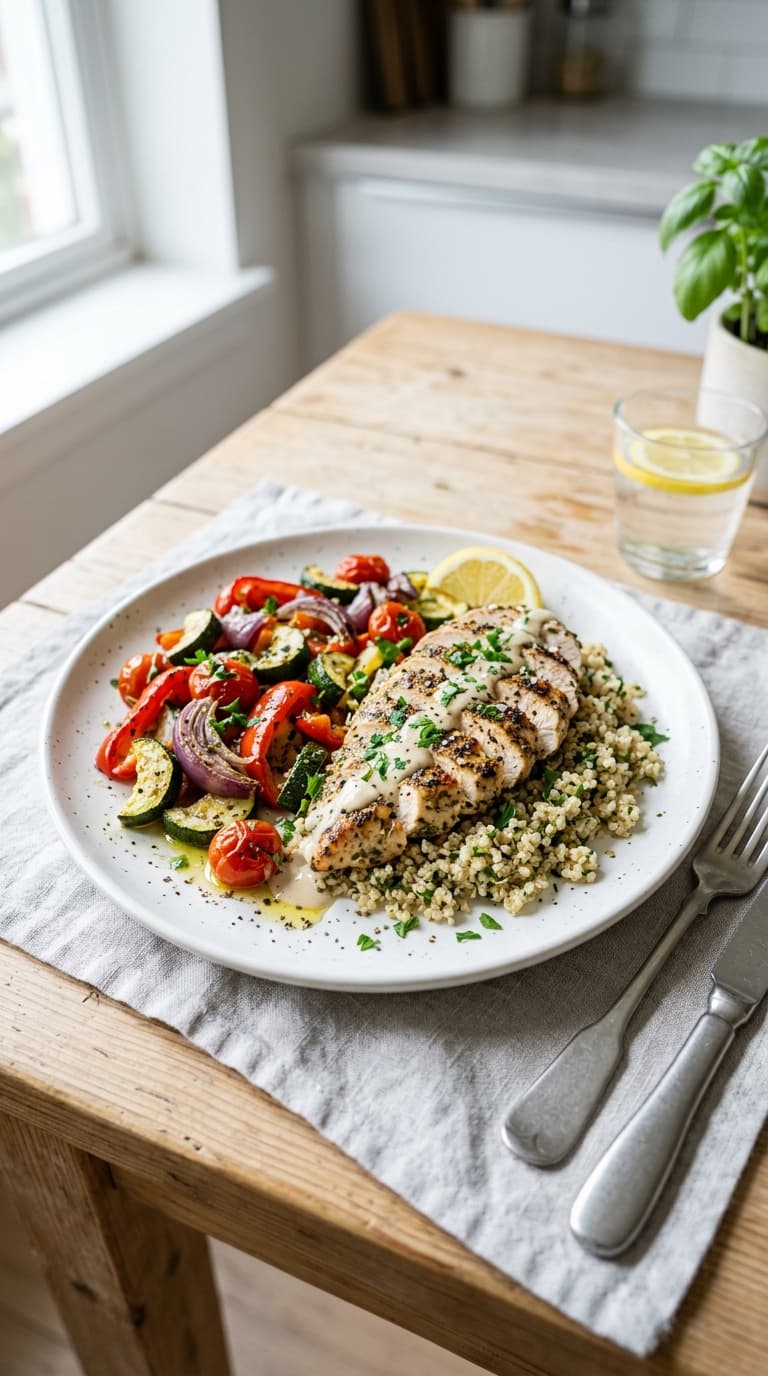
Your doctor just told you to “watch your blood pressure” — and now you’re staring at the fridge wondering if celery sticks are your new best friend. Sound familiar? Well, good news: the DASH diet isn’t the punishment you think it is. Cardiologists have been recommending it for decades because it actually works, and more importantly, you can eat real food on it. Let me walk you through a full 7-day plan that a cardiologist would genuinely be proud of.
What Exactly Is the DASH Diet (And Why Should You Care)?
DASH stands for Dietary Approaches to Stop Hypertension. It was originally developed by researchers funded by the National Heart, Lung, and Blood Institute, and it’s consistently ranked as one of the best overall diets in the world. Not because it’s trendy — but because the science is rock solid.
The core idea is simple: eat more whole foods, cut back on sodium, and load up on nutrients like potassium, magnesium, and calcium. These nutrients naturally help relax blood vessels and lower blood pressure. No magic pills, no weird powders — just food doing what food is supposed to do.
IMO, what makes DASH stand out from every other diet out there is that it doesn’t eliminate entire food groups. You’re not cutting carbs, going carnivore, or surviving on shakes. You’re just eating smarter.
What Cardiologists Actually Say About It
Here’s something most diet articles skip over — cardiologists don’t recommend fad diets. They recommend DASH because clinical trials show it can lower systolic blood pressure by 8–14 mm Hg, which is comparable to some medications. That’s a big deal.
Cardiologists also love DASH because it supports heart health beyond just blood pressure. It reduces LDL cholesterol, lowers inflammation markers, and supports healthy weight management. And patients actually stick to it — which is the real win.
Ever wondered why so many heart patients come home from the hospital with a DASH diet pamphlet? Because it works across the board, not just for one specific issue.
The DASH Diet Ground Rules
Before we get to the meal plan, let’s set the foundation. These aren’t complicated — promise.
Daily nutrient targets on DASH:
- Sodium: 1,500–2,300 mg per day (aim for the lower end if you have hypertension)
- Potassium: 4,700 mg
- Calcium: 1,250 mg
- Magnesium: 500 mg
- Fiber: 30 grams
Daily food servings to aim for:
- Grains: 6–8 servings (whole grains preferred)
- Vegetables: 4–5 servings
- Fruits: 4–5 servings
- Low-fat dairy: 2–3 servings
- Lean protein (meat, poultry, fish): 6 or fewer servings
- Nuts, seeds, legumes: 4–5 per week
- Fats and oils: 2–3 servings
- Sweets: 5 or fewer per week
That last one — yes, sweets are allowed. DASH isn’t a villain. 🙂
The 7-Day DASH Diet Meal Plan
Day 1 — Start Strong, Not Boring
Breakfast: Oatmeal topped with fresh blueberries and a drizzle of honey, plus a glass of low-fat milk.
Lunch: Grilled chicken breast on whole-grain bread with avocado, romaine lettuce, tomato, and a squeeze of lemon instead of mayo.
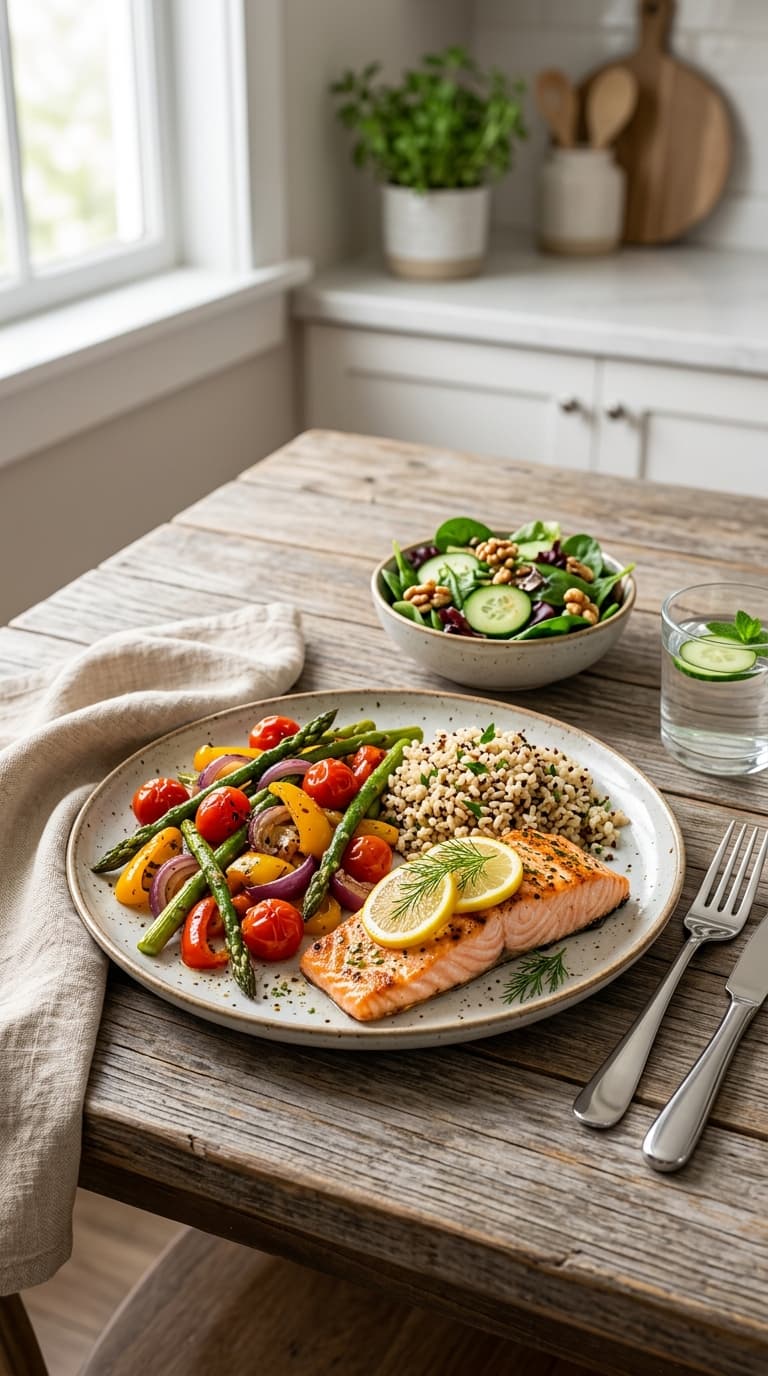
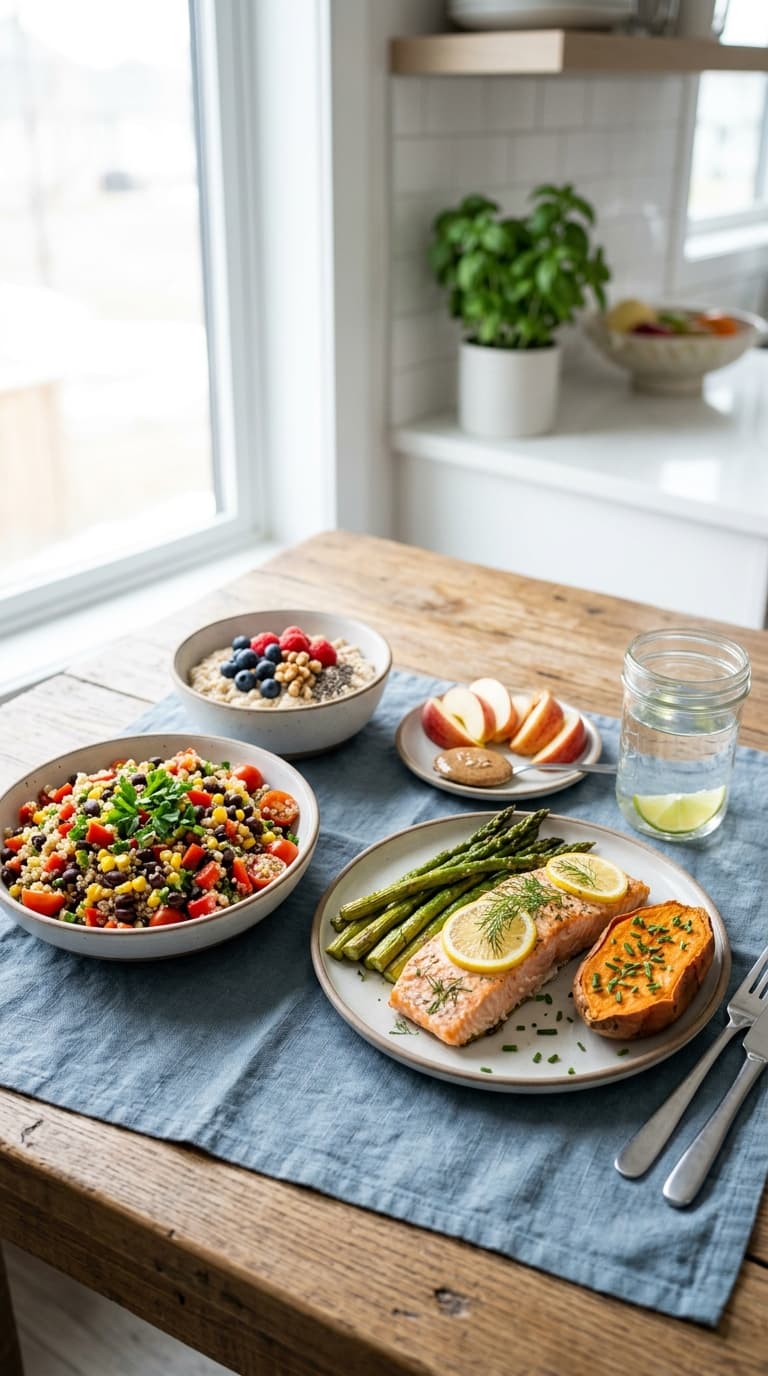
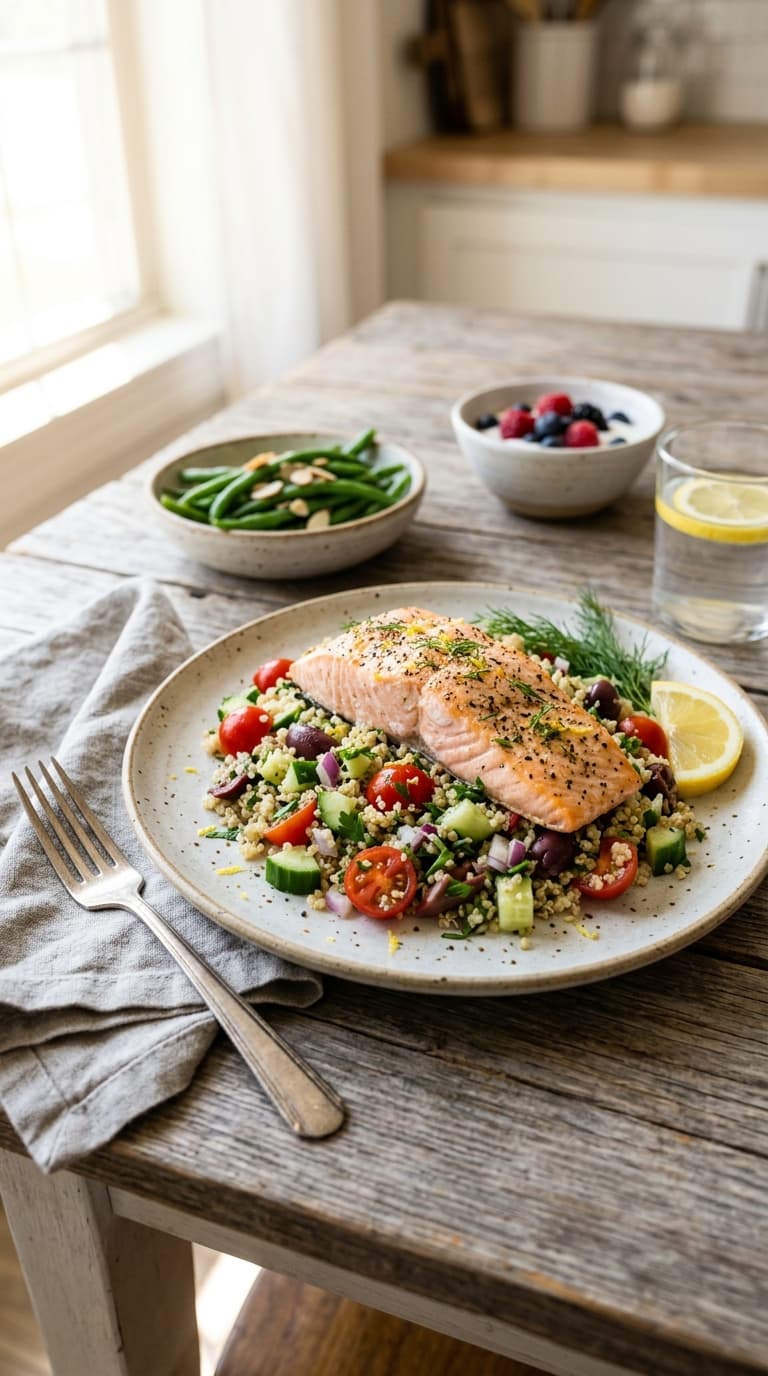
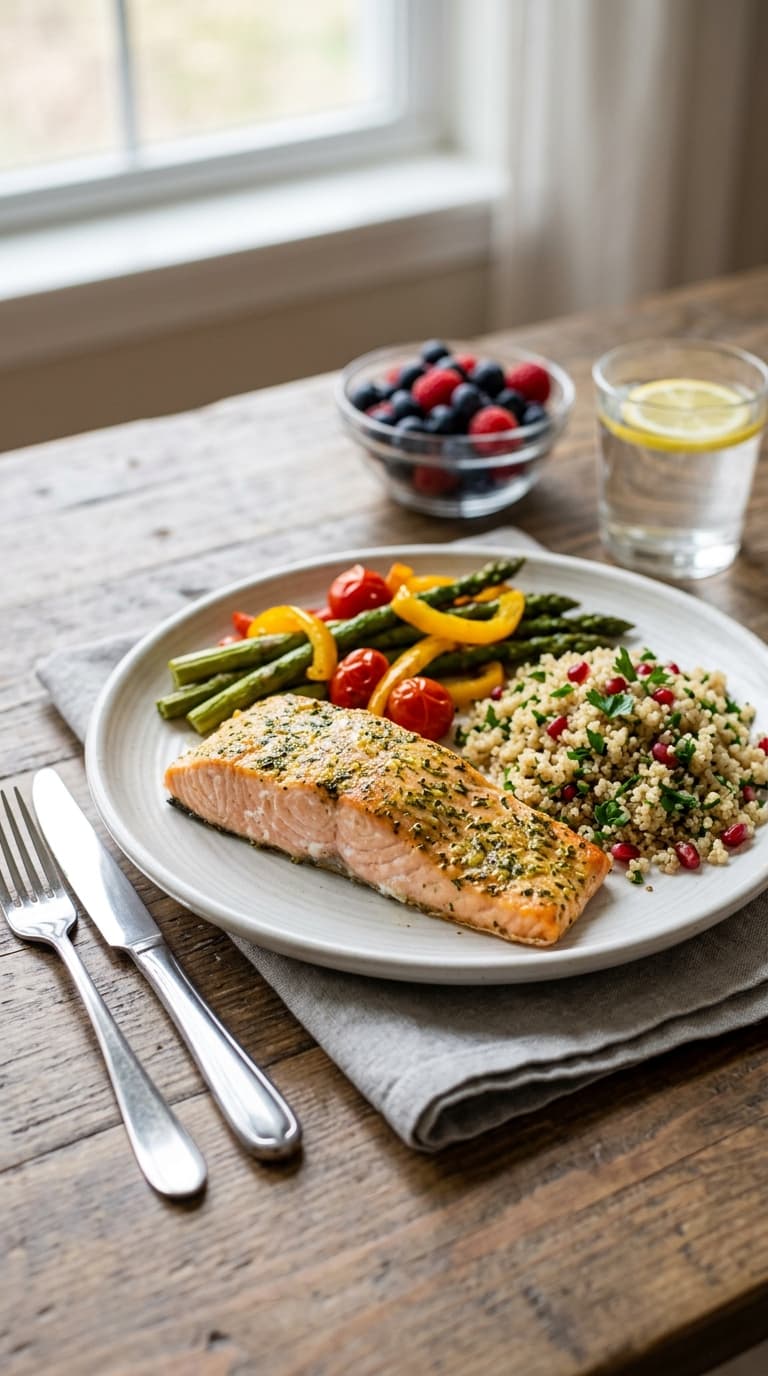
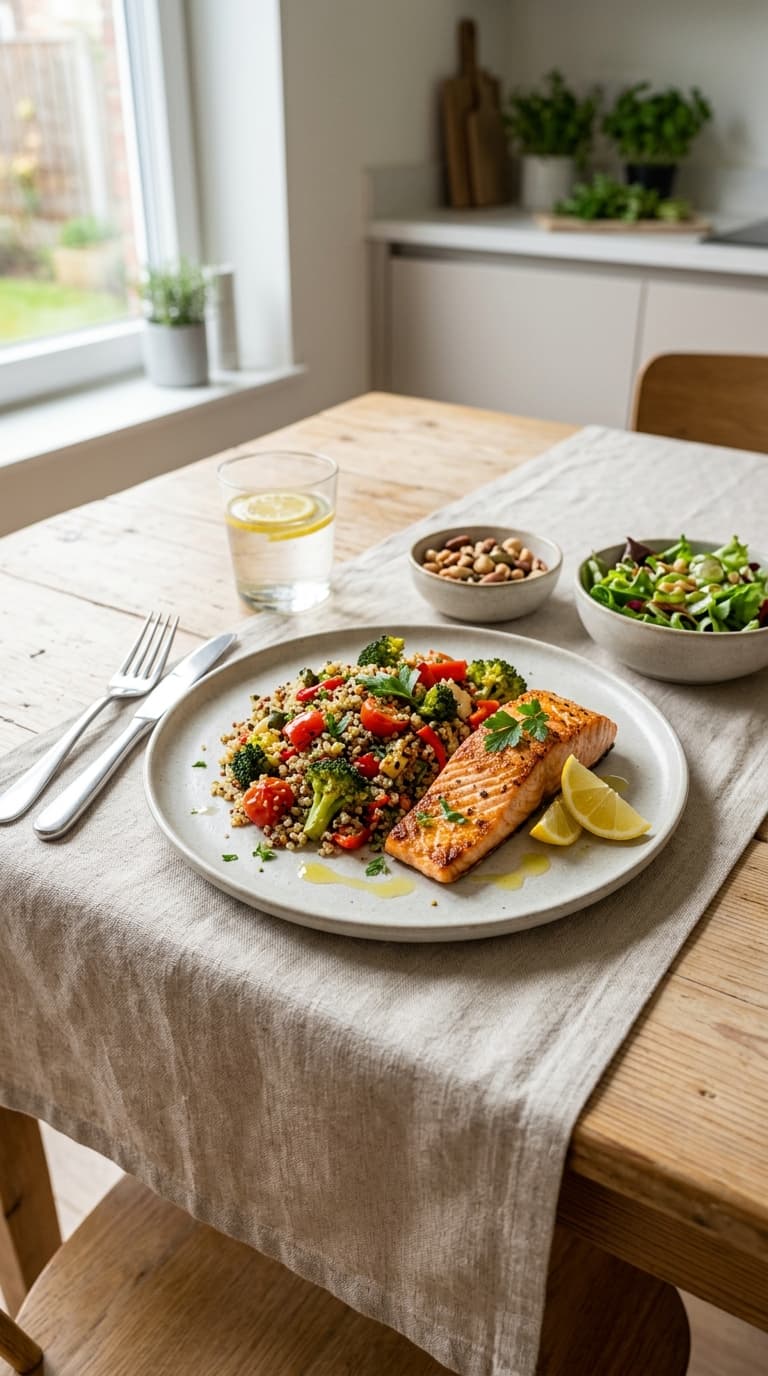
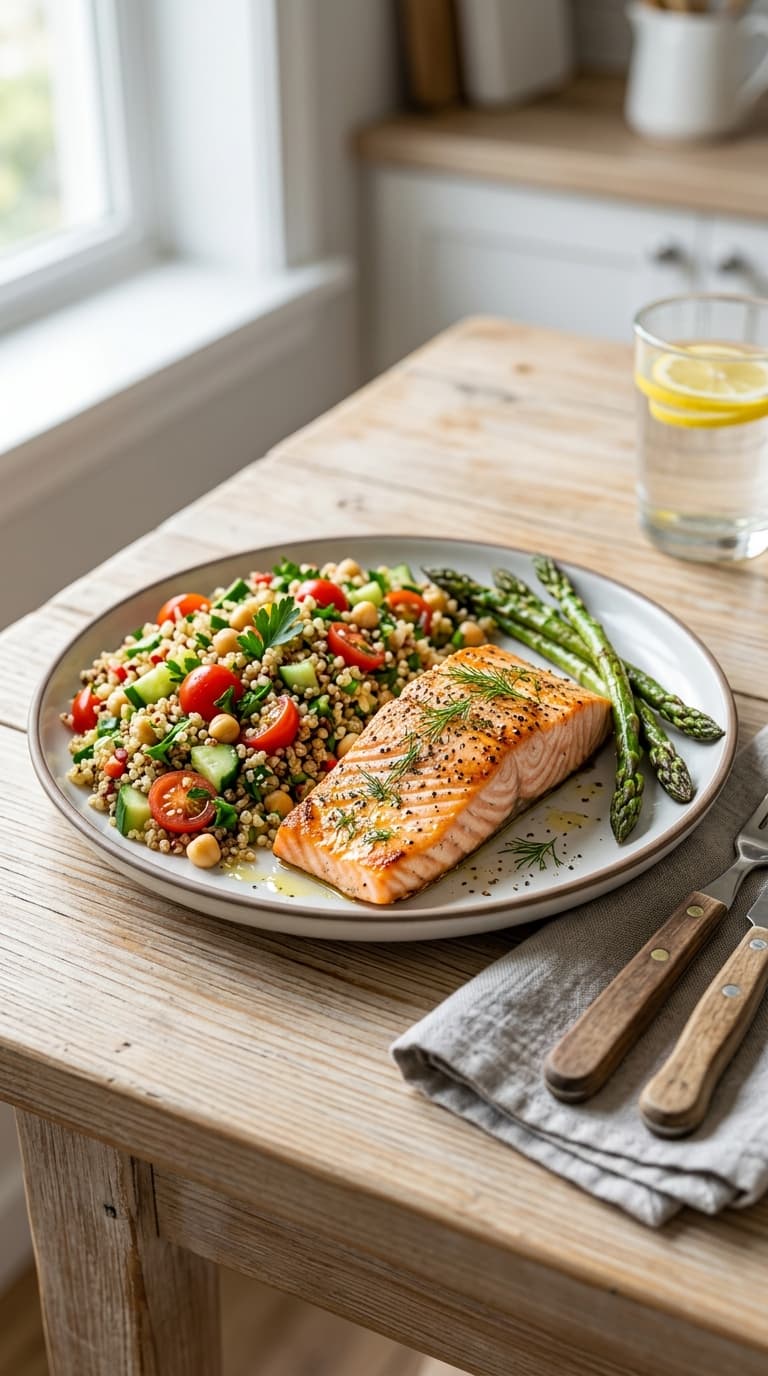
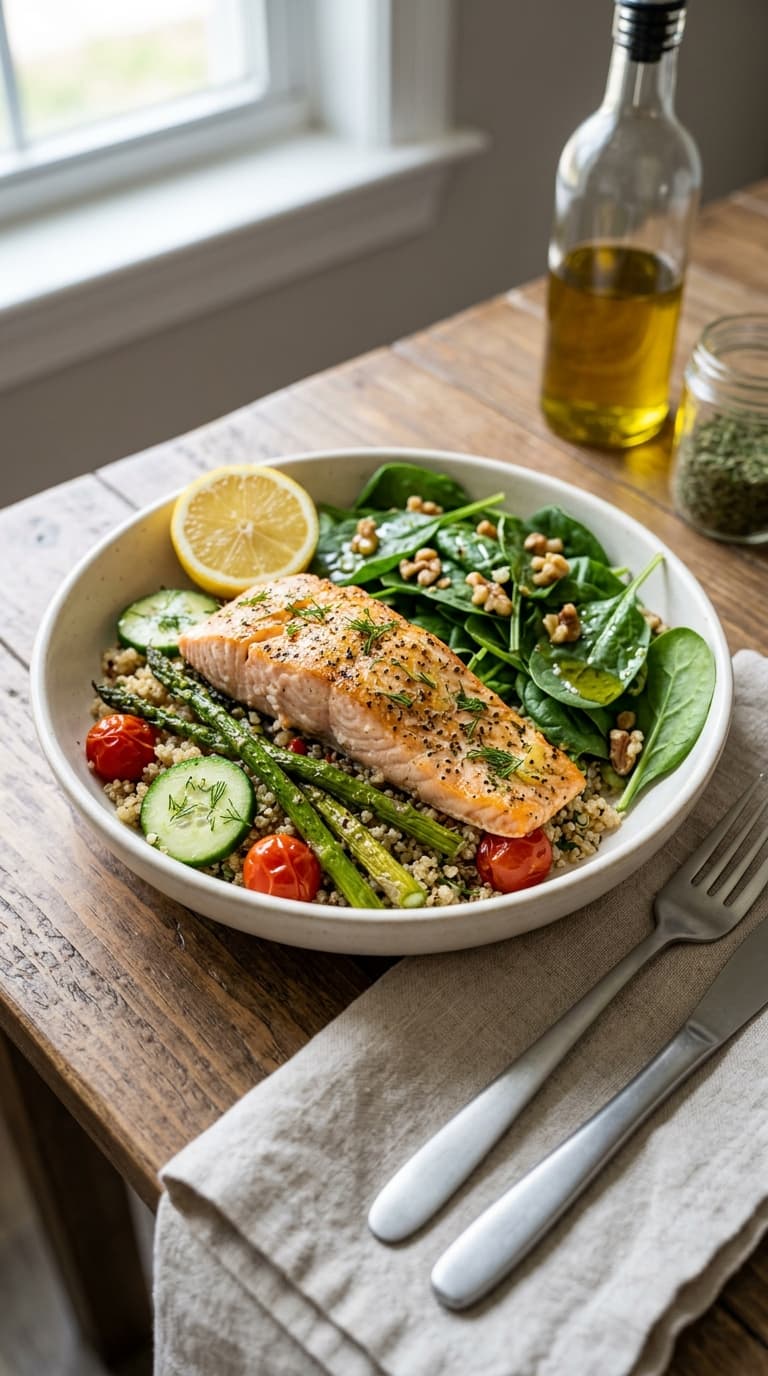
Dinner: Baked salmon with roasted sweet potato and steamed broccoli. Season with garlic, lemon, and herbs — not salt.
Snack: A small handful of unsalted almonds and a banana.
Why it works: This day hits your potassium and omega-3 goals hard from day one, setting a strong metabolic tone for the week.
Day 2 — Keep the Momentum Going
Breakfast: Greek yogurt (low-fat) with sliced strawberries and a tablespoon of ground flaxseed.
Lunch: Lentil soup with a side of whole-grain crackers and a small green salad dressed with olive oil and vinegar.
Dinner: Stir-fried tofu with mixed bell peppers, snap peas, and brown rice. Use low-sodium soy sauce sparingly.
Snack: Apple slices with natural almond butter.
Why it works: Day 2 introduces plant-based protein, which cardiologists consistently highlight as beneficial for long-term heart health.
Day 3 — Midweek Power Plate
Breakfast: Two scrambled eggs with spinach and diced tomatoes, served with one slice of whole-grain toast.
Lunch: Quinoa bowl with roasted chickpeas, cucumber, cherry tomatoes, and a tahini-lemon dressing.
Dinner: Baked chicken thighs (skinless) with mashed cauliflower and a side of steamed green beans.
Snack: Low-fat cottage cheese with pineapple chunks.
Why it works: You’re getting fiber, lean protein, and calcium all in one day — that’s the DASH trifecta right there.
Day 4 — The Halfway Point (Treat Yourself, Responsibly)
Breakfast: Whole-grain pancakes topped with mixed berries and a dollop of low-fat yogurt instead of syrup.
Lunch: Turkey and vegetable wrap in a whole-wheat tortilla with hummus, shredded carrots, and spinach.
Dinner: Grilled tilapia with a mango salsa, wild rice, and roasted asparagus.
Snack: A small square of dark chocolate (70%+ cacao) and a few walnuts.
Yes, dark chocolate. Told you DASH wasn’t punishment :/
Why it works: You hit the sweet craving without wrecking your sodium or sugar intake, and tilapia brings in lean protein without the saturated fat load.
Day 5 — Fiber Friday (Even If It’s Not Friday)
Breakfast: Whole-grain cereal with low-fat milk, topped with sliced banana and a sprinkle of chia seeds.
Lunch: Black bean and vegetable burrito bowl — brown rice, black beans, salsa, shredded lettuce, and a small scoop of avocado.
Dinner: Lean beef stir-fry with broccoli, mushrooms, and snap peas over brown rice. Keep the soy sauce low-sodium.
Snack: Celery sticks with hummus (yes, celery — but at least you’ve got hummus to make it bearable).
Why it works: The fiber load today helps reduce LDL cholesterol, which is one of the secondary goals cardiologists love about DASH.
Day 6 — Weekend Feels, DASH Style
Breakfast: Smoothie made with low-fat milk, frozen mango, spinach, and a tablespoon of flaxseed.
Lunch: Homemade vegetable soup with a whole-grain roll. Load it up — carrots, celery, tomatoes, zucchini, barley.
Dinner: Herb-crusted baked cod with roasted Brussels sprouts and a baked potato (eat the skin — that’s where the potassium lives).
Snack: A small bowl of mixed fresh fruit.
Why it works: Weekend meals tend to drift toward takeout and heavy food. Keeping Day 6 intentional helps you finish the week strong without feeling deprived.
Day 7 — Finish the Week Like a Pro
Breakfast: Veggie omelet with mushrooms, spinach, and feta cheese (low-sodium), served with a slice of whole-grain toast.
Lunch: Salad with grilled shrimp, mixed greens, avocado, mandarin oranges, and a light citrus vinaigrette.
Dinner: Slow-cooked chicken and vegetable stew with kidney beans and whole-grain dinner rolls.
Snack: Low-fat yogurt with a teaspoon of honey and crushed walnuts.
Why it works: You finish the week with a high-fiber, high-protein, anti-inflammatory day. Your heart will genuinely thank you.
Sodium Swaps That Make a Real Difference
One of the biggest challenges people face on DASH is cutting sodium without feeling like their food tastes like cardboard. FYI, here are some easy swaps that cardiologists actually suggest:
- Swap table salt → Use herbs like oregano, basil, thyme, cumin, or rosemary
- Swap canned vegetables → Use fresh or frozen (no salt added)
- Swap soy sauce → Use low-sodium soy sauce or coconut aminos
- Swap deli meats → Use freshly cooked, sliced chicken or turkey
- Swap store-bought dressings → Make your own with olive oil, lemon, and herbs
- Swap chips and crackers → Go for unsalted nuts or fresh veggies
The flavor adjustment takes about two weeks. After that, salty processed food actually starts tasting too salty. Your taste buds recalibrate — it’s genuinely fascinating.
Common DASH Diet Mistakes (Don’t Be That Person)
Even people who try DASH make a few classic blunders. Here’s what to avoid:
Mistake #1: Going too low on calories. DASH is not a calorie-restriction diet. If you’re hungry all the time, you’re doing it wrong.
Mistake #2: Ignoring portion sizes on “healthy” foods. Whole-grain bread is great — three slices at every meal is a bit much.
Mistake #3: Replacing salt with high-sodium condiments. Ketchup, soy sauce, and teriyaki sauce can wreck your sodium budget fast. Check those labels.
Mistake #4: Skipping the dairy. A lot of people cut dairy thinking it’s unhealthy. On DASH, low-fat dairy is a key source of calcium and helps lower blood pressure.
Mistake #5: Expecting overnight results. Blood pressure changes take 2–4 weeks of consistent DASH eating to show up. Stick with it.
Who Benefits Most From the DASH Diet?
DASH works for pretty much everyone, but cardiologists especially recommend it for:
- People with high blood pressure or prehypertension
- Those with a family history of heart disease
- People managing type 2 diabetes (DASH also improves insulin sensitivity)
- Anyone looking to reduce their cardiovascular risk long-term
- People coming off a high-sodium, processed-food diet
The American Heart Association endorses DASH as one of the most evidence-based dietary patterns for heart health — and they’re not exactly known for handing out compliments easily.
Quick Tips to Stay on Track All Week
- Meal prep on Sunday — chop vegetables, cook grains, and portion snacks so you’re not making decisions when you’re tired or hungry
- Read nutrition labels — specifically sodium content, every single time
- Drink more water — hydration supports kidney function and blood pressure regulation
- Track your sodium for the first two weeks using a free app like MyFitnessPal so you actually know where you stand
- Don’t skip meals — it leads to overeating and poor food choices later in the day
Wrapping It Up
Here’s the bottom line: the DASH diet isn’t a diet in the restrictive, miserable sense of the word. It’s a way of eating that your cardiologist recommends because it genuinely lowers blood pressure, supports heart health, and is sustainable long-term. The 7-day plan above gives you a real, practical starting point — not a fantasy meal plan that requires three hours of cooking every night.
You don’t need to be perfect. You need to be consistent. Start with this week, track how you feel, and adjust as you go. Your heart is doing a lot of work every single day — the least you can do is give it the fuel it deserves.
Now close this tab and go make that oatmeal. 🙂