7-Day Whole Food Plant-Based Meal Plan (WFPB Diet!)
7-Day Whole Food Plant-Based Meal Plan (WFPB Diet!)
So you’ve heard about the whole food plant-based diet and you’re thinking, “Okay, but what do I actually eat?” — been there. When I first stumbled into the WFPB world, I spent way too long staring at a half-empty fridge wondering if a handful of almonds and some sad lettuce counted as a meal. Spoiler: it doesn’t. But once I figured out the rhythm of this way of eating, it genuinely changed how I feel every single day. This 7-day meal plan is exactly what I wish someone had handed me at the start.
What Even Is the WFPB Diet?
Before we jump into the meal plan, let’s make sure we’re on the same page. A whole food plant-based diet focuses on eating foods as close to their natural state as possible — think vegetables, fruits, legumes, whole grains, nuts, and seeds. No processed junk, minimal oil, and zero animal products.
It’s not just another trendy diet, though. Research consistently shows that a well-planned WFPB diet supports heart health, healthy weight management, and reduced inflammation. And honestly? The food is way more exciting than people give it credit for.
The key difference between WFPB and regular veganism is that WFPB emphasizes whole, minimally processed foods — so vegan cookies and faux meat products don’t really fit the bill here. We’re talking real food, real flavors, real results.
Why Try a 7-Day Meal Plan?
Structure matters, especially when you’re making a big dietary shift. A 7-day plan gives you enough time to feel the difference without feeling overwhelmed by a month-long commitment. IMO, a week is the perfect test drive.
You get to experiment with flavors, figure out what works for your schedule, and build a small repertoire of go-to meals. By day 7, you’ll likely find yourself reaching for these foods naturally — not because you “have to,” but because your body starts genuinely craving them.
The goal here isn’t perfection. Miss a meal, swap a day, eat the same lunch three times — that’s completely fine. This plan is a guide, not a rulebook.
What to Stock Before You Start
Don’t set yourself up to fail by starting Day 1 with an empty pantry. Here’s what I always keep on hand:
- Grains: rolled oats, brown rice, quinoa, whole wheat pasta, farro
- Legumes: canned chickpeas, black beans, lentils (red and green), edamame
- Vegetables: sweet potatoes, spinach, kale, broccoli, zucchini, bell peppers, carrots
- Fruits: bananas, berries (fresh or frozen), apples, mangoes
- Nuts & Seeds: walnuts, chia seeds, flaxseeds, sunflower seeds, almond butter
- Flavor builders: nutritional yeast, tamari or low-sodium soy sauce, garlic, ginger, lemon, herbs and spices
Once you’ve got these basics, the meals practically build themselves. Well — almost. 🙂
Day 1: Ease Into It
Breakfast
Overnight oats are your best friend on busy mornings. Combine rolled oats with plant-based milk, chia seeds, a mashed banana, and a handful of blueberries. Let it sit overnight and grab it straight from the fridge. Zero cooking required — which is the kind of morning energy I can get behind.
Lunch
A big hearty lentil soup with carrots, celery, garlic, and diced tomatoes. Make a large batch because you’ll want leftovers. Season it with cumin, smoked paprika, and a squeeze of lemon at the end. That lemon hit is non-negotiable.
Dinner
Stuffed bell peppers loaded with brown rice, black beans, corn, diced tomatoes, and taco-style spices. Top them with a dollop of homemade cashew cream or just some fresh avocado. This one looks impressive and takes about 40 minutes — great for a first WFPB dinner that’ll make you feel like you actually know what you’re doing.
Day 2: Build the Momentum
Breakfast
Green smoothie bowl — blend spinach, frozen mango, banana, and a splash of plant-based milk until thick. Pour into a bowl and top with granola, sliced kiwi, and a sprinkle of flaxseeds. It’s colorful, filling, and takes maybe 5 minutes.
Lunch
Chickpea salad wrap using whole grain tortillas. Mash chickpeas with a fork, mix in diced celery, red onion, mustard, lemon juice, and fresh herbs. Stuff it into a tortilla with romaine and sliced tomatoes. This is genuinely one of my favorite quick lunches — it tastes way better than it sounds on paper.
Dinner
Stir-fried tofu with vegetables over brown rice. Use a sauce made from tamari, garlic, ginger, and a little maple syrup. Add broccoli, snap peas, and shredded carrots. Quick, satisfying, and packed with plant protein.
Day 3: Midweek Fuel
Ever notice how by Wednesday most people are reaching for the easiest, most comforting food possible? Plan for that.
Breakfast
Banana oat pancakes — just mashed banana, oats blended into flour, plant-based milk, and a pinch of cinnamon. Cook on a non-stick pan and top with fresh berries and a drizzle of pure maple syrup. These are so good they feel like cheating.
Lunch
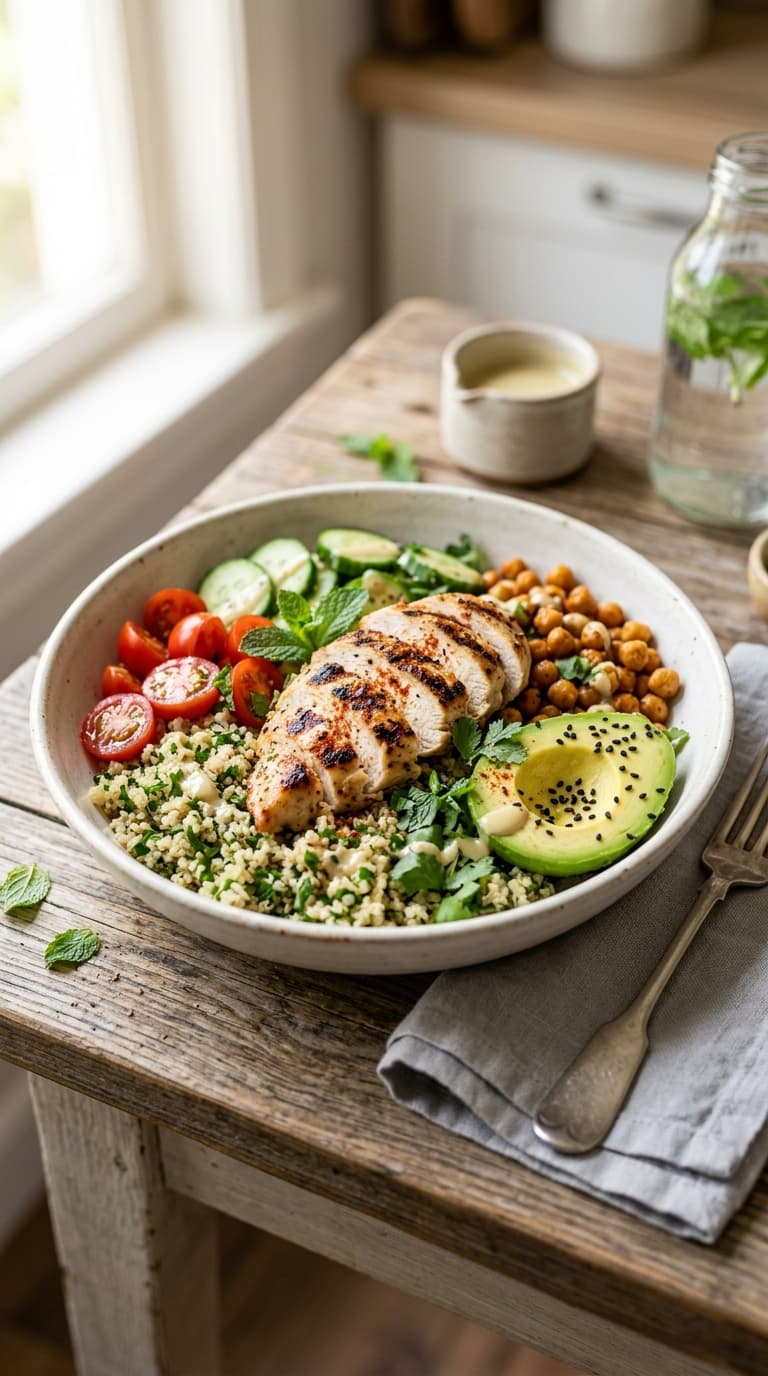
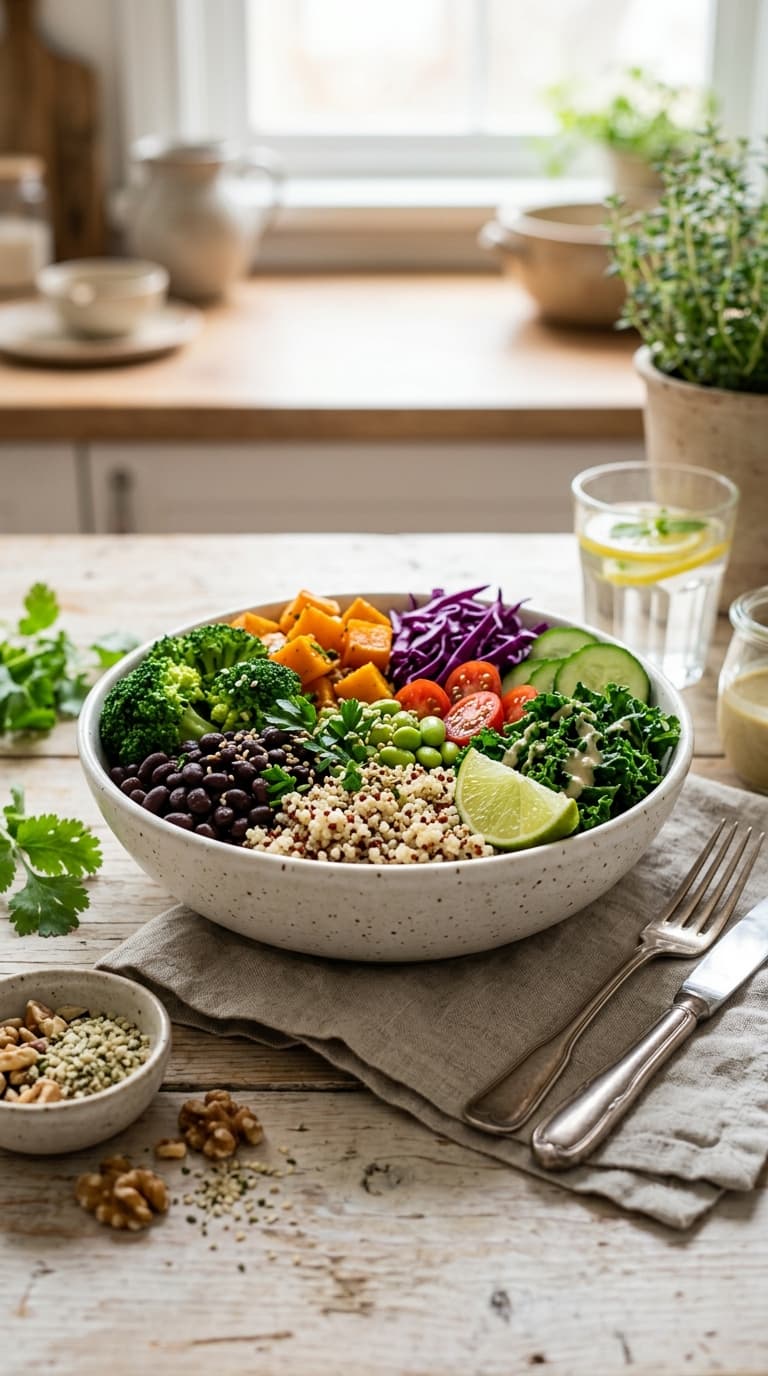
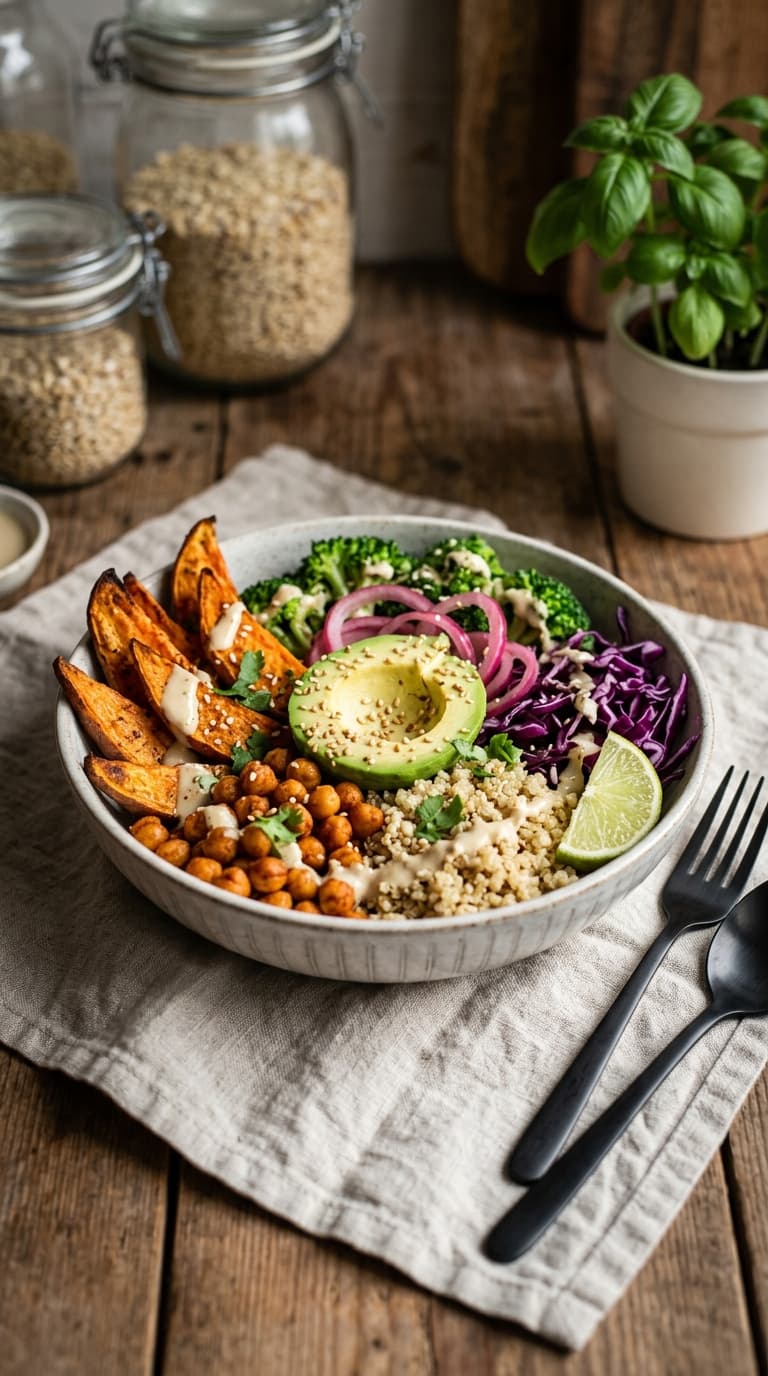
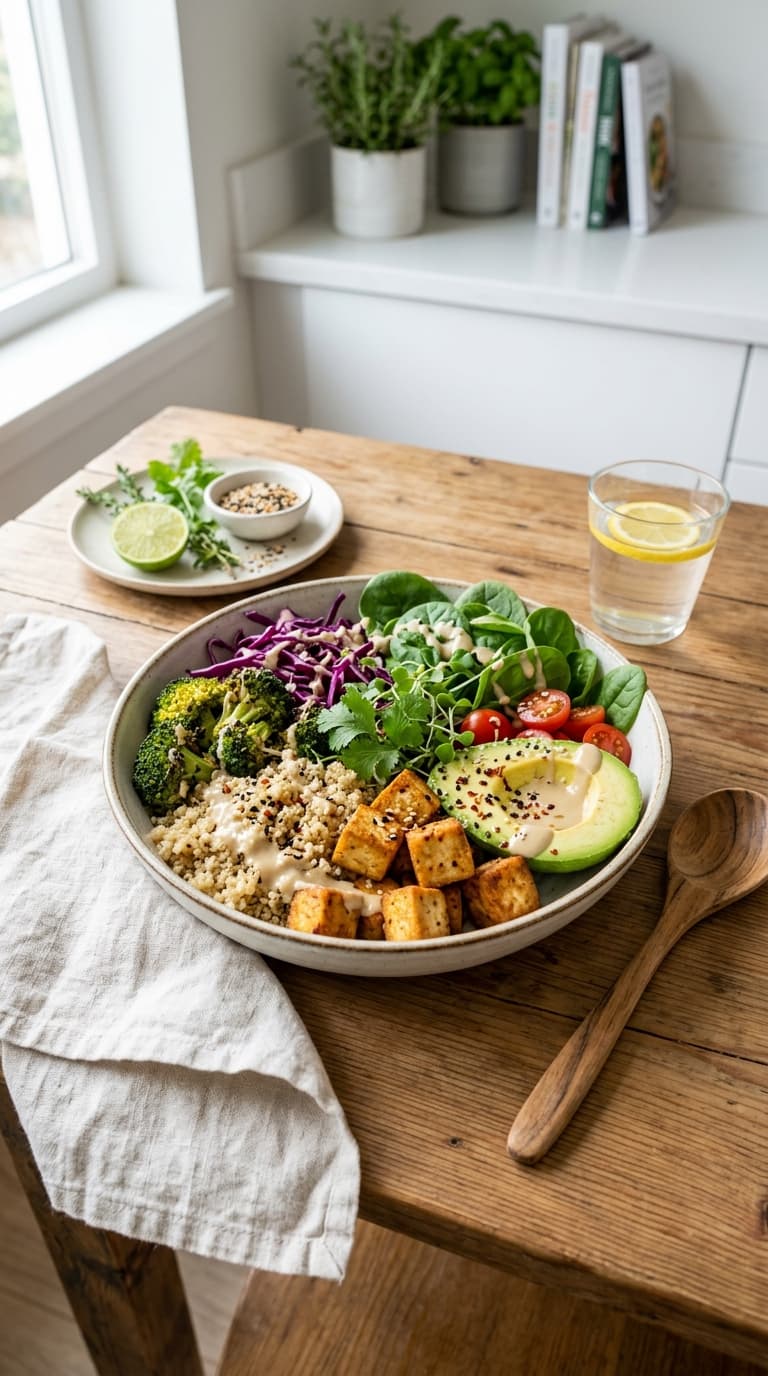
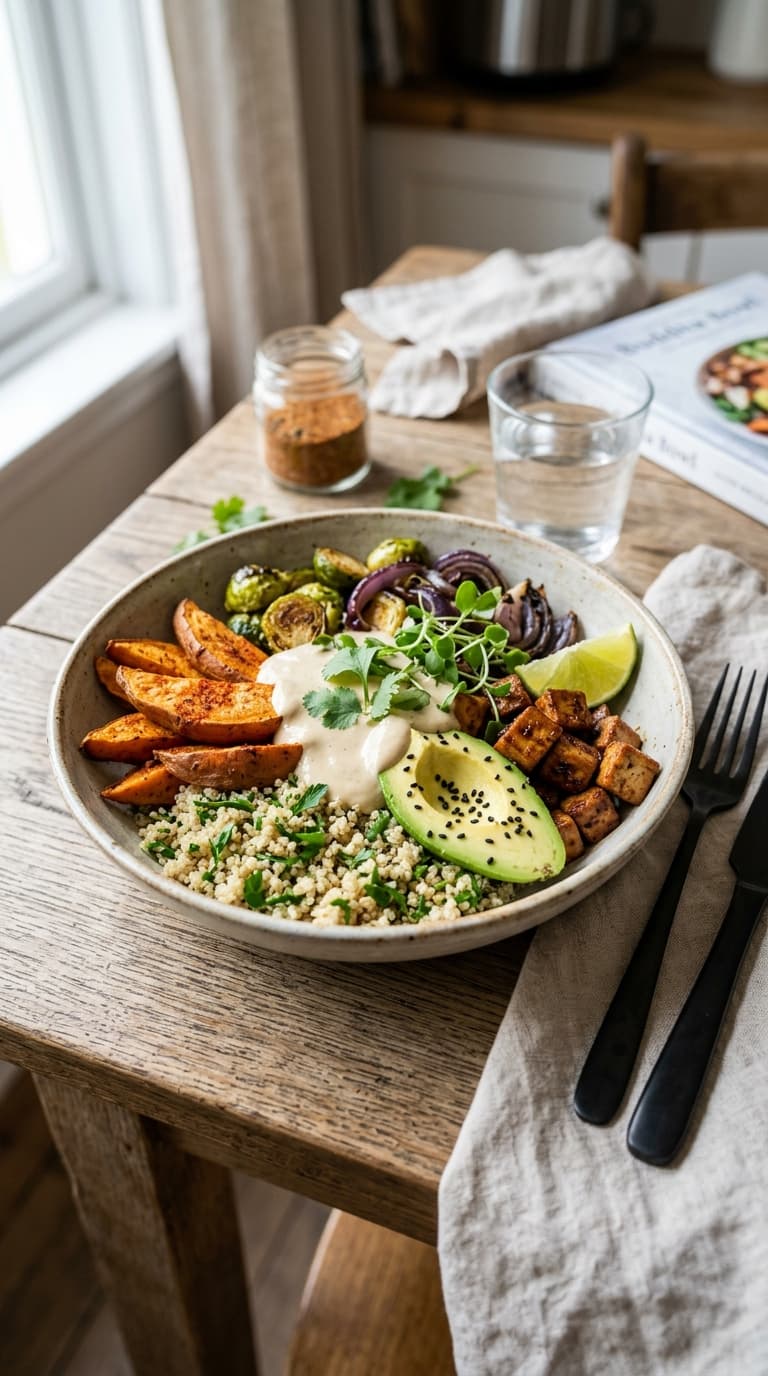
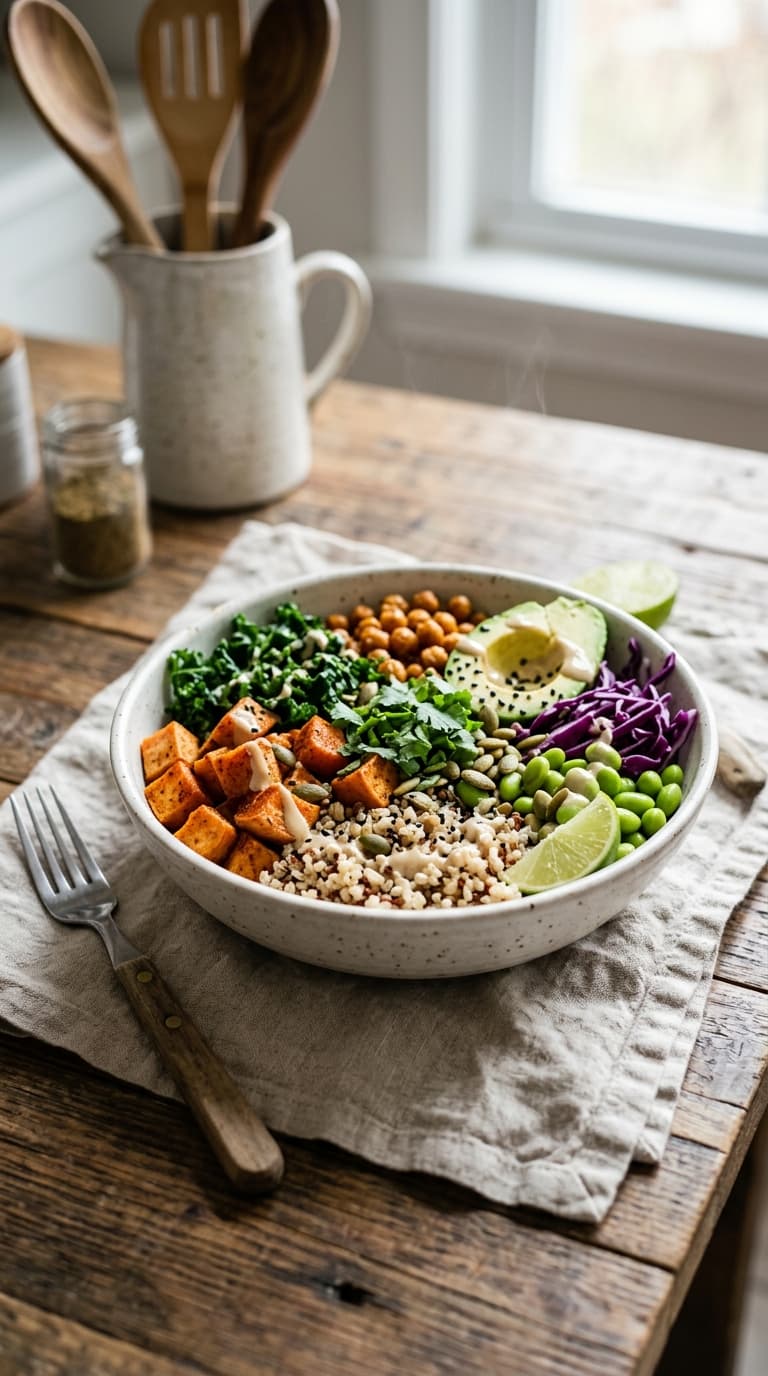
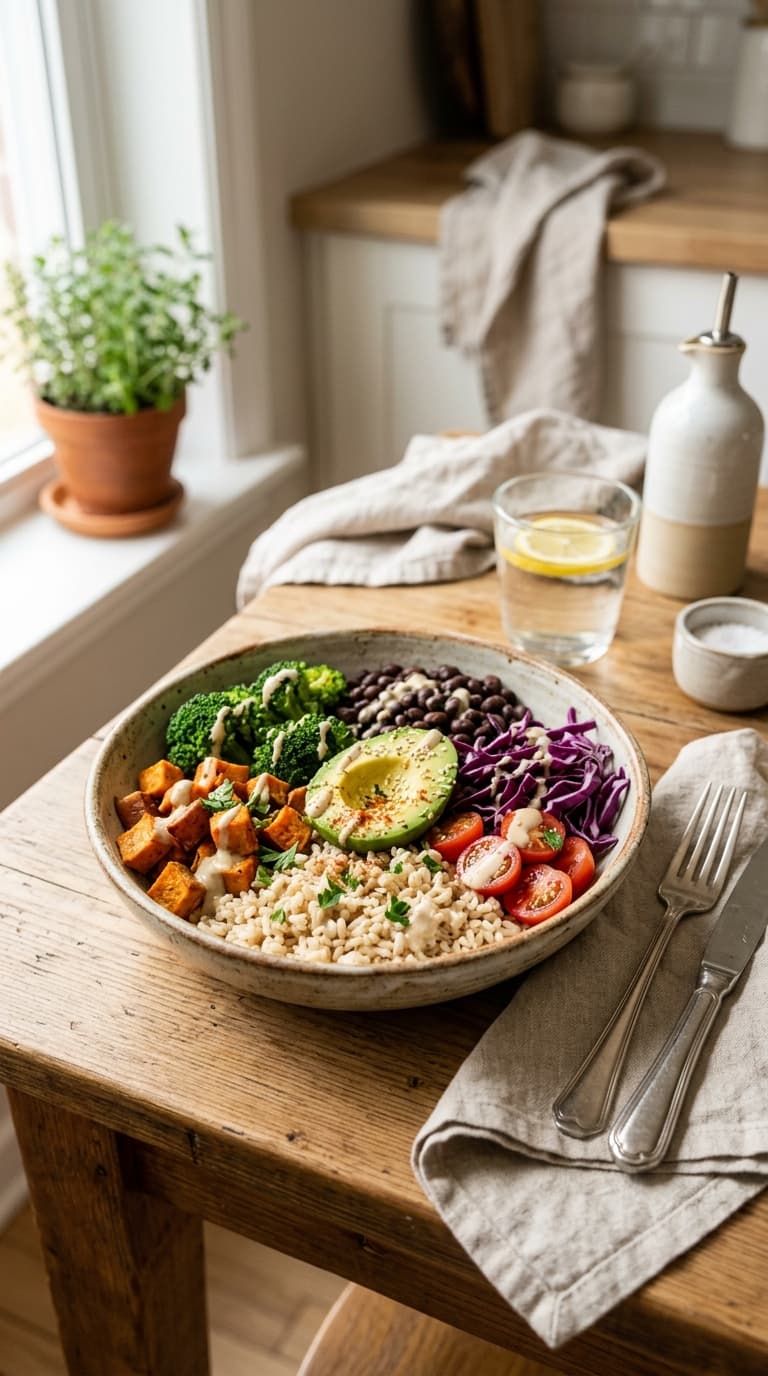
Quinoa power bowl with roasted sweet potato, steamed kale, cucumber, and a tahini lemon dressing. Tahini dressing is the secret weapon of the WFPB world — it makes everything taste rich and satisfying without any dairy.
Dinner
Red lentil dal served over basmati rice with a side of whole grain flatbread. This is hands-down one of the most comforting, nutrient-dense meals in the plant-based playbook. The combination of lentils, tomatoes, and warming spices like turmeric and garam masala is absolutely unbeatable.
Day 4: Shake Things Up
Breakfast
Try savory oatmeal — and yes, before you click away, hear me out. Cook your oats in vegetable broth instead of water, then top with sautéed mushrooms, wilted spinach, and a sprinkle of nutritional yeast. It sounds weird. It tastes incredible.
Lunch
Black bean soup with a big mixed greens salad on the side. The soup comes together fast if you use canned beans — just blend half of it for a creamy texture without any cream involved. Season aggressively with cumin, chili powder, and garlic.
Dinner
Whole wheat pasta with a chunky marinara loaded with zucchini, mushrooms, and spinach. Use a jarred marinara with no added oil or sugar, or make your own in 20 minutes. Finish with a generous amount of nutritional yeast on top — it gives that cheesy, savory hit that makes this dish feel totally indulgent.
Day 5: Keep It Fresh
Breakfast
Chia pudding made the night before. Mix chia seeds with plant-based milk, a touch of vanilla, and a little maple syrup. Let it set overnight and top with sliced mango and coconut flakes in the morning. FYI, chia pudding also makes a solid snack or dessert — just saying.
Lunch
Roasted veggie and hummus grain bowl — use whatever vegetables you have on hand (sweet potato, cauliflower, and red onion work brilliantly together), roast them at high heat, and serve over farro or barley with a generous scoop of hummus and some fresh greens.
Dinner
Vegetable curry with chickpeas served over brown rice. Use coconut milk for creaminess — this is one of those rare cases where a higher-fat plant food is totally worth it. Load the curry with cauliflower, spinach, and tomatoes. The flavors get better the longer it sits, so this is also an ideal meal prep dish.
Day 6: Comfort Edition
Breakfast
Whole grain toast with almond butter and sliced banana — sometimes simple is exactly what you need. Add a sprinkle of chia seeds and a drizzle of honey (or agave if you want to keep it strictly plant-based). Pair it with a piece of fresh fruit for a complete breakfast.
Lunch
Massive grain salad with farro, roasted beets, arugula, walnuts, apple slices, and a simple balsamic dressing. Beets are criminally underrated in plant-based eating — they add color, natural sweetness, and serious nutritional value.
Dinner
Baked sweet potato stuffed with black beans, salsa, and guacamole. This is the kind of meal that’s impossible not to love. It’s fast, filling, naturally sweet, and completely satisfying. Serve with a simple corn and cucumber salad on the side.
Day 7: Finish Strong
Breakfast
Smoothie loaded with greens — blend kale, banana, frozen pineapple, ginger, and plant-based milk. You won’t taste the kale, I promise. Top it with granola and a few berries for some crunch.
Lunch
Warm lentil and roasted vegetable salad — use your leftover roasted veggies from earlier in the week, toss them with warm cooked green lentils, fresh herbs, and a mustardy vinaigrette. This is peak “using what’s already in the fridge” efficiency. :/
Dinner
Homemade veggie burgers on whole grain buns with all the fixings. Make the patties from a mix of black beans, oats, and spices, bake them in the oven, and serve with sliced avocado, tomato, lettuce, and mustard. It’s a proper celebration meal to cap off your first WFPB week.
Tips for Actually Sticking With It
Let’s be real — the hardest part of any dietary change isn’t day one. It’s day four when you’re tired and just want to order pizza. Here are a few things that genuinely help:
- Batch cook grains and legumes on Sunday so you always have something ready to build a meal from
- Keep healthy snacks visible — a bowl of fruit on the counter, cut veggies in the fridge at eye level
- Don’t aim for perfection — one imperfect meal doesn’t undo a week of great eating
- Invest in a few good spices — flavor is everything in plant-based cooking
- Eat enough — undereating is the most common WFPB mistake and the fastest route to giving up
The Benefits You’ll Actually Notice
After a week of eating this way, most people report better energy levels, clearer skin, and improved digestion. Some people notice better sleep. Others find their cravings for processed foods start to ease up naturally.
The science backs this up too — plant-based diets have been linked to lower risks of heart disease, type 2 diabetes, and certain cancers. And no, you won’t be protein deficient if you eat a variety of whole plant foods throughout the day.
What surprises most people most is how satisfied they feel. Whole foods are high in fiber, which keeps you full longer than processed alternatives. The calorie density is lower, but the volume is higher — so you eat plenty and still feel light.
Final Thoughts
Look, I’m not going to tell you that switching to a whole food plant-based diet is effortless. There’s a learning curve, some new ingredients to get familiar with, and the occasional moment where you stare at a bag of nutritional yeast wondering how it ended up in your pantry. But the payoff is real.
This 7-day plan gives you a solid foundation — real meals, real flavors, and real flexibility. You can repeat weeks, swap days around, or use this as a springboard to build your own go-to recipes.
Give it a full week. Your body — and honestly, your taste buds — will thank you for it. And if by day 3 you’re already planning week two? Well, don’t say I didn’t warn you.