7-Day DASH Diet Meal Plan for Weight Loss (Lose Fat + Lower BP!)
7-Day DASH Diet Meal Plan for Weight Loss (Lose Fat + Lower BP!)
Let’s be real — most diets feel like punishment. You’re hungry, cranky, and Googling “is sadness a calorie?” by day three. The DASH diet is different, and I say that as someone who’s tried more eating plans than I care to admit. It doesn’t just help you drop weight — it actively works to lower your blood pressure at the same time. Two birds, one delicious stone.
What Even Is the DASH Diet?
DASH stands for Dietary Approaches to Stop Hypertension. Originally designed by health researchers to tackle high blood pressure, people quickly noticed a pretty sweet bonus — it also helps with weight loss. Funny how eating whole, nutrient-dense foods tends to do that, right?
The core idea is simple:
- Load up on fruits, vegetables, whole grains, and lean proteins
- Cut back on sodium, saturated fats, and added sugars
- Focus on potassium, magnesium, and calcium — the minerals that help your blood vessels relax
It’s not a “no-carb, no-joy” diet. It’s more like the sensible friend who tells you to stop eating an entire bag of chips in one sitting. Annoying? Maybe. Effective? Absolutely.
Why DASH Works for Both Weight Loss and Blood Pressure
Here’s the thing most people miss — high blood pressure and excess weight are deeply connected. Extra body fat makes your heart work harder. More pressure on your arteries equals higher blood pressure. The DASH diet attacks both problems from the same angle.
When you eat more whole foods and slash sodium, your body starts releasing the excess water it was holding onto. That alone can drop a few pounds in the first week. Then, as you eat fewer processed calories and more fiber-rich foods, real fat loss kicks in.
IMO, the DASH diet wins over keto or extreme calorie restriction because it’s actually sustainable. You’re not banning entire food groups. You’re just eating smarter.
The Basic DASH Diet Numbers to Know
Before we get to the meal plan, here are the targets you’re working with:
- Sodium: No more than 1,500–2,300 mg per day
- Fruits & Vegetables: 8–10 servings daily
- Whole Grains: 6–8 servings per day
- Lean Protein: 6 or fewer servings per day
- Dairy (low-fat): 2–3 servings per day
- Nuts, seeds, legumes: 4–5 servings per week
- Sweets & added sugars: 5 or fewer per week
These aren’t as scary as they look once you see them in an actual meal plan. Speaking of which — let’s get into it.
Your 7-Day DASH Diet Meal Plan
Day 1 — Start Strong
Breakfast: Oatmeal made with low-fat milk, topped with sliced banana and a sprinkle of walnuts. No sugar added — the banana handles that.
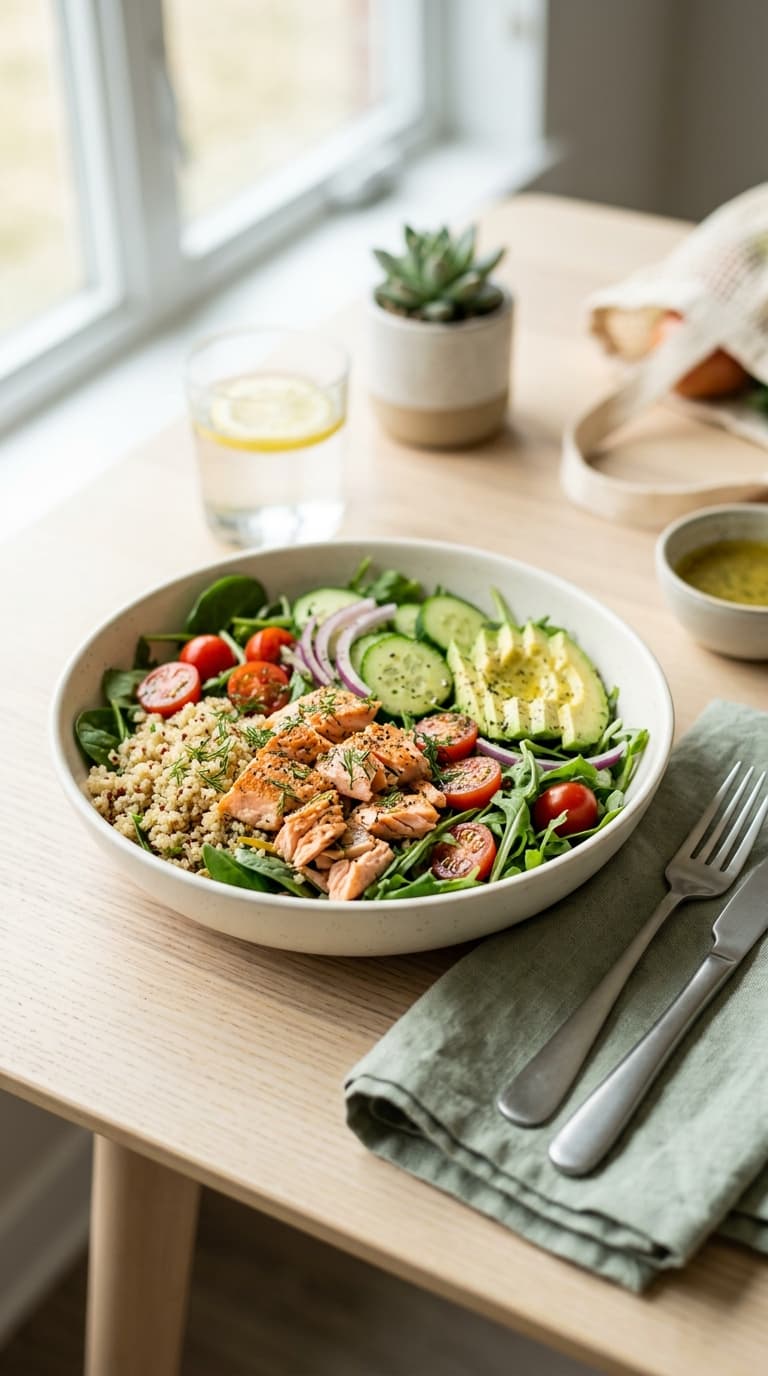
Lunch: Grilled chicken salad with mixed greens, cucumber, cherry tomatoes, and a drizzle of olive oil and lemon juice.
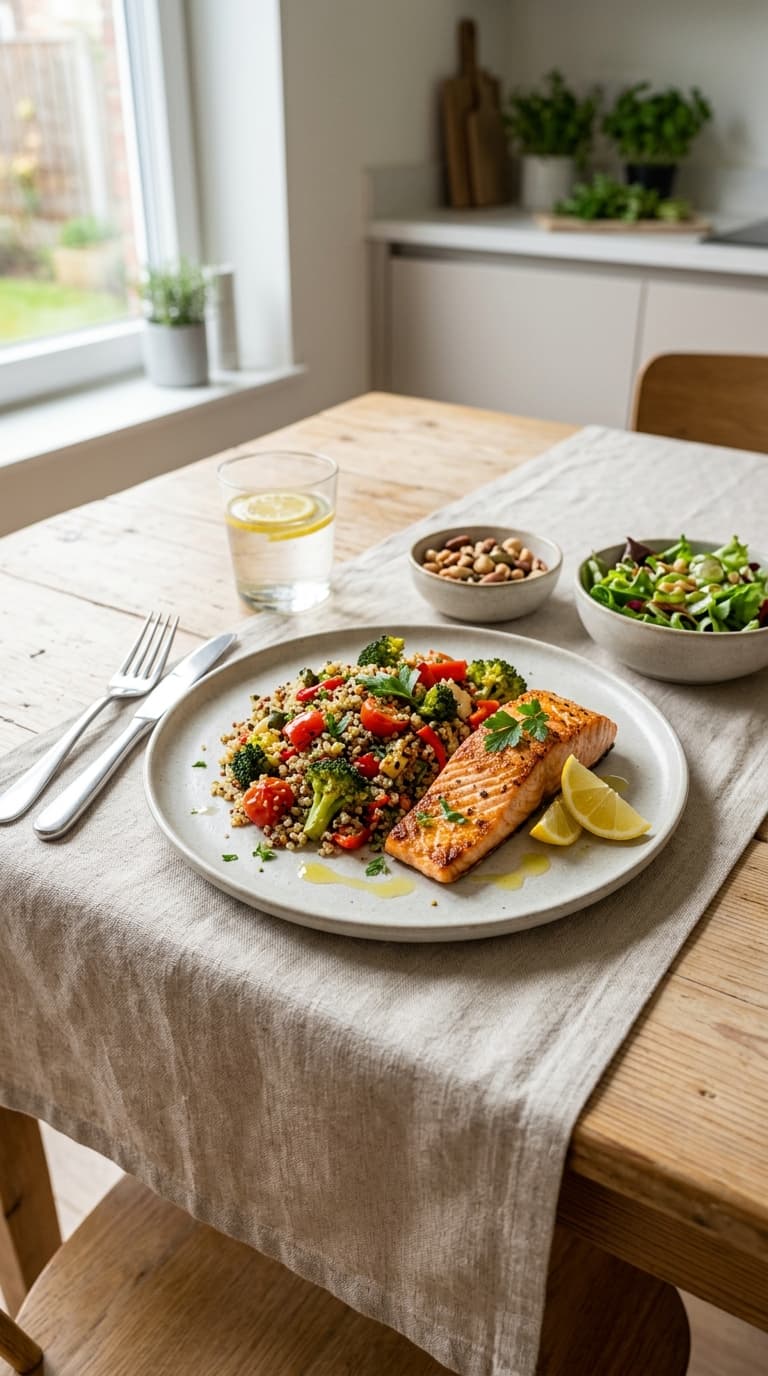
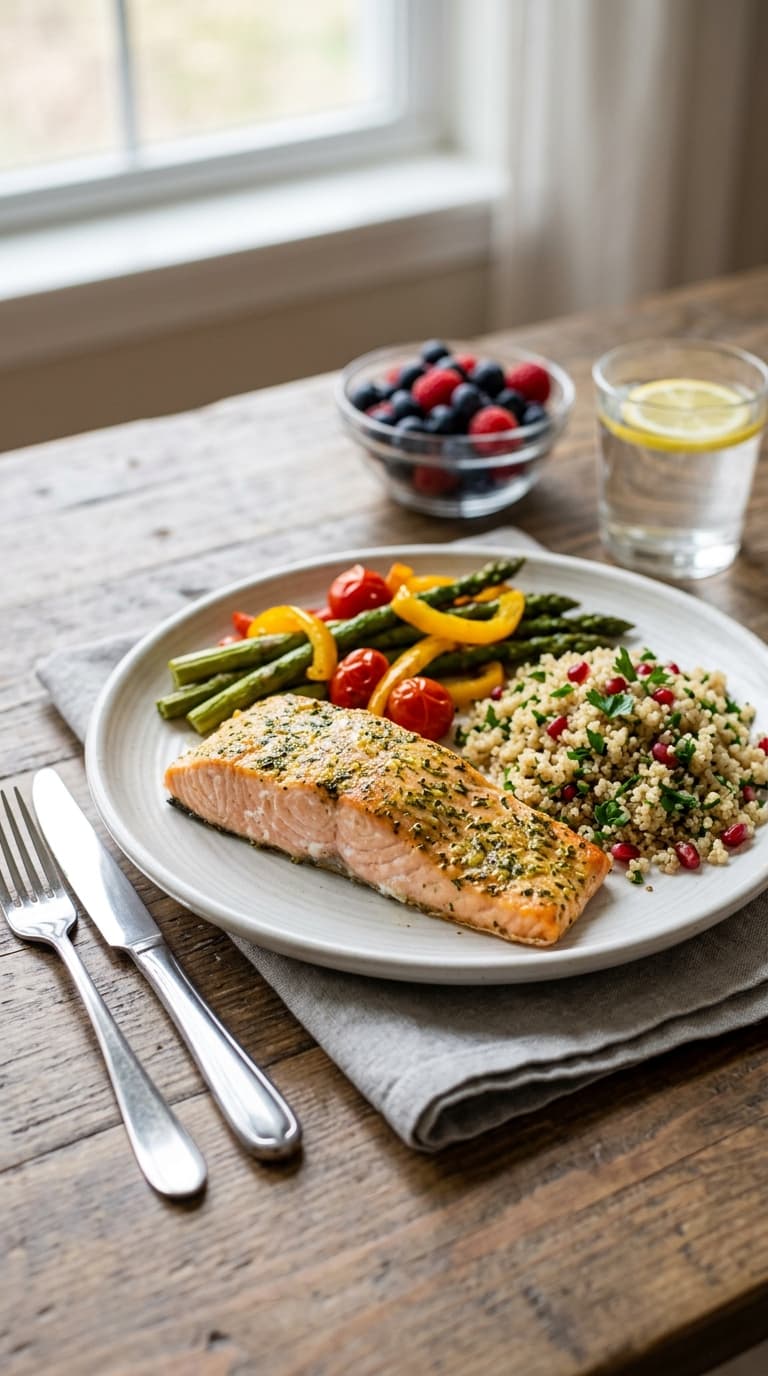
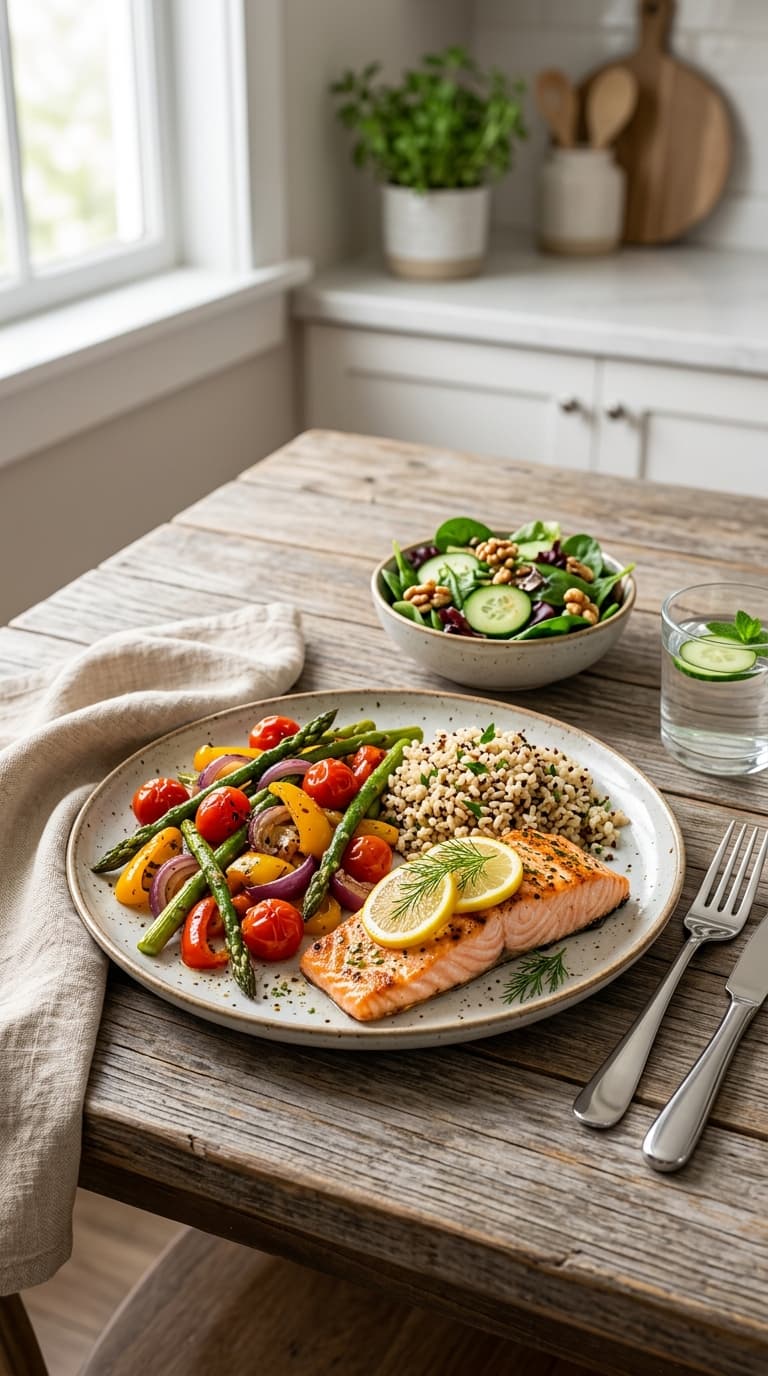
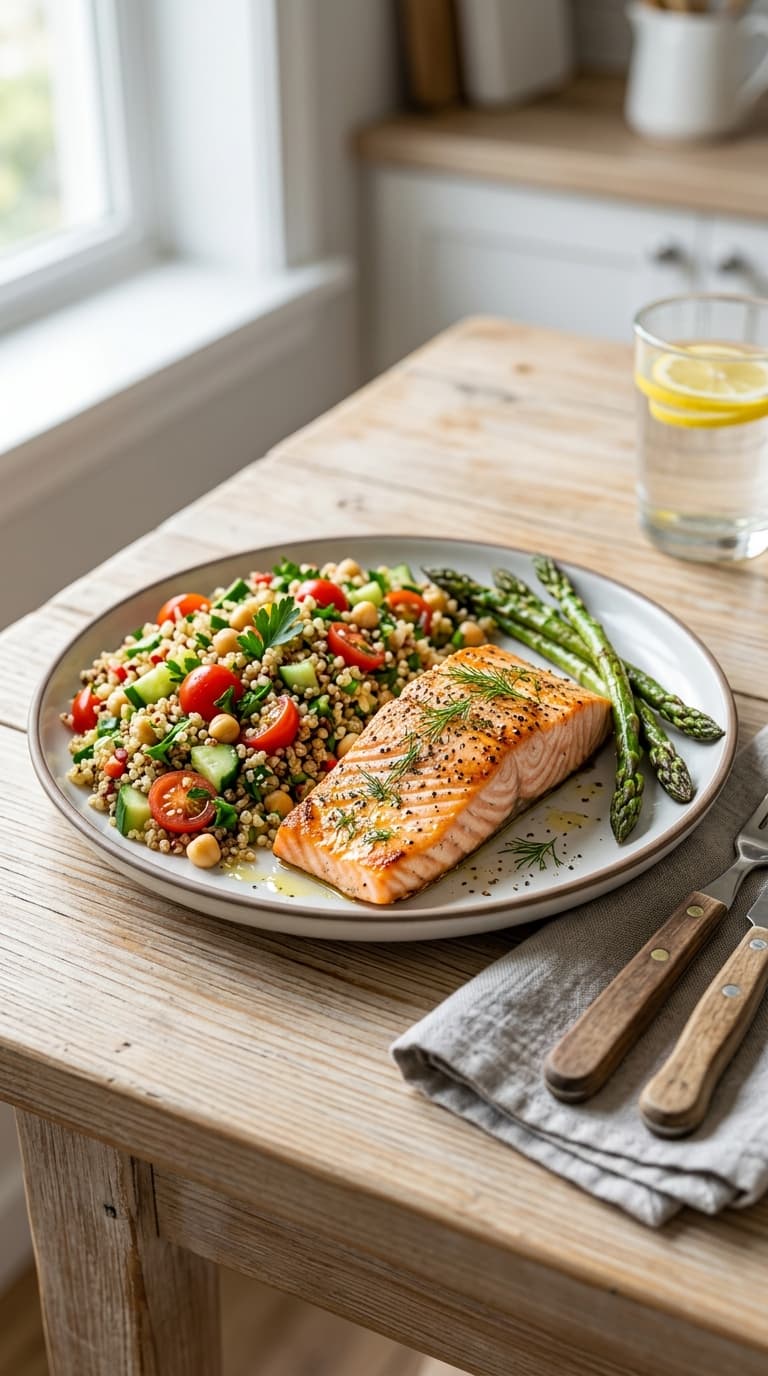
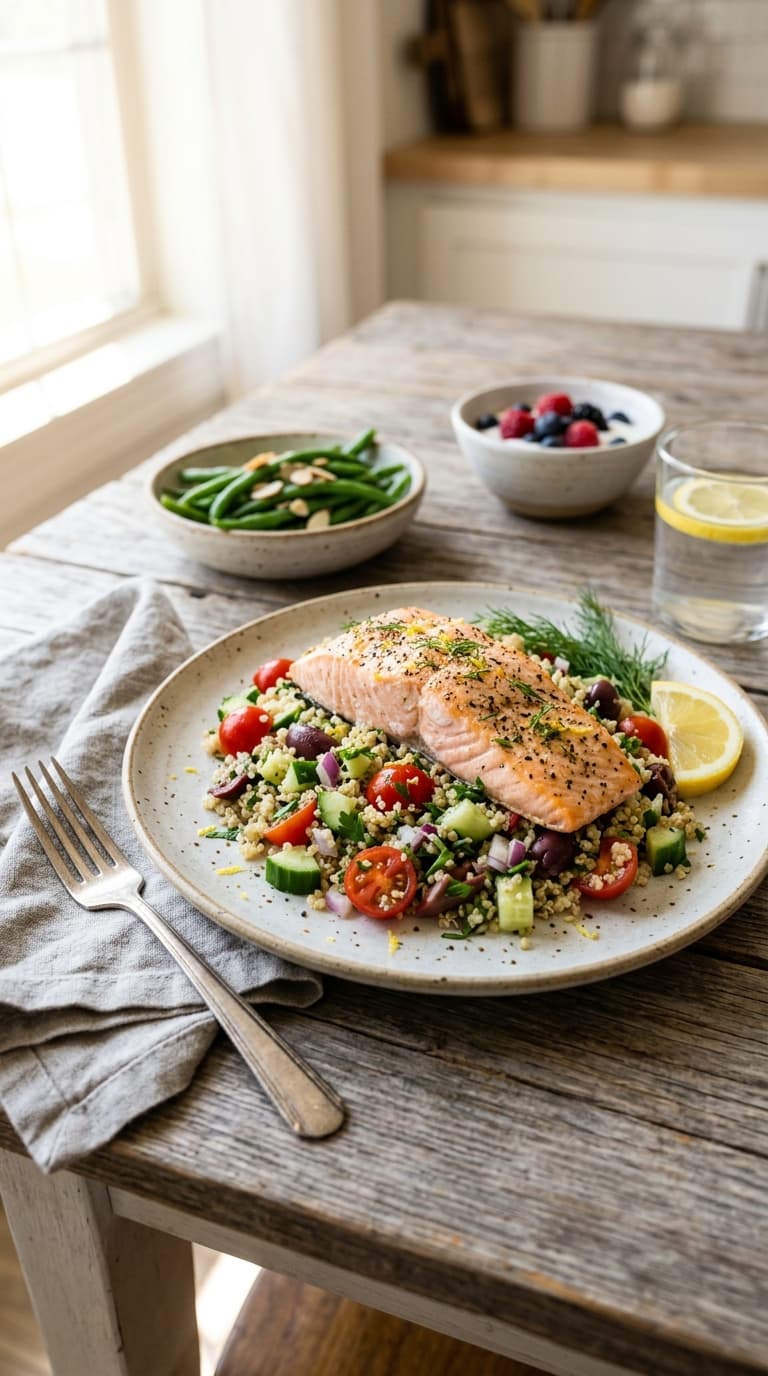
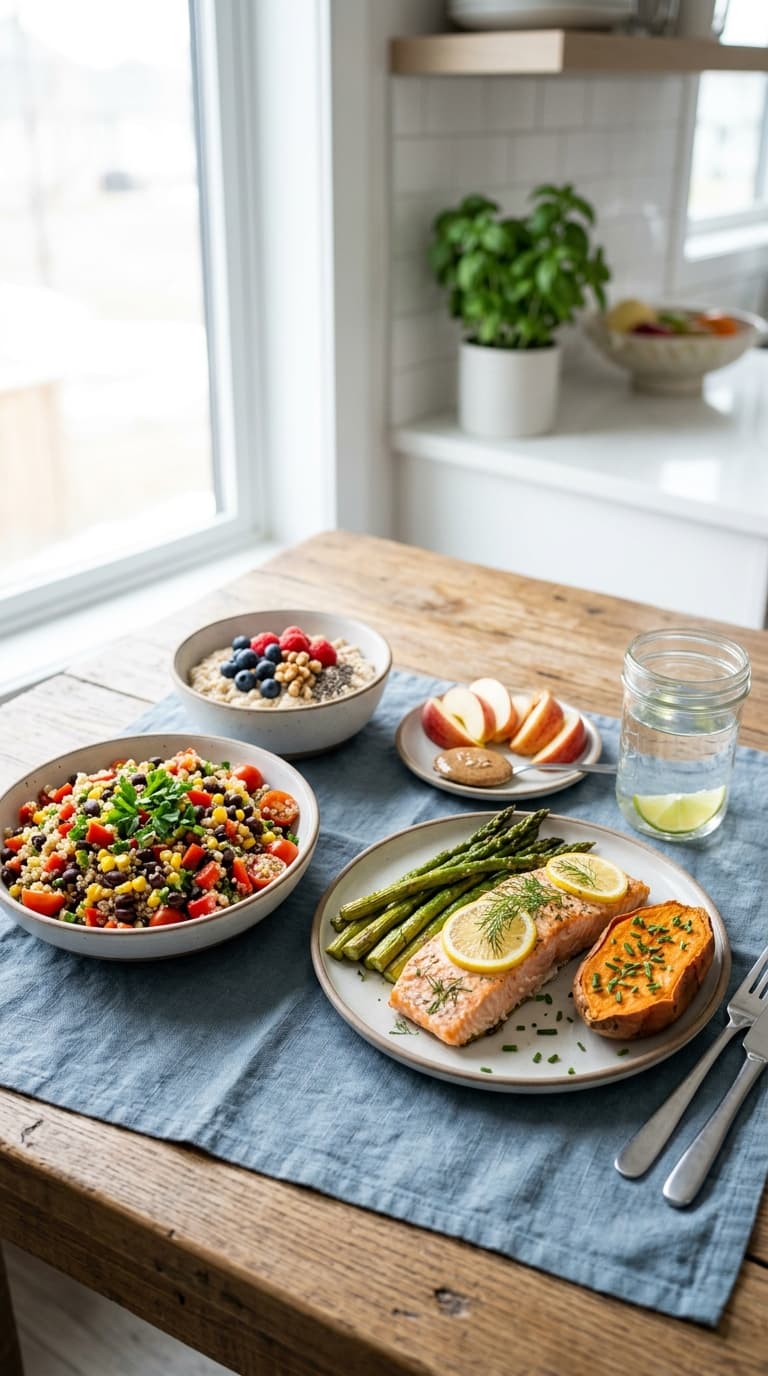
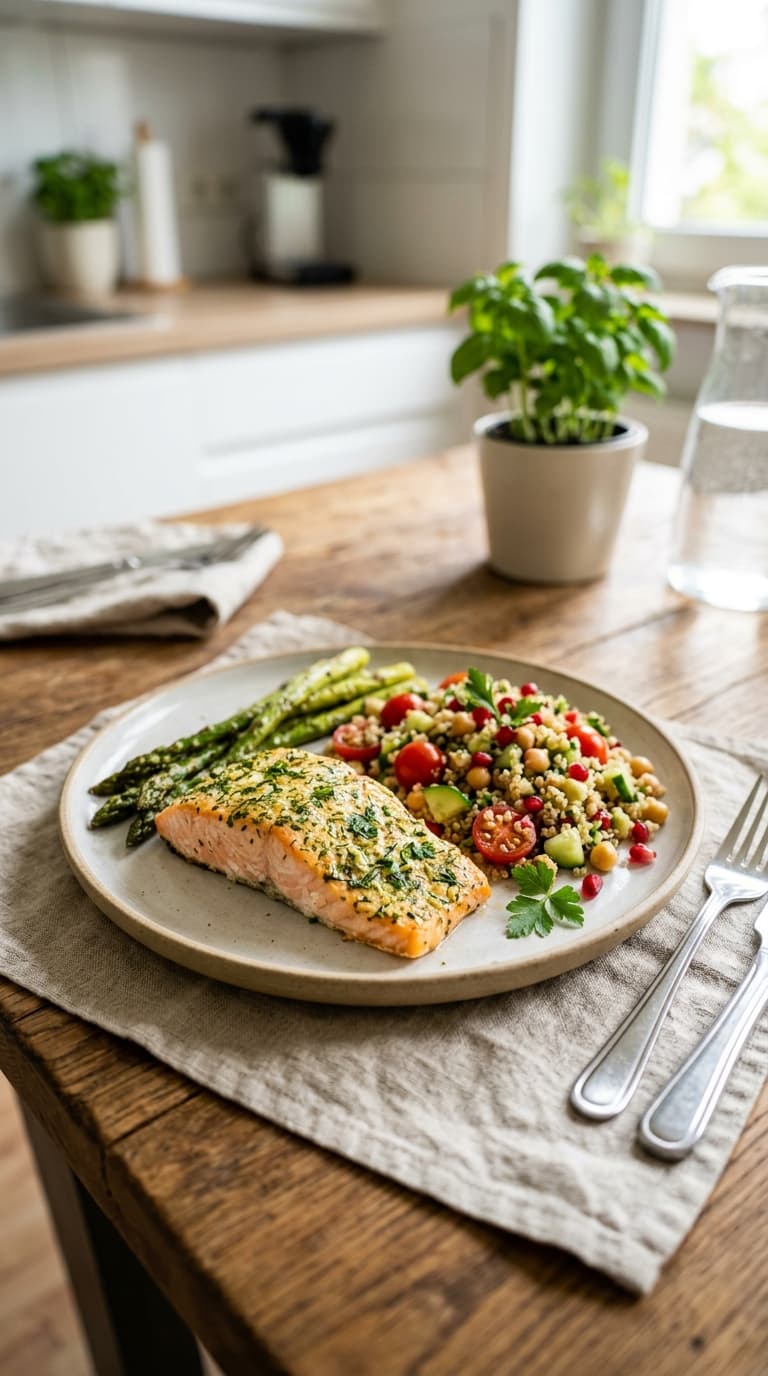
Dinner: Baked salmon with a side of roasted sweet potato and steamed broccoli. Season with garlic and herbs — skip the salt shaker.
Snack: A small handful of unsalted almonds and an apple.
Day 2 — Keep the Momentum Going
Breakfast: Greek yogurt (low-fat) with fresh berries and a tablespoon of flaxseeds.
Lunch: Whole wheat wrap stuffed with turkey breast, avocado, spinach, and mustard. Easy, quick, and actually filling.
Dinner: Lentil soup loaded with carrots, celery, and tomatoes. Pair it with a slice of whole grain bread.
Snack: Carrot sticks with hummus. Classic for a reason.
Day 3 — Midweek Fuel
Breakfast: Two scrambled eggs with sautéed spinach and a side of whole grain toast.
Lunch: Brown rice bowl with black beans, roasted bell peppers, corn, and a squeeze of lime.
Dinner: Grilled chicken breast with quinoa and a large side salad. Keep the dressing light — olive oil and vinegar works perfectly.
Snack: A pear and a small portion of low-fat cottage cheese.
Day 4 — Shake Things Up
Breakfast: Smoothie made with unsweetened almond milk, a handful of spinach, frozen berries, half a banana, and a tablespoon of chia seeds.
Lunch: Tuna salad (made with plain Greek yogurt instead of mayo) on whole wheat bread with lettuce and tomato.
Dinner: Stir-fried tofu with mixed vegetables over brown rice. Season with low-sodium soy sauce and fresh ginger.
Snack: A small orange and a handful of walnuts.
Day 5 — Friday Feels
Breakfast: Whole grain cereal with low-fat milk and sliced strawberries.
Lunch: Hearty vegetable soup — think zucchini, tomatoes, chickpeas, and spinach — paired with whole grain crackers.
Dinner: Lean beef (or turkey) tacos in corn tortillas with shredded cabbage, salsa, and a dollop of plain Greek yogurt instead of sour cream.
Snack: Apple slices with a tablespoon of natural almond butter.
Day 6 — Weekend Mode
Breakfast: Whole wheat pancakes topped with fresh blueberries and a drizzle of pure maple syrup. Yes, you can enjoy weekends on DASH 🙂
Lunch: Large quinoa salad with roasted vegetables, feta cheese (go easy — it’s salty), and lemon tahini dressing.
Dinner: Herb-baked chicken thighs with roasted asparagus and mashed cauliflower. Trust me on the cauliflower mash — it slaps.
Snack: A banana and a small handful of sunflower seeds.
Day 7 — Finish Strong
Breakfast: Veggie omelette with bell peppers, onions, mushrooms, and a sprinkle of low-fat cheese.
Lunch: Leftover herb chicken from Day 6 sliced over mixed greens with olive oil and lemon.
Dinner: Baked cod with roasted sweet potato wedges and sautéed green beans with garlic.
Snack: Low-fat yogurt with a drizzle of honey and a few chopped walnuts.
Foods to Eat More Of on the DASH Diet
The DASH diet isn’t really about restriction — it’s more about crowding out the bad stuff with the good stuff. Here’s your green list:
- Vegetables: Leafy greens, broccoli, sweet potatoes, peppers, carrots
- Fruits: Berries, bananas, oranges, apples, melons
- Whole grains: Brown rice, oats, quinoa, whole wheat bread and pasta
- Lean proteins: Chicken breast, turkey, fish, beans, lentils, tofu
- Low-fat dairy: Greek yogurt, low-fat milk, cottage cheese
- Healthy fats: Avocado, olive oil, nuts, seeds
Foods to Cut Back On (Yes, Even Those)
Here’s where most people struggle, and I won’t sugarcoat it — some of these are tough to give up. But reducing these is where the blood pressure and weight loss magic really happens:
- High-sodium foods: Canned soups, deli meats, fast food, soy sauce (use low-sodium versions)
- Processed snacks: Chips, crackers, packaged cookies
- Sugary drinks: Soda, fruit juice, energy drinks
- Saturated fats: Fatty cuts of red meat, full-fat dairy, butter
- Added sugars: Candy, pastries, flavored yogurts with added sweeteners
FYI — you don’t have to eliminate these overnight. Gradual cuts are more sustainable than going cold turkey.
Practical Tips to Stick with the DASH Diet
Ever started a diet with total confidence only to bail by Thursday? Same. Here’s how to actually make this one stick:
Meal prep on Sundays. Cook a big batch of brown rice, roast a tray of vegetables, and prep your proteins for the week. When healthy food is already made, you’re way less likely to order a pizza at 9pm.
Get a good herb and spice collection. When you cut sodium, you need flavor to come from somewhere. Garlic powder, cumin, paprika, oregano, turmeric — these become your best friends. Flavor, not salt, is what makes food exciting.
Read nutrition labels. Sodium hides in places you’d never expect — bread, breakfast cereals, canned tomatoes. Getting into the habit of checking labels puts you in control.
Don’t skip meals. The DASH diet works best when you eat consistently. Skipping meals leads to overeating later, and that’s how you end up eating half a wheel of cheese at midnight.
How Much Weight Can You Actually Lose?
Let’s set realistic expectations because, honestly, the internet is full of “lose 20 lbs in a week!” nonsense and it’s exhausting :/
On the DASH diet, most people lose 1–2 pounds per week when they’re also eating in a modest calorie deficit. In the first week, you might see a bigger drop because of water weight — especially if you were eating a high-sodium diet before. That’s normal and encouraging, but don’t expect it every week.
Over seven days, a realistic expectation is 3–5 pounds lost, depending on your starting point, activity level, and how closely you stick to the plan. Pair the DASH diet with moderate exercise — even 30 minutes of walking daily — and you’ll accelerate those results noticeably.
DASH Diet and Blood Pressure: What the Research Shows
This isn’t just anecdote — the research on DASH and blood pressure reduction is seriously impressive. Studies have consistently shown that people following the DASH diet can lower their systolic blood pressure by 8–14 mmHg. That’s comparable to what some medications achieve.
The key mechanisms are:
- Potassium (from fruits and veggies) helps your kidneys flush out excess sodium
- Magnesium helps blood vessels relax and dilate
- Calcium supports healthy vascular tone
- Lower sodium directly reduces pressure on artery walls
Combine all four, and your cardiovascular system gets a serious upgrade.
Who Should Try the DASH Diet?
The DASH diet works well for a wide range of people:
- Anyone with hypertension or pre-hypertension
- People looking to lose weight without extreme restriction
- Those who want a balanced, long-term eating approach
- Anyone with a family history of heart disease
- Basically anyone tired of fad diets that don’t last
It’s also generally safe for most people, but if you have kidney disease or specific health conditions, check with your doctor before making major dietary changes. Potassium needs to be managed carefully in some medical situations.
A Quick Note on Sodium — The Sneaky Villain
Most people know to skip the salt shaker. What they don’t realize is that about 70% of the sodium Americans consume comes from packaged and restaurant food, not from home cooking. That’s wild when you think about it.
The DASH target of 1,500–2,300 mg of sodium per day sounds manageable until you realize a single fast food meal can clock in at 2,000 mg alone. Cooking at home, using fresh ingredients, and reading labels are the three biggest needle-movers when it comes to hitting your sodium targets.
Conclusion: Is the DASH Diet Worth Your Time?
Absolutely, yes — and I say that without hesitation. The DASH diet doesn’t ask you to be miserable. It doesn’t eliminate entire food groups or require expensive supplements. It’s just a well-structured, whole-food eating pattern that your body genuinely responds to.
Seven days is enough time to feel the difference — more energy, less bloating, lighter on the scale, and potentially a noticeable drop in blood pressure numbers if you were running high. Use this 7-day plan as your launchpad, not a one-time reset.
The best diet is always the one you can actually stick to. And honestly? After a week of eating salmon, fresh salads, hearty lentil soups, and whole grain pancakes on a Saturday morning — you might just find that sticking to it is the easy part.
Now go stock your fridge and make it happen. Your heart will literally thank you.