7-Day DASH Diet Meal Plan to Lower Blood Pressure in 1 Week (Printable!)
7-Day DASH Diet Meal Plan to Lower Blood Pressure in 1 Week (Printable!)
Your doctor just flagged your blood pressure numbers, and now you’re staring at a list of foods you “should” eat — feeling equal parts confused and slightly betrayed by your love of salt. Sound familiar? I’ve been there, and honestly, the DASH diet doesn’t have to feel like a punishment sentence. With the right plan, one week is genuinely enough to start seeing real changes.
Let me walk you through exactly what to eat, when to eat it, and how to make the whole thing feel less like a diet and more like… actually good food.
What Is the DASH Diet and Why Does It Actually Work?
DASH stands for Dietary Approaches to Stop Hypertension. It’s not a fad, it’s not someone’s weekend wellness project — it’s a clinically researched eating pattern developed specifically to bring blood pressure down without medication (or at least alongside it).
The core idea is simple: eat more foods rich in potassium, calcium, magnesium, and fiber, and cut back on sodium, saturated fat, and added sugar. Your blood vessels literally relax when you feed them the right stuff. Think of it as de-stressing your arteries — which, honestly, they deserve.
What makes it stand out from every other “heart-healthy” plan? It doesn’t eliminate entire food groups. You’re not going carb-free or surviving on lettuce. You’re just shifting proportions — more fruits, vegetables, whole grains, and lean proteins; less salt and processed junk.
The Golden Rules of DASH Before You Start
Before we get into the actual meal plan, let’s cover the non-negotiables so you don’t accidentally undo all your hard work with a sneaky bag of chips.
- Keep sodium under 2,300mg per day (the stricter version aims for 1,500mg)
- Load up on fruits and vegetables — aim for 8–10 servings daily
- Choose whole grains over refined white carbs every single time
- Pick lean proteins — chicken, fish, legumes, and low-fat dairy are your best friends
- Limit saturated fat and skip anything with trans fat entirely
- Cut added sugar — yes, that includes your “healthy” flavored yogurt :/
FYI — reading nutrition labels becomes your new hobby this week. Sodium hides in the most unexpected places: bread, canned soup, salad dressing. You’ll be shocked.
7-Day DASH Diet Meal Plan
Here’s your full week, broken down day by day. Each day stays within DASH guidelines, keeps sodium in check, and — most importantly — actually tastes like real food.
Day 1 — Monday: Fresh Start Energy
Breakfast: Oatmeal topped with fresh blueberries and a handful of unsalted walnuts. Sweeten with a drizzle of honey if needed. Pair with a glass of low-fat milk.
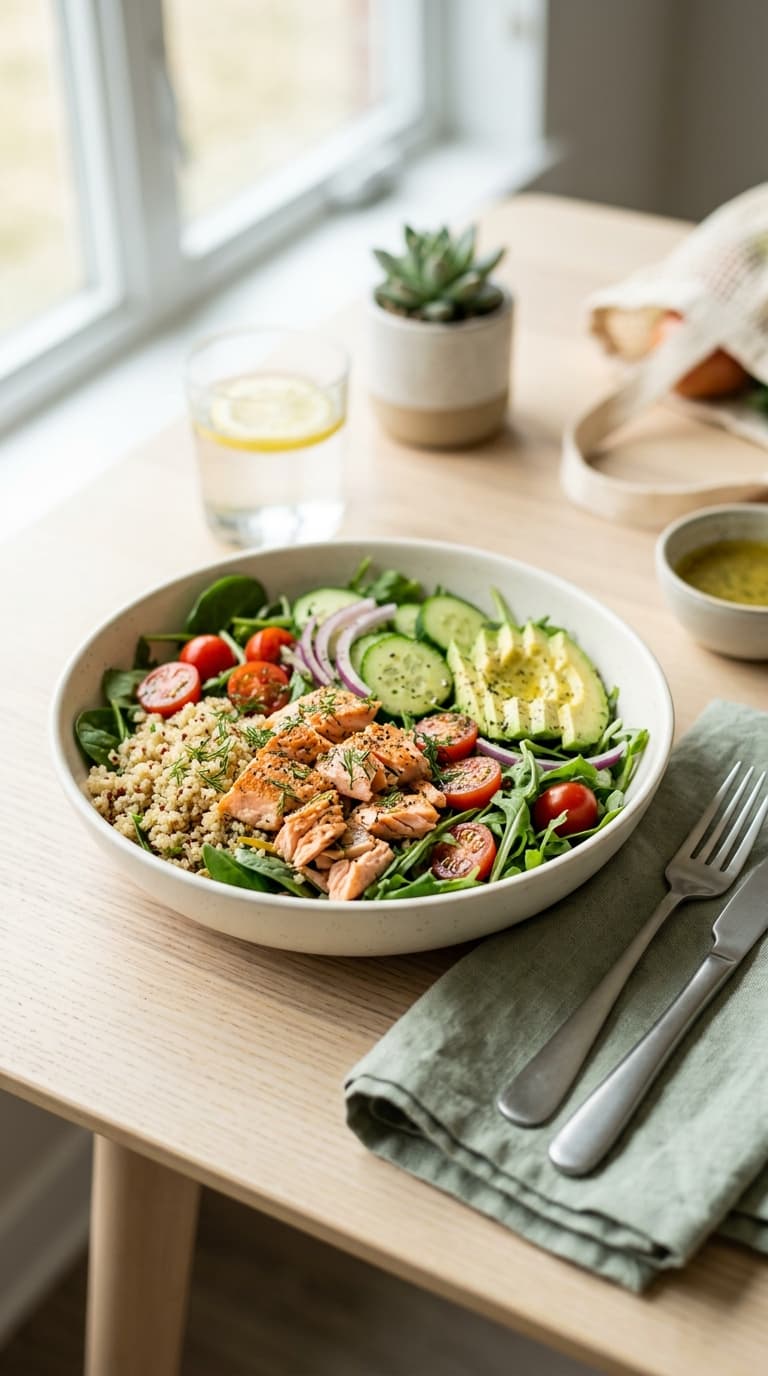
Lunch: Grilled chicken salad with mixed greens, cherry tomatoes, cucumber, avocado, and a lemon-olive oil dressing. Skip the bottled dressing — the sodium in those things is no joke.
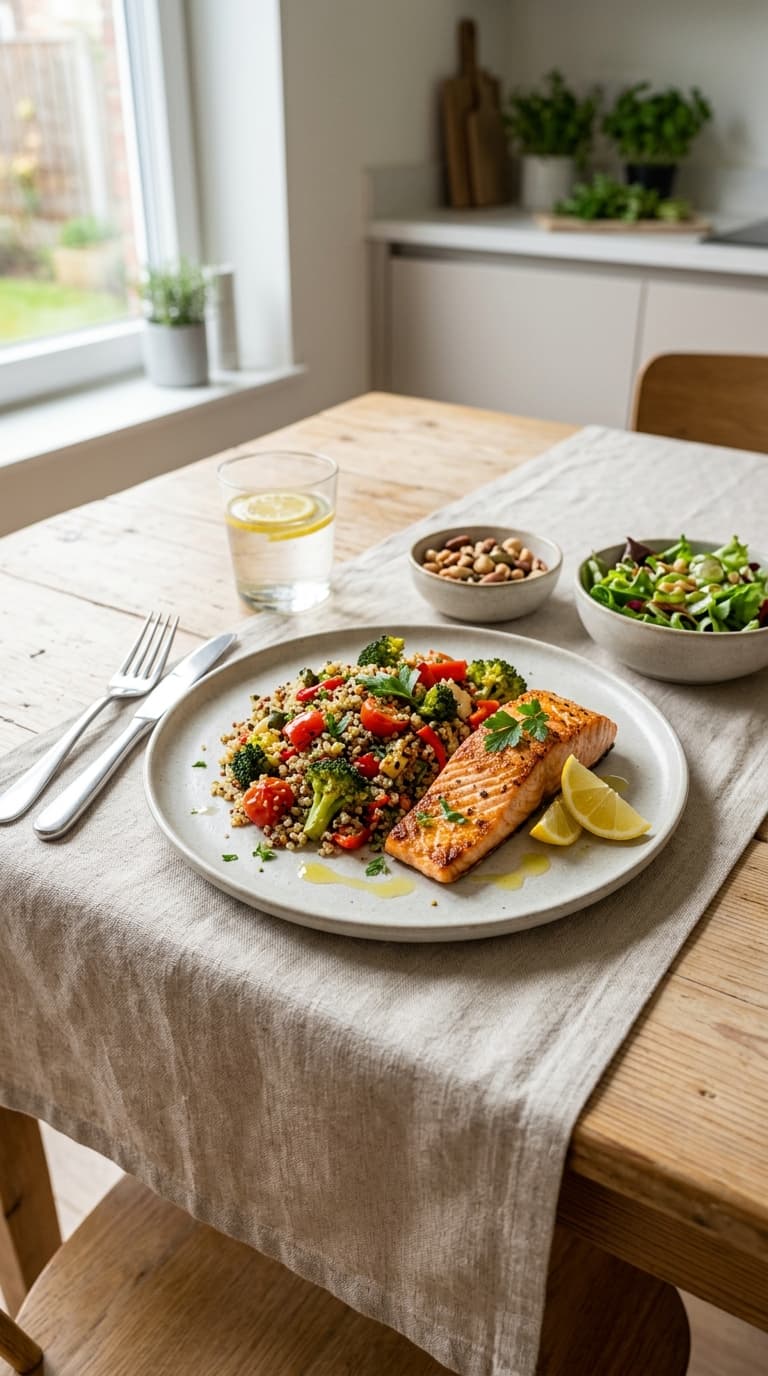
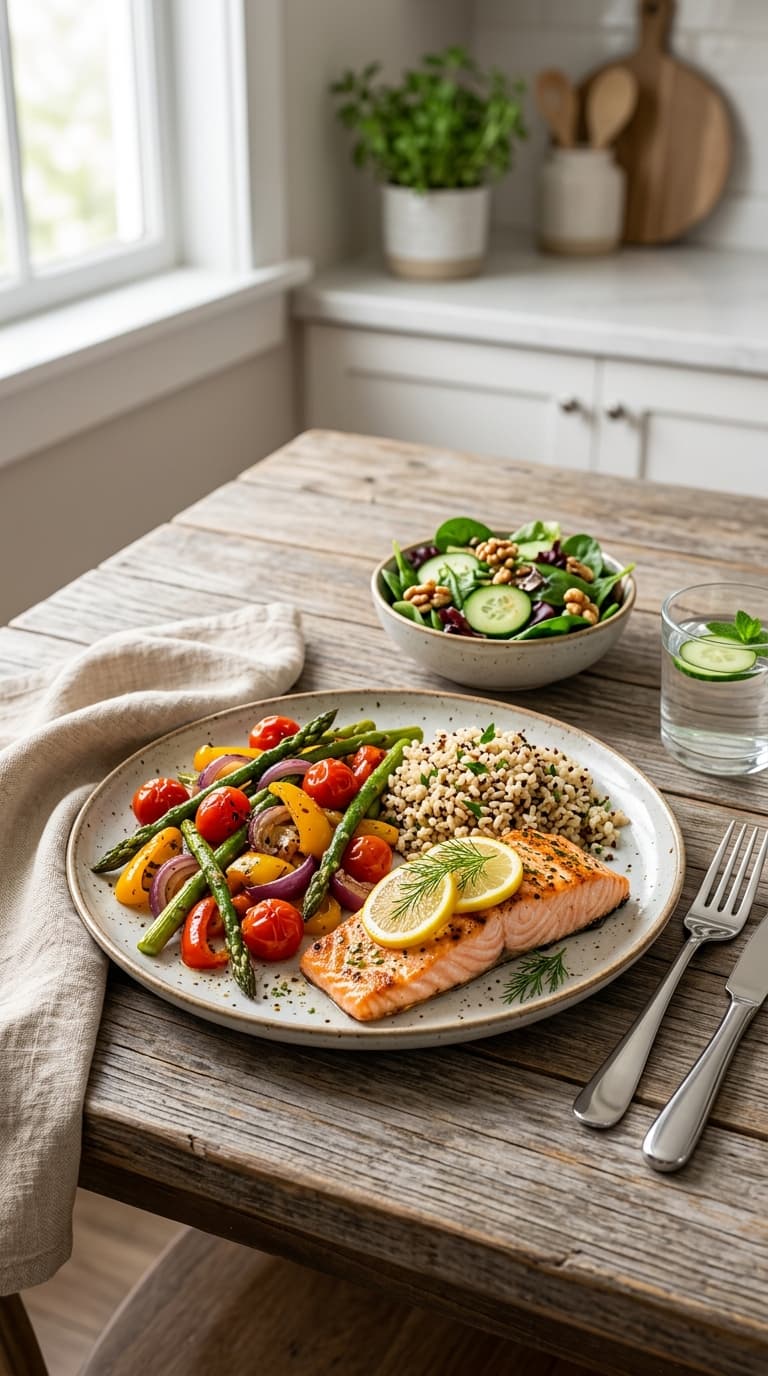
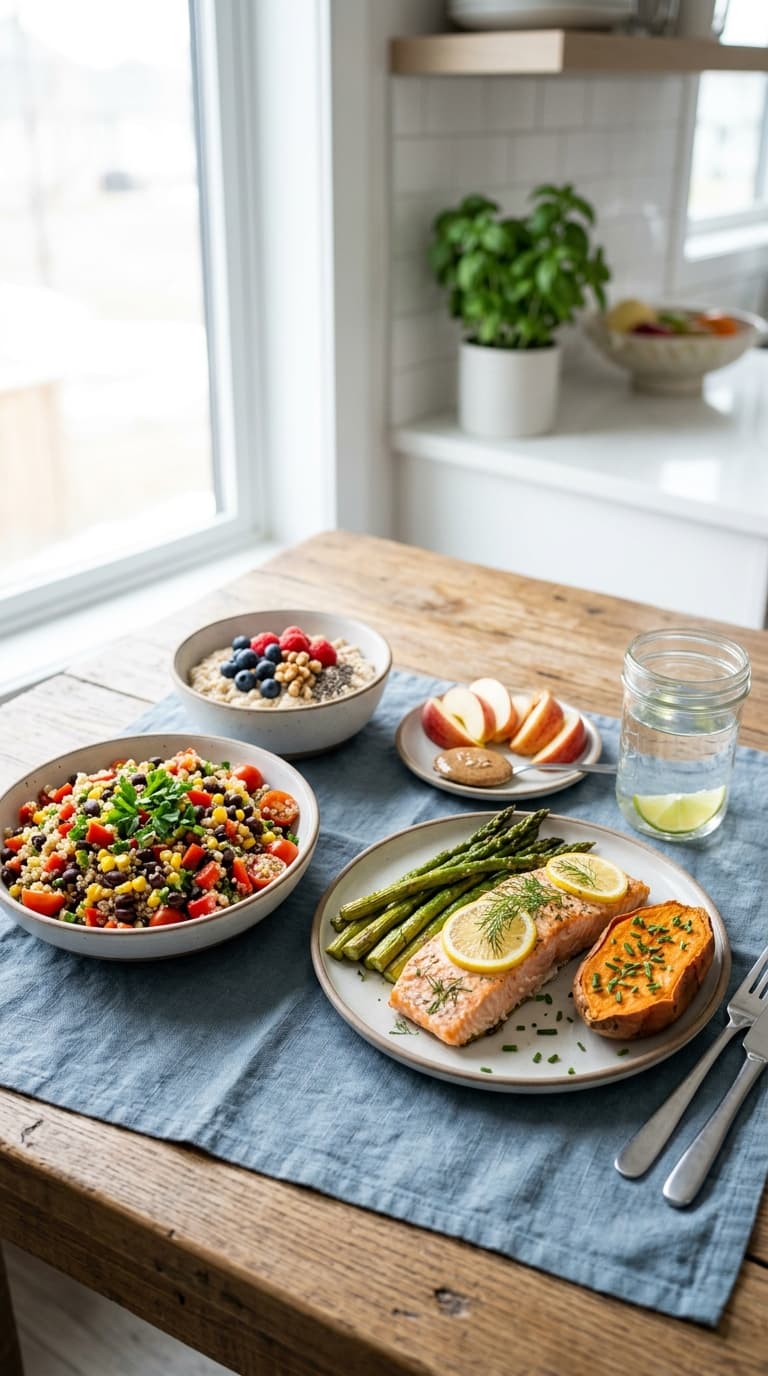
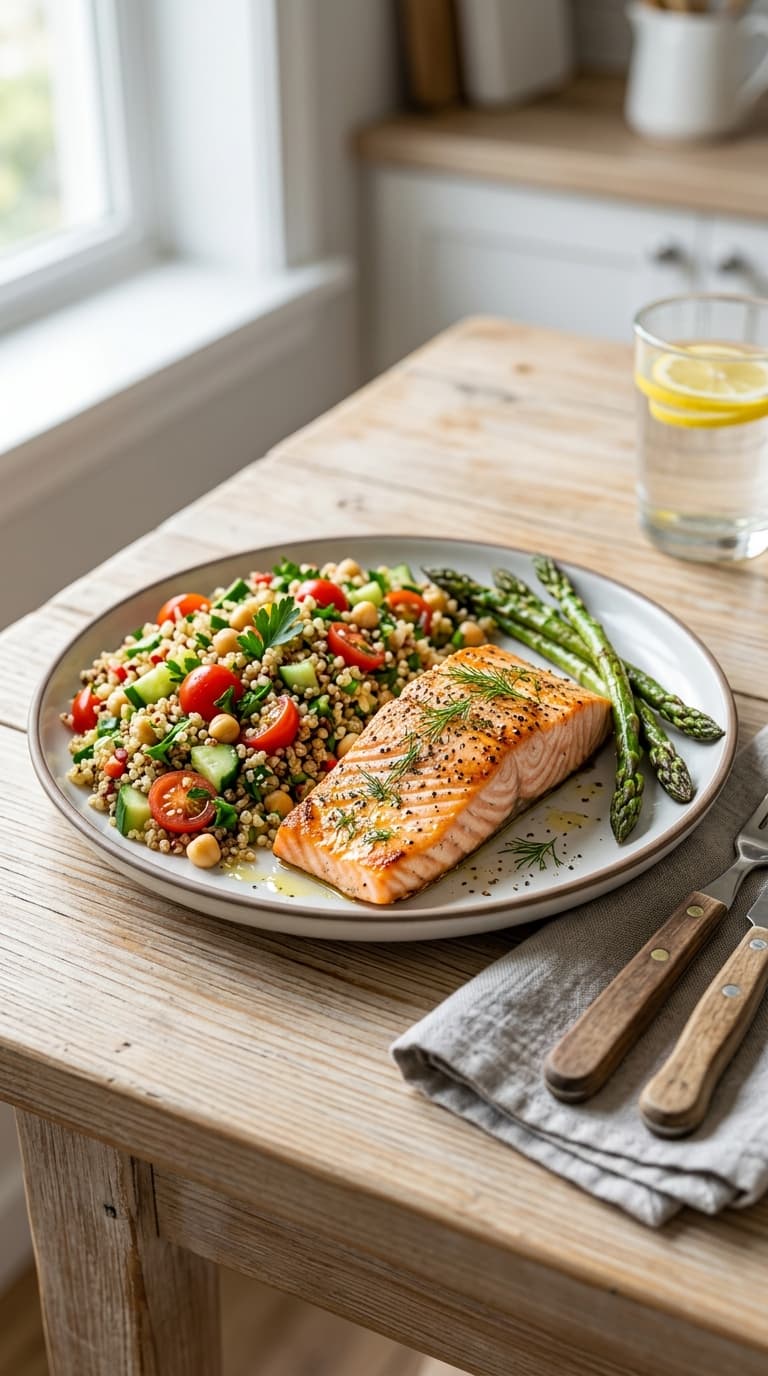
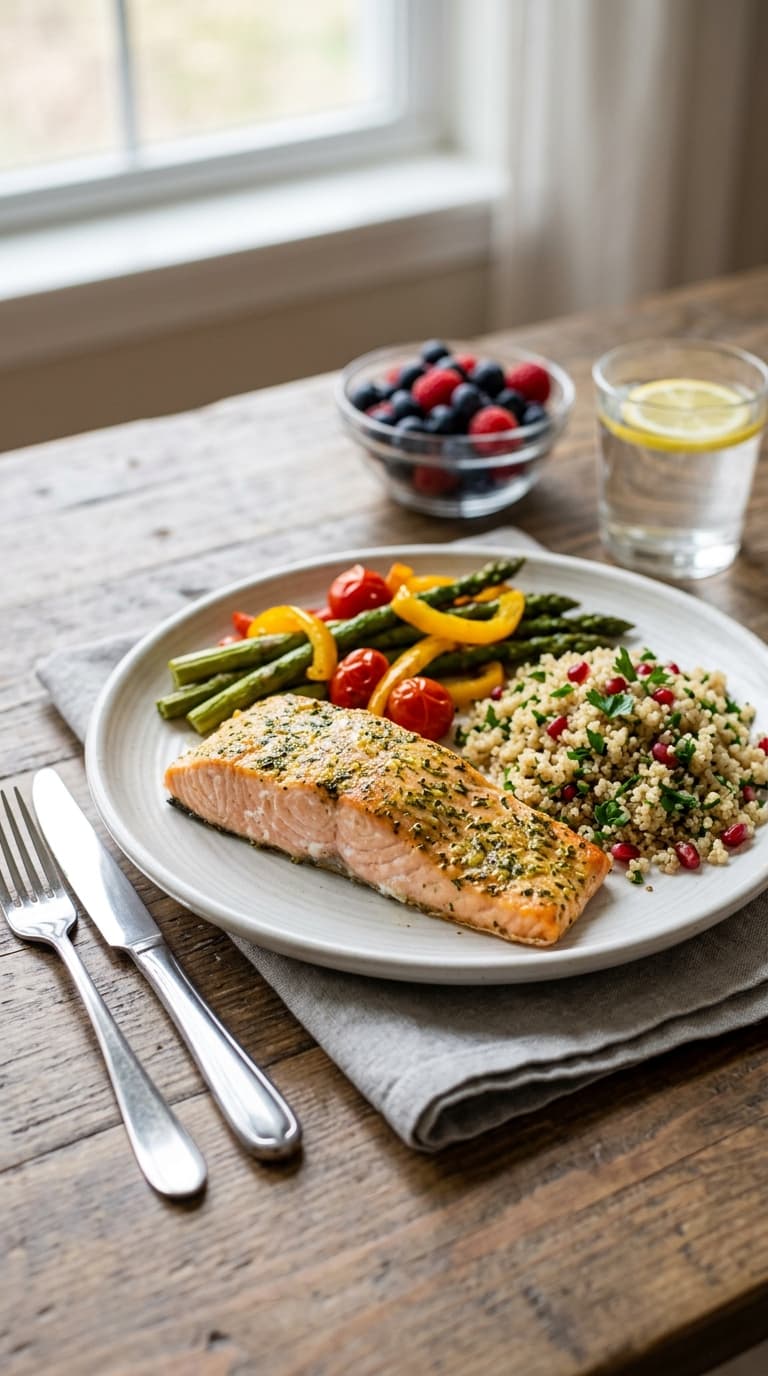
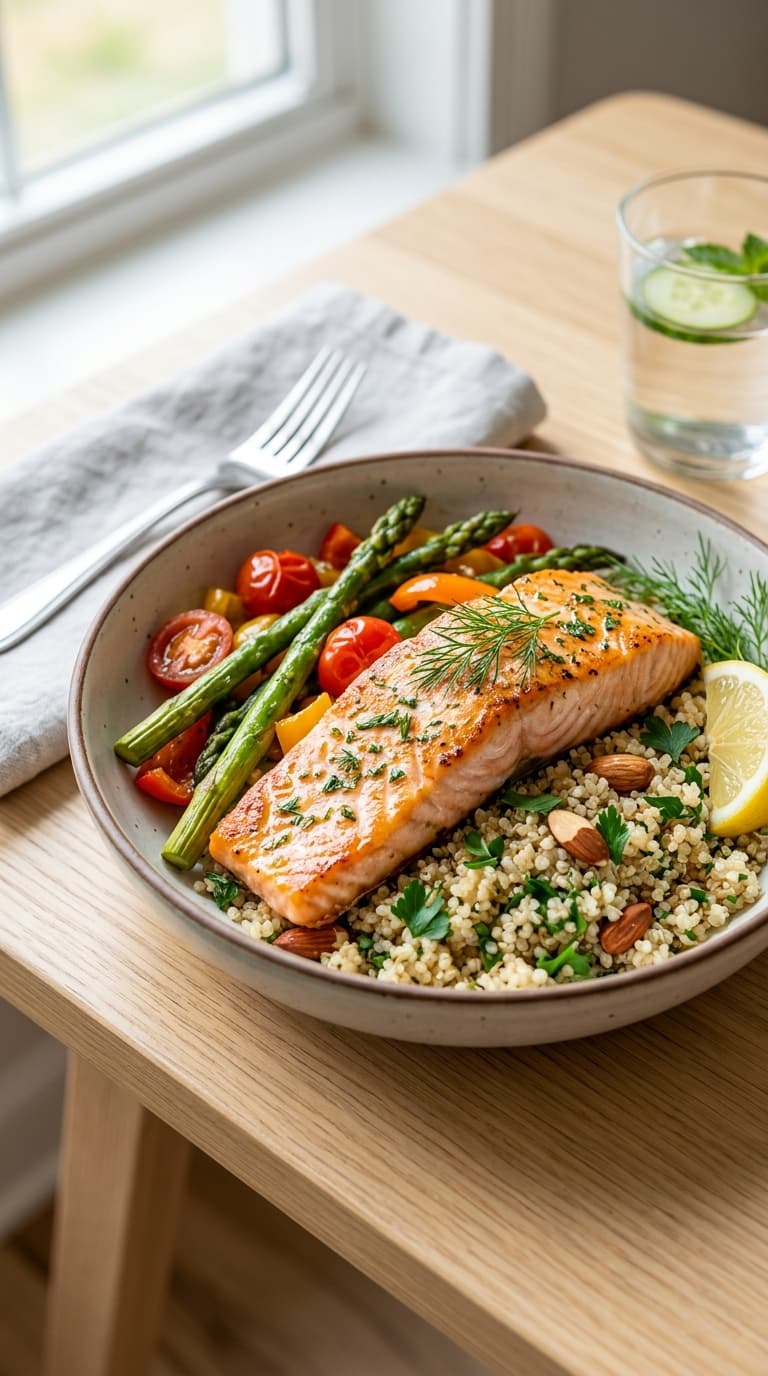
Dinner: Baked salmon with steamed broccoli and a side of brown rice. Season with garlic, lemon, and herbs instead of salt.
Snack: One banana and a small handful of unsalted almonds.
Day 2 — Tuesday: Plant Power Day
Breakfast: Whole wheat toast with mashed avocado and a sliced hard-boiled egg. Add a side of fresh orange slices.
Lunch: Lentil soup with spinach and diced tomatoes. Make a big batch — you’ll thank yourself later.
Dinner: Stir-fried tofu with bell peppers, snap peas, and carrots over quinoa. Use low-sodium soy sauce — not regular.
Snack: Greek yogurt (plain, low-fat) with a few fresh strawberries.
Day 3 — Wednesday: Midweek Reset
Breakfast: Low-fat yogurt parfait with granola (no added sugar) and mixed berries.
Lunch: Whole wheat wrap with turkey breast, romaine lettuce, tomato, and mustard. Add a side of carrot sticks.
Dinner: Chicken and vegetable soup made with low-sodium broth. Load it with zucchini, celery, onion, and herbs. Serve with a slice of whole grain bread.
Snack: An apple with a tablespoon of natural almond butter.
Day 4 — Thursday: Lean and Green
Breakfast: Scrambled eggs (2 eggs) with sautéed spinach and mushrooms. Side of whole wheat toast.
Lunch: Brown rice bowl with black beans, corn, diced tomato, avocado, and a squeeze of lime. No added salt needed — the lime does the heavy lifting.
Dinner: Baked cod with roasted sweet potato and steamed green beans. Drizzle with olive oil and fresh herbs.
Snack: A small handful of mixed unsalted nuts and a pear.
Day 5 — Friday: Feel-Good Friday
Breakfast: Smoothie made with low-fat milk, frozen banana, spinach, and a scoop of natural peanut butter. No added sugar — the banana handles sweetness perfectly.
Lunch: Tuna salad (made with plain Greek yogurt instead of mayo) on whole wheat crackers. Add sliced cucumber on the side.
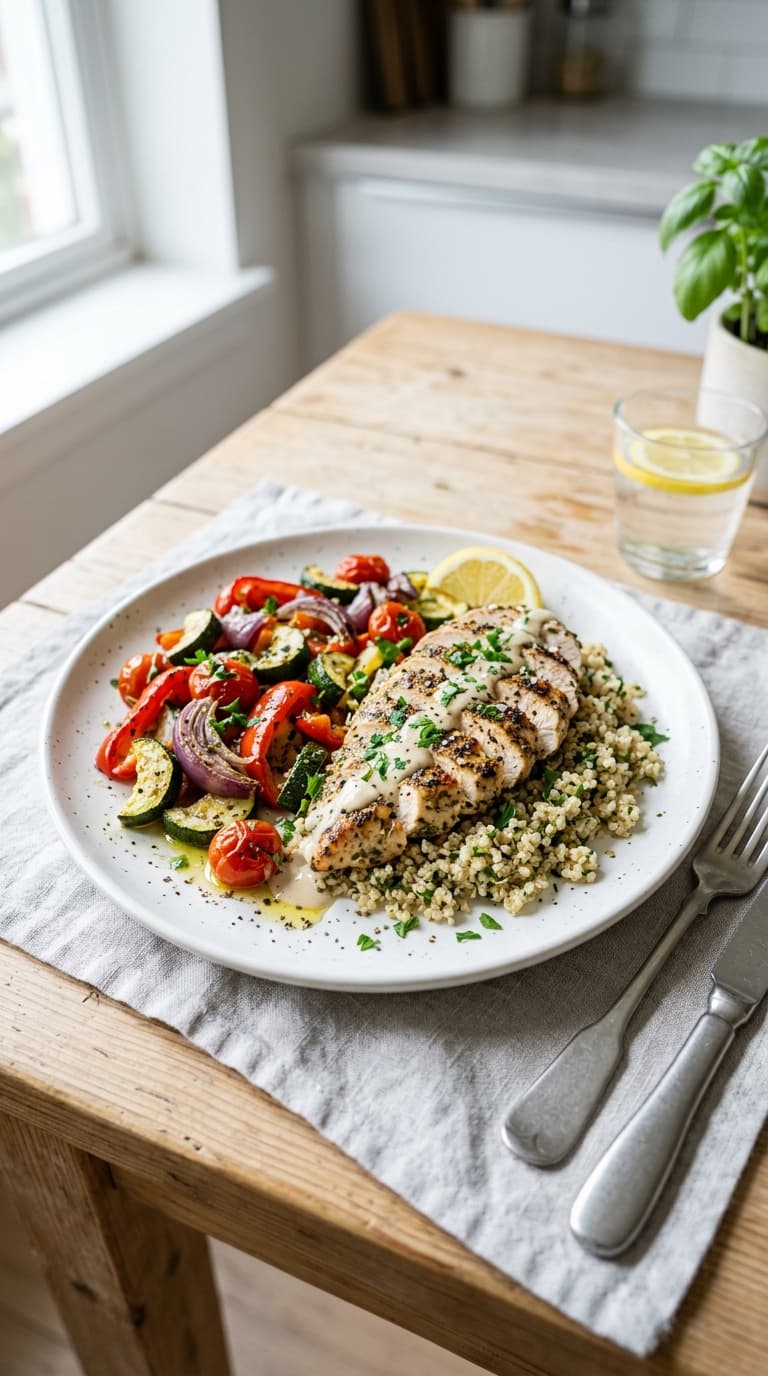
Dinner: Grilled chicken breast with roasted asparagus and a side salad with olive oil and lemon dressing.
Snack: Celery sticks with hummus (check the sodium on the label — some brands go overboard).
Day 6 — Saturday: Weekend Comfort
Breakfast: Whole grain pancakes topped with fresh raspberries and a small drizzle of pure maple syrup. Use unsalted butter.
Lunch: Homemade vegetable and chickpea curry with brown rice. Make it aromatic with turmeric, cumin, and ginger — all of which have solid anti-inflammatory benefits on their own.
Dinner: Lean beef stir-fry with broccoli, snap peas, and bell peppers. Low-sodium soy sauce, sesame oil, and fresh ginger make this genuinely delicious.
Snack: A cup of fresh fruit salad — whatever’s in season.
Day 7 — Sunday: Strong Finish
Breakfast: Veggie omelette with onion, tomato, spinach, and a sprinkle of low-fat feta. Side of fresh orange juice (no added sugar).
Lunch: Whole wheat pasta with homemade tomato sauce, roasted vegetables, and a sprinkle of Parmesan. Keep the portion to about one cup of pasta — the veggies do the volume work.
Dinner: Herb-roasted chicken thighs (skinless) with roasted root vegetables — carrots, parsnips, sweet potato. Classic, satisfying, and perfectly DASH-friendly.
Snack: Plain rice cakes with a thin layer of natural almond butter.
Foods to Eat More Of on the DASH Diet
Want to keep this going beyond the first week? Stock your kitchen with these DASH staples:
- Fruits: Bananas, berries, oranges, melons, kiwi, apples
- Vegetables: Spinach, broccoli, sweet potatoes, carrots, tomatoes, beets
- Whole grains: Brown rice, oats, whole wheat bread, quinoa, barley
- Lean proteins: Chicken breast, turkey, fish, eggs, legumes, tofu
- Low-fat dairy: Greek yogurt, skim or 1% milk, low-fat cheese
- Nuts and seeds: Almonds, walnuts, flaxseeds, sunflower seeds (unsalted!)
- Healthy fats: Olive oil, avocado
Foods to Limit (Or Just Say Goodbye To)
IMO, this list is where most people quietly slip up. Be honest with yourself:
- High-sodium foods: Canned soups, deli meats, pickles, chips, fast food
- Saturated fats: Full-fat dairy, fatty cuts of red meat, butter
- Added sugars: Soda, candy, pastries, flavored coffee drinks
- Alcohol: More than one drink a day raises blood pressure — no workarounds here
- Processed snacks: If the ingredient list reads like a chemistry textbook, put it back
Tips to Actually Stick With the DASH Diet
Here’s the thing — knowing what to eat and actually doing it are two very different challenges. So let me share what genuinely helps:
Meal prep is your best friend. Spend 1–2 hours on Sunday cooking grains, roasting vegetables, and prepping proteins. When hunger hits at 6pm on a Tuesday, you’ll be glad you did.
Season generously — just not with salt. Garlic, onion powder, lemon, lime, fresh herbs, cumin, paprika, turmeric — these turn plain food into something worth eating. The DASH diet isn’t flavorless; it just requires you to get creative with seasoning.
Drink more water than you think you need. Staying hydrated supports kidney function, which plays a direct role in blood pressure regulation. Aim for at least 8 glasses a day.
Swap, don’t eliminate. Instead of cutting everything cold turkey, swap one thing at a time. Regular pasta → whole wheat pasta. White rice → brown rice or quinoa. Table salt → herbs and lemon.
What Results Can You Realistically Expect in One Week?
Let’s be real — you probably won’t see your blood pressure drop from dangerously high to perfectly normal in seven days. That’s not how the body works, and anyone who tells you otherwise is selling something 🙂
What you can expect in the first week:
- Reduced bloating as you drop excess sodium
- More consistent energy levels throughout the day
- A noticeable decrease in systolic blood pressure — studies show the DASH diet can reduce it by 8–14 mmHg in people with hypertension
- Better sleep — especially if you were eating heavy, salty meals before bed
- A growing awareness of how much sodium was hiding in your everyday foods
The American Heart Association consistently recommends the DASH diet as one of the most effective dietary approaches for managing hypertension — and the research backs that up strongly.
How to Make This Meal Plan Printable
Want to stick this on your fridge and actually use it? Here’s how to make it work as a printable:
- Copy the 7-day plan into a simple table format in Google Docs or Word
- Use columns for Breakfast, Lunch, Dinner, and Snack
- Print it in landscape mode for the cleanest layout
- Laminate it if you’re serious (no shame — I’ve done it)
You can also find printable DASH diet templates through the National Heart, Lung, and Blood Institute, which has free resources built specifically around the DASH approach.
Grocery List for the Full Week
To make shopping easier, here’s a general list based on the 7-day plan:
Produce:
- Bananas, blueberries, strawberries, raspberries, apples, oranges, pears
- Spinach, broccoli, sweet potatoes, carrots, asparagus, bell peppers, zucchini, tomatoes, avocados, mushrooms, snap peas
Proteins:
- Chicken breast, salmon, cod, lean ground turkey, tofu, canned tuna (low-sodium), eggs, lentils, black beans, chickpeas
Grains:
- Oats, whole wheat bread, whole wheat pasta, brown rice, quinoa, whole wheat tortillas, whole grain crackers
Dairy:
- Low-fat Greek yogurt, low-fat milk, low-fat feta cheese
Pantry:
- Olive oil, unsalted almonds, walnuts, natural almond butter, natural peanut butter, low-sodium soy sauce, low-sodium broth, canned tomatoes (no added salt), herbs and spices
Final Thoughts
Seven days isn’t a magic cure, but it’s a genuinely powerful starting point. The DASH diet works — the science is solid, the food is good (better than you’re expecting), and the results compound over time. You just have to actually do it.
Start with this week’s plan, track how you feel each morning, and notice what changes. Your blood pressure, your energy, your sleep — your body gives you pretty clear feedback when you start treating it right.
The hardest part isn’t the food. It’s breaking old habits and retraining your taste buds to not crave salt at every meal. Give it two weeks, and you won’t even miss it — I promise. Now go print that meal plan and put it somewhere you’ll actually see it. Your arteries will thank you. ❤️