Eat Like You’re in Greece: 7-Day Mediterranean Meal Plan
Eat Like You’re in Greece: 7-Day Mediterranean Meal Plan
Picture this: you’re sitting at a tiny table overlooking the Aegean Sea, eating the freshest salad of your life, drizzled with olive oil so good it almost makes you emotional. You can’t actually be in Greece right now — but your plate? That’s a different story.
The Mediterranean diet isn’t some trendy wellness fad that’ll disappear by next January. It’s been around for centuries, and the science backs it up hard. We’re talking lower risks of heart disease, better brain function, more energy, and food that actually tastes incredible. IMO, that’s the best health deal you’ll ever find.
This 7-day meal plan walks you through a full week of eating the Mediterranean way — practical, delicious, and not requiring you to fly to Athens. Let’s get into it.
Why the Mediterranean Diet Actually Works
Before we jump into the meal plan, let’s talk about why this style of eating gets so much love — and deserves it.
The Mediterranean diet focuses on whole, minimally processed foods. We’re talking fresh vegetables, legumes, whole grains, nuts, olive oil, fish, and a little bit of dairy and lean meat. It’s not about counting macros or starving yourself into submission. It’s about eating real food with real flavor.
Research consistently links this eating pattern to reduced inflammation, improved cholesterol, and better gut health. It also doesn’t ask you to give up wine entirely — and honestly, a diet that includes a glass of red now and then just feels more sustainable. 🙂
The secret weapon? Extra virgin olive oil. It’s the backbone of almost every Mediterranean dish and packs serious antioxidants. If you’re still using vegetable oil for everything, this is your sign to switch.
What Your Pantry Needs Before Day 1
You can’t cook Mediterranean without the right staples. Here’s what to stock up on before you start the week:
- Oils & Fats: Extra virgin olive oil (get a good one — it matters)
- Grains: Whole wheat bread, brown rice, farro, bulgur, and quinoa
- Legumes: Canned or dried chickpeas, lentils, white beans, and black beans
- Nuts & Seeds: Almonds, walnuts, pistachios, and sesame seeds
- Dairy: Greek yogurt, feta cheese, and small amounts of halloumi
- Proteins: Salmon, sardines, tuna, shrimp, and chicken thighs
- Herbs & Spices: Oregano, cumin, paprika, cinnamon, turmeric, and fresh parsley
- Pantry Extras: Canned tomatoes, olives, capers, and tahini
FYI, most of these keep for weeks, so the initial grocery run is the hardest part. Once your pantry is loaded, the actual cooking becomes surprisingly easy.
Day 1: A Fresh Start
Breakfast
Kick off Monday with a Greek yogurt parfait. Layer full-fat Greek yogurt with a drizzle of honey, a handful of walnuts, and fresh berries. It takes five minutes and keeps you full for hours. No sad desk granola bars needed.
Lunch
Make a big falafel wrap using whole wheat flatbread, store-bought or homemade falafel, hummus, cucumber, tomato, and a squeeze of lemon. It’s hearty enough to carry you through an afternoon of meetings without the 3 PM crash.
Dinner
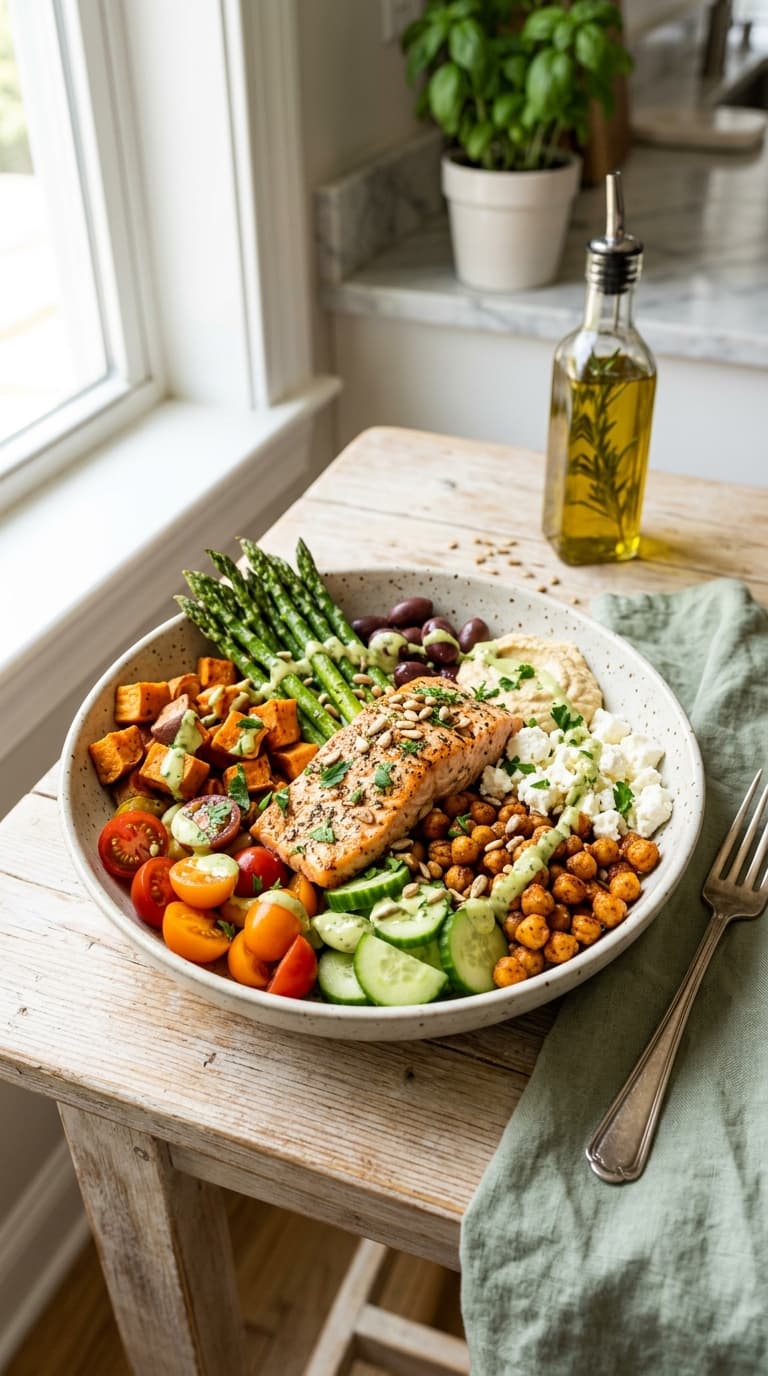
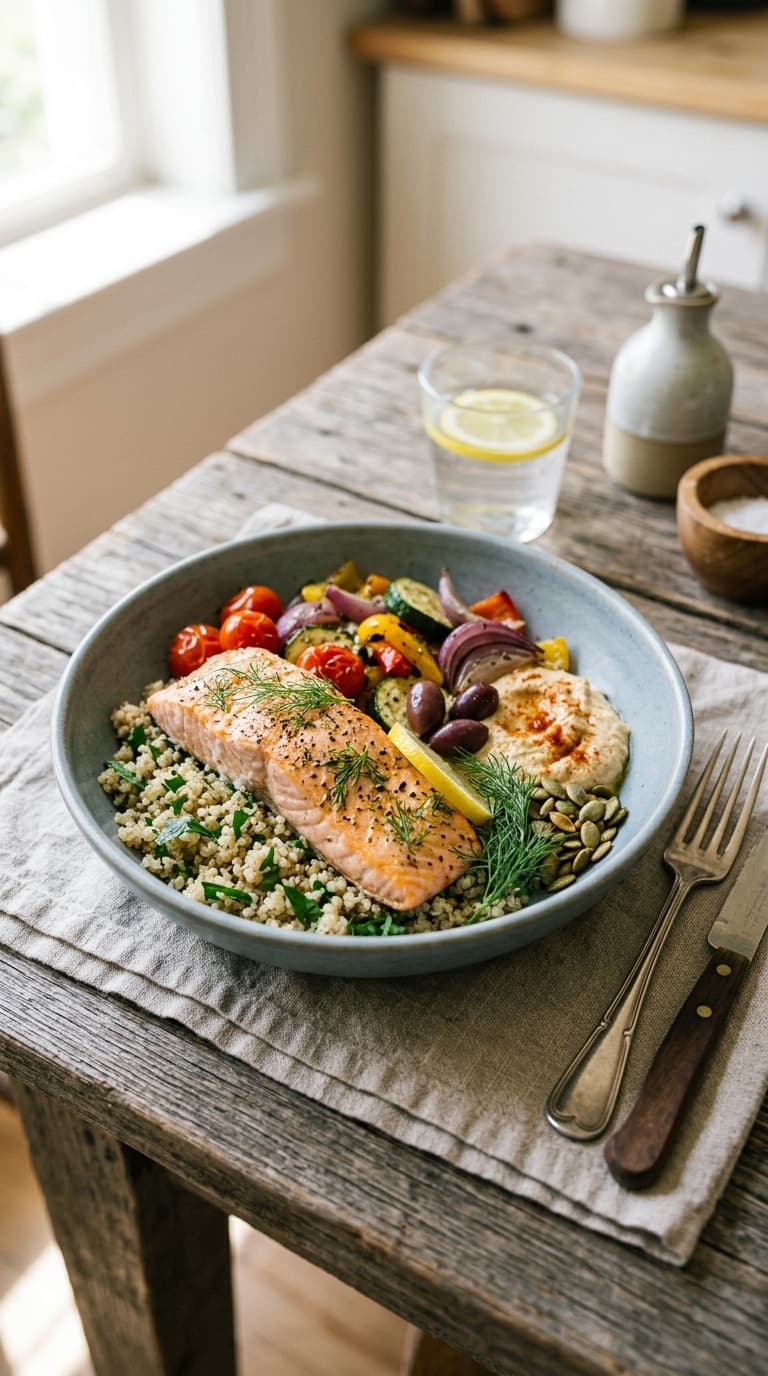
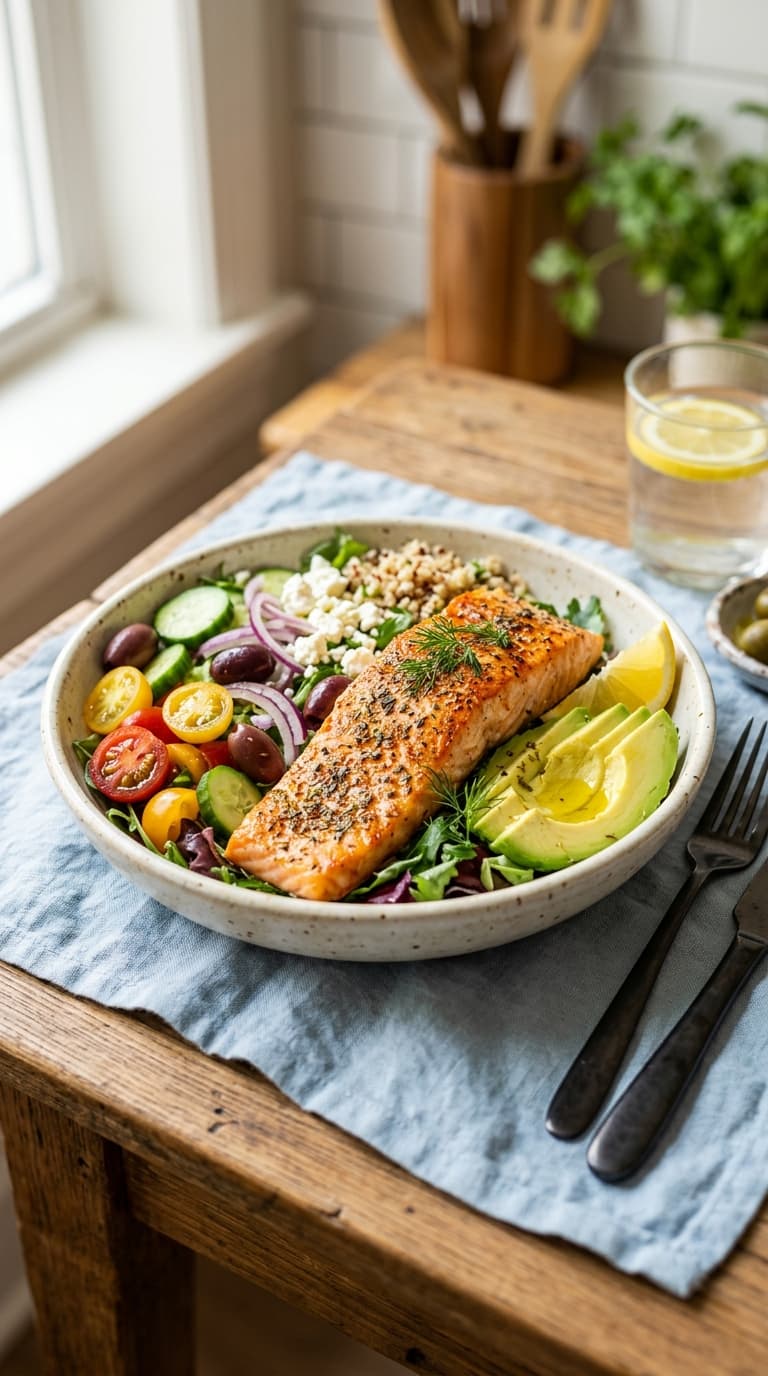
Go classic with baked lemon herb salmon served over a bed of sautéed spinach and a side of bulgur. Season the salmon with olive oil, lemon zest, garlic, and dried oregano. Roast at 200°C for about 15–18 minutes. Simple, elegant, and genuinely delicious.
Day 2: Leaning Into Legumes
Breakfast
Try whole grain toast topped with mashed avocado and a soft-boiled egg, sprinkled with za’atar and chili flakes. Yes, this is a Mediterranean breakfast — Middle Eastern and North African cuisines sit firmly within the Mediterranean world.
Lunch
Cook up a lentil soup with diced tomatoes, cumin, coriander, lemon, and a swirl of olive oil at the end. Lentils are one of the most underrated proteins out there. They’re cheap, filling, and loaded with fiber. Make a big pot and you’ll have lunch sorted for two days.
Dinner
Prepare stuffed bell peppers filled with a mix of brown rice, ground turkey, diced tomatoes, olives, and feta. Bake them until tender and serve with a simple green salad. This dish looks far more impressive than the effort it takes — always a win.
Day 3: The Midweek Reset
Breakfast
Make a vegetable-packed frittata with eggs, cherry tomatoes, zucchini, onion, and crumbled feta. Cook it in a cast iron pan on the stovetop, then finish under the broiler. Slice it up and you’ve got breakfast for today and tomorrow morning.
Lunch
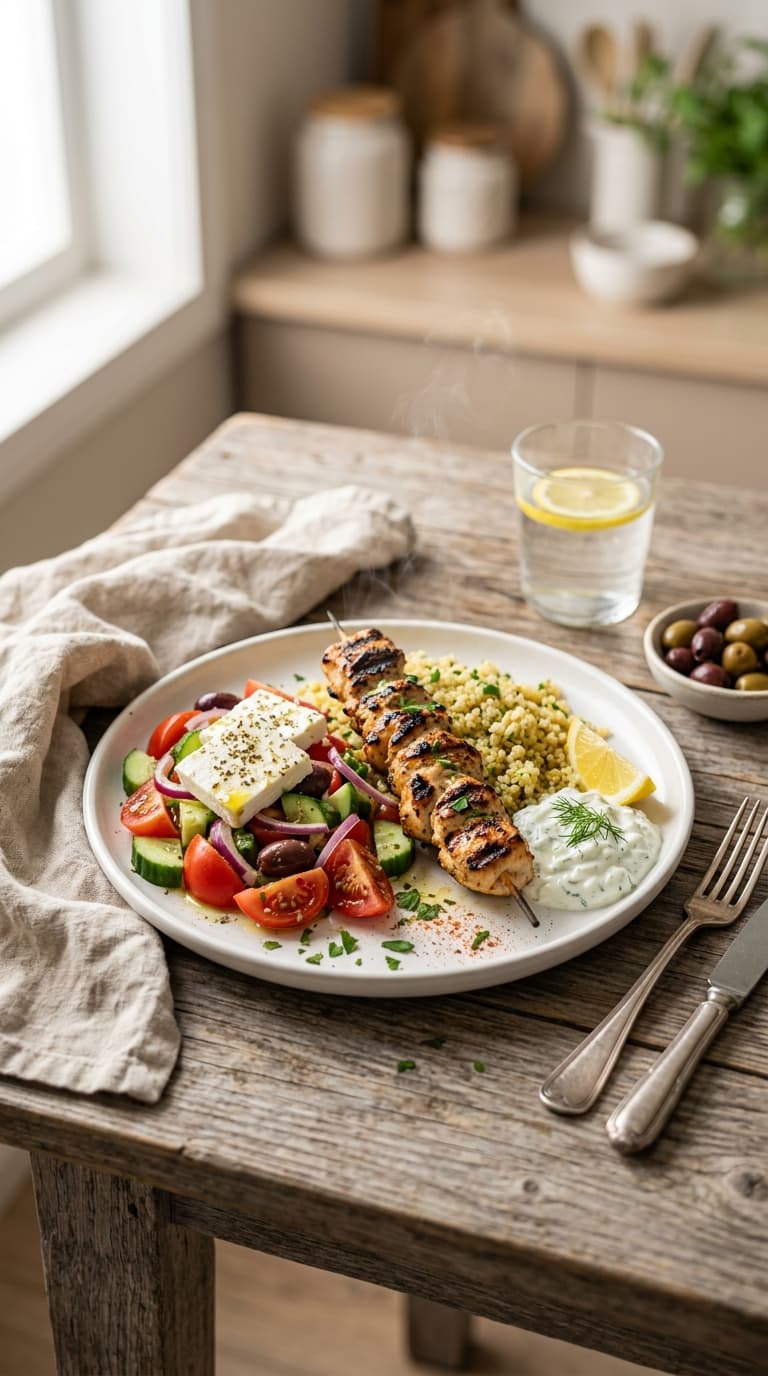
Build a classic Greek salad — cucumber, tomatoes, Kalamata olives, red onion, green pepper, and a thick slab of feta. Dress with olive oil, red wine vinegar, oregano, and salt. Pair it with a piece of whole grain pita. No lettuce required — true Greek salad skips it entirely. (The Greeks know what they’re doing.)
Dinner
Whip up shrimp saganaki, a Greek taverna classic. Sauté shrimp in olive oil with garlic, crushed tomatoes, white wine, and finish with crumbled feta and fresh parsley. Serve with crusty bread to mop up the sauce. This one gets requested every single time I make it.
Day 4: Plant-Forward Thursday
Breakfast
Blend a smoothie with frozen mango, banana, Greek yogurt, a tablespoon of tahini, and a splash of almond milk. The tahini adds a nutty depth that feels indulgent but packs in healthy fats and protein. Give it a try before you judge the combination.
Lunch
Toss together a chickpea and roasted red pepper salad with fresh arugula, capers, lemon juice, olive oil, and a handful of toasted pine nuts. Chickpeas carry this dish — they’re satisfying enough that you won’t even miss meat.
Dinner
Cook pasta e fagioli — an Italian staple that translates to pasta with beans. Use a small pasta shape like ditalini, white cannellini beans, canned tomatoes, rosemary, garlic, and a generous glug of olive oil. This is peasant food in the best possible way: deeply comforting and incredibly nourishing.
Day 5: Fish Friday (Obviously)
Breakfast
Keep it light with whole grain toast, a thin spread of almond butter, sliced banana, and a drizzle of honey. Pair with black coffee or herbal tea. Sometimes simple is all you need on a Friday morning.
Lunch
Put together tuna and white bean salad — canned tuna (in olive oil, not water), white beans, diced red onion, parsley, lemon juice, and olive oil. Serve on top of mixed greens or in a pita pocket. This takes about eight minutes to make and tastes like you tried way harder.
Dinner
Make whole roasted sea bream or sea bass stuffed with lemon slices, garlic, and fresh herbs. Roast at 200°C for 25–30 minutes. If you’ve never cooked a whole fish before, this is your gateway. It’s much less intimidating than it looks and the flavor is miles ahead of fillets. Serve alongside roasted baby potatoes and a tomato-herb salad.
Day 6: Saturday Slow Cooking
Breakfast
Saturdays call for something a little more relaxed. Make shakshuka — eggs poached directly in a spiced tomato sauce with bell peppers, onion, cumin, and paprika. Finish with crumbled feta and fresh herbs. Eat it straight from the pan with crusty bread. This is the kind of breakfast that makes you want to stay in your kitchen all morning.
Lunch
Grill up some halloumi and serve it with roasted cherry tomatoes, olives, cucumber ribbons, and a drizzle of pomegranate molasses. Halloumi has that magical quality of being squeaky, salty, golden-crispy, and deeply satisfying all at once. If you haven’t fallen in love with it yet, Saturday is the day. :/
Dinner
Slow-cook a lamb and chickpea stew with canned tomatoes, cumin, coriander, cinnamon, and fresh cilantro. Let it simmer for at least an hour. The warm spices draw from North African Maghrebi cooking — very much part of the broader Mediterranean world. Serve with couscous and harissa on the side.
Day 7: Sunday Wind-Down
Breakfast
End the week with a proper mezze breakfast spread — sliced cucumber, tomatoes, olives, hard-boiled eggs, a piece of feta, whole grain bread, and a small bowl of hummus. This is how a traditional Turkish or Lebanese morning table looks. It’s communal, colorful, and genuinely joyful to eat.
Lunch
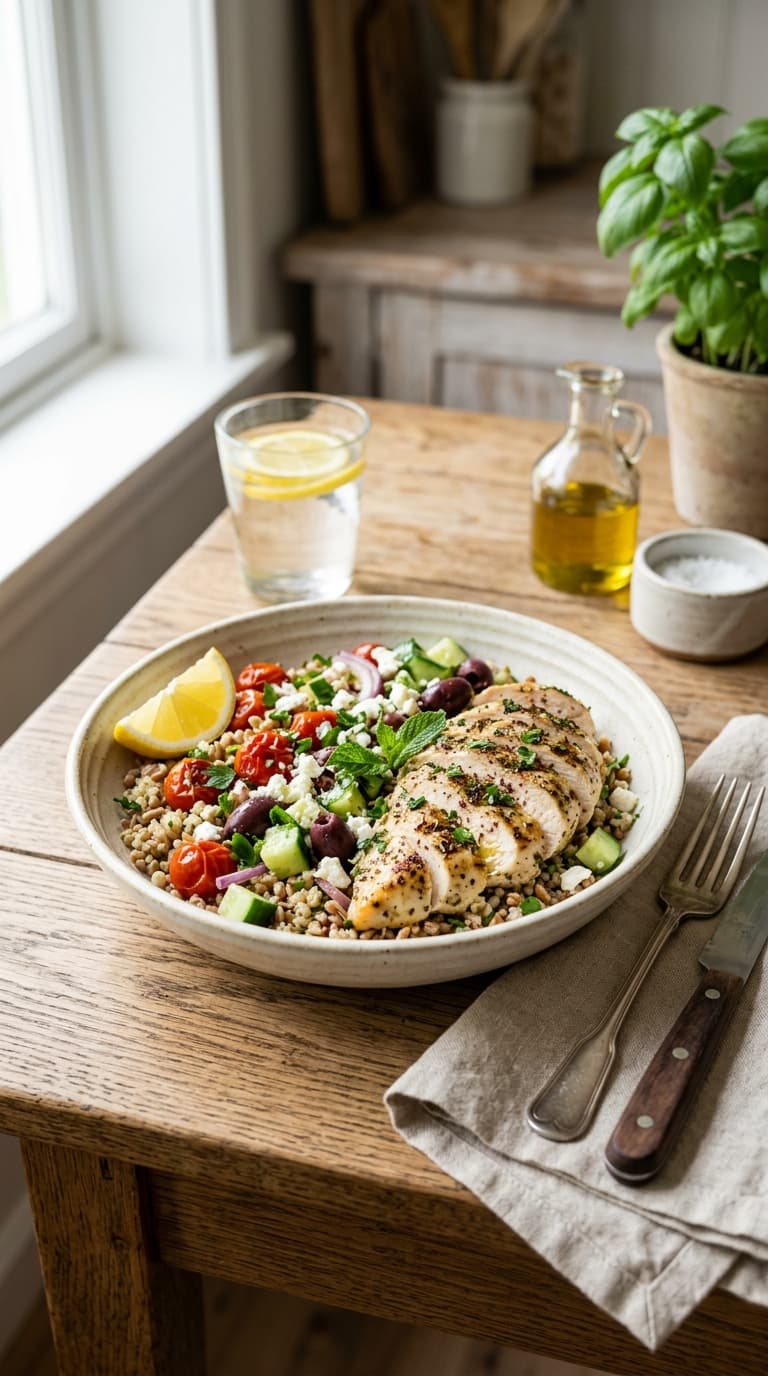
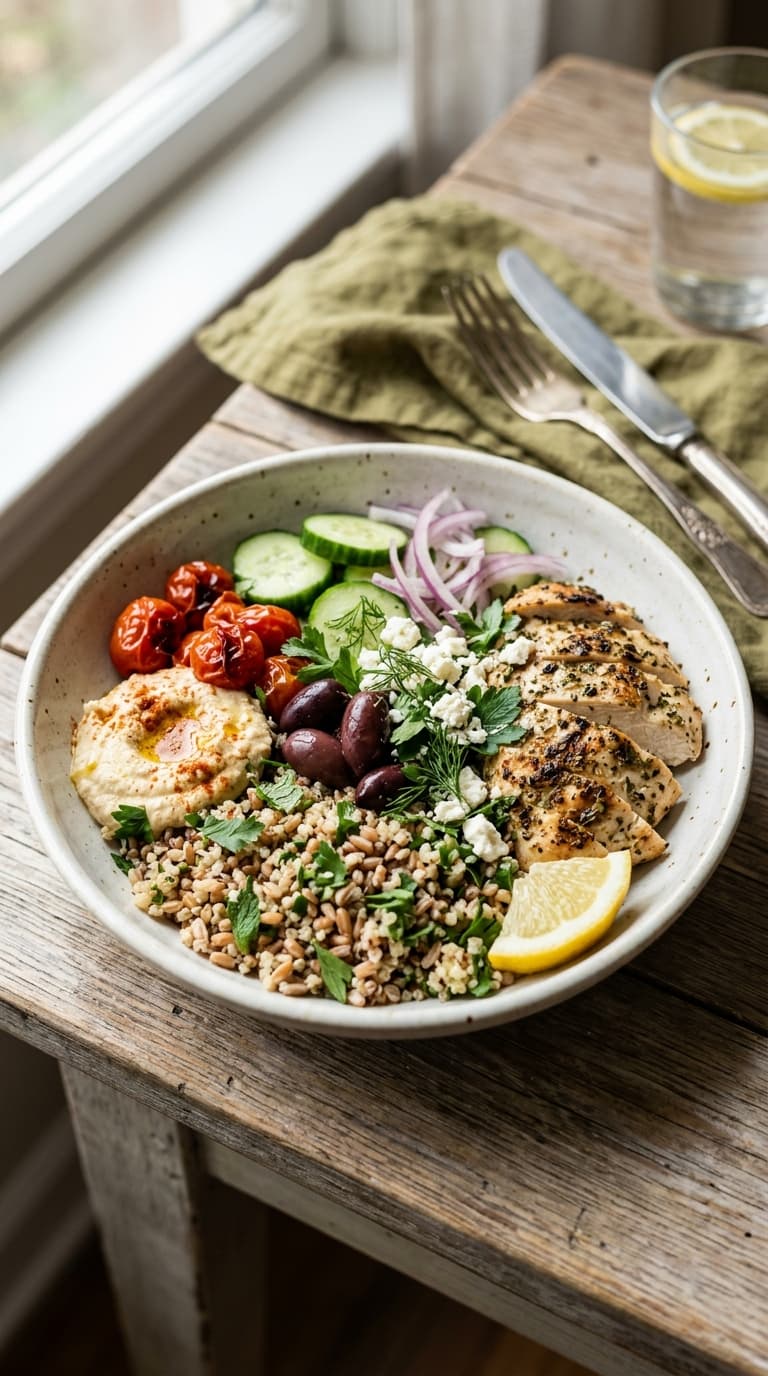
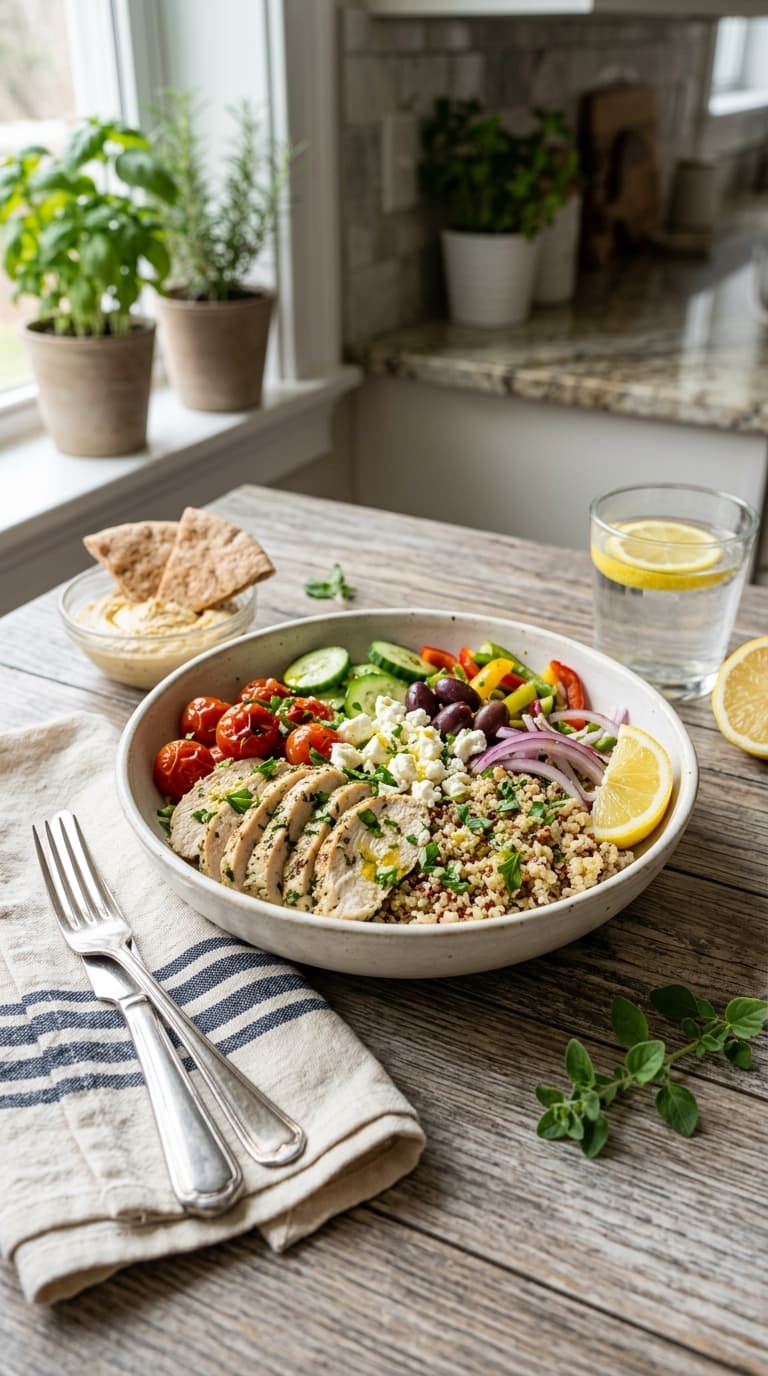
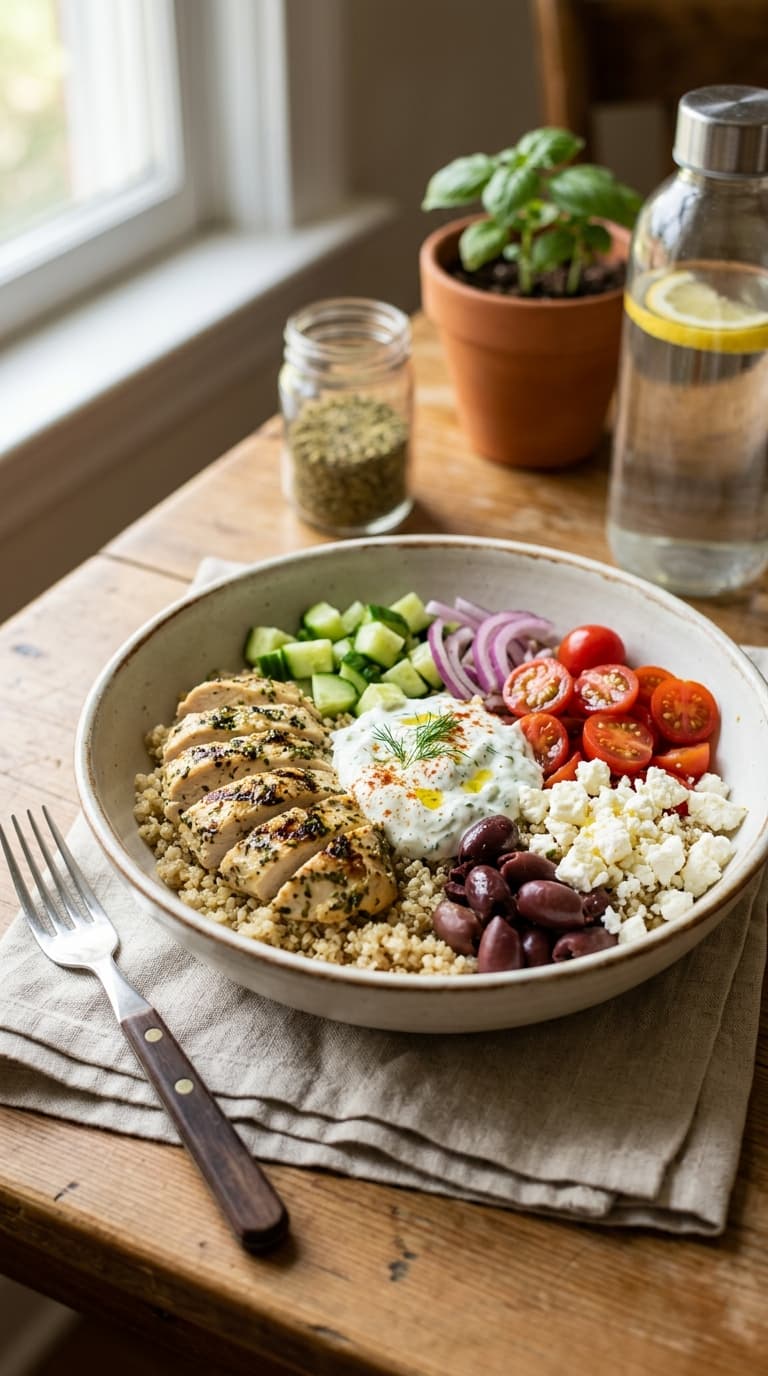
Use up any leftover grains or vegetables from the week in a grain bowl. Base of farro or brown rice, roasted vegetables, a soft egg or legumes, tzatziki drizzled on top, and whatever fresh herbs you have left. Zero waste, maximum flavor.
Dinner
Close the week with slow-roasted chicken thighs marinated in lemon, garlic, olive oil, and dried herbs. Roast them alongside chunks of zucchini, eggplant, and cherry tomatoes until everything caramelizes beautifully. Serve with warm pita and a big dollop of Greek yogurt. Simple, satisfying, and exactly the kind of meal that makes a Sunday feel complete.
Tips to Make This Week Actually Stick
You could read this plan and nod enthusiastically, then completely abandon it by Wednesday. (We’ve all been there.) Here’s how to actually follow through:
- Batch cook on Sunday: Prepare a pot of grains, roast a tray of vegetables, and cook a batch of legumes. That way, weekday meals come together in minutes.
- Keep olive oil front and center: Make it the oil you reach for automatically, not as a special occasion ingredient.
- Eat slowly and together: The Mediterranean lifestyle isn’t just about the food — it’s about how you eat. Sit down. Chew. Enjoy the meal.
- Don’t stress about perfection: One non-Mediterranean meal won’t derail anything. This is a pattern, not a prison.
- Buy seasonal produce: It costs less and tastes dramatically better. What grows locally in any given month is almost always the right choice.
The Bigger Picture
The Mediterranean diet isn’t just a meal plan — it’s a whole food philosophy rooted in pleasure, community, and quality ingredients over quantity. It doesn’t ask you to go low-carb or count every calorie. It just asks you to eat well, move a little, and enjoy your food.
After a week of eating this way, most people notice they feel lighter, more energetic, and weirdly less hungry between meals. The fiber, healthy fats, and protein work together to keep your blood sugar stable and your appetite in check without any willpower gymnastics.
One more week of eating like this and it starts feeling less like a “plan” and more like just… how you eat. That’s the goal.
Wrapping It Up
Seven days, dozens of incredible meals, and zero misery — that’s the Mediterranean way. You don’t need to move to a sun-drenched island (though no one would blame you for trying). You just need good olive oil, fresh ingredients, and the willingness to cook real food.
Start with Day 1 this coming Monday. Stock your pantry, make that yogurt parfait, and let the week unfold from there. Your body will thank you, your taste buds will absolutely thank you, and you might just wonder why you didn’t start eating like this years ago.
Now go make something delicious.