7-Day Mediterranean Diet Meal Plan for Weight Loss (With Calories!)
7-Day Mediterranean Diet Meal Plan for Weight Loss (With Calories!)
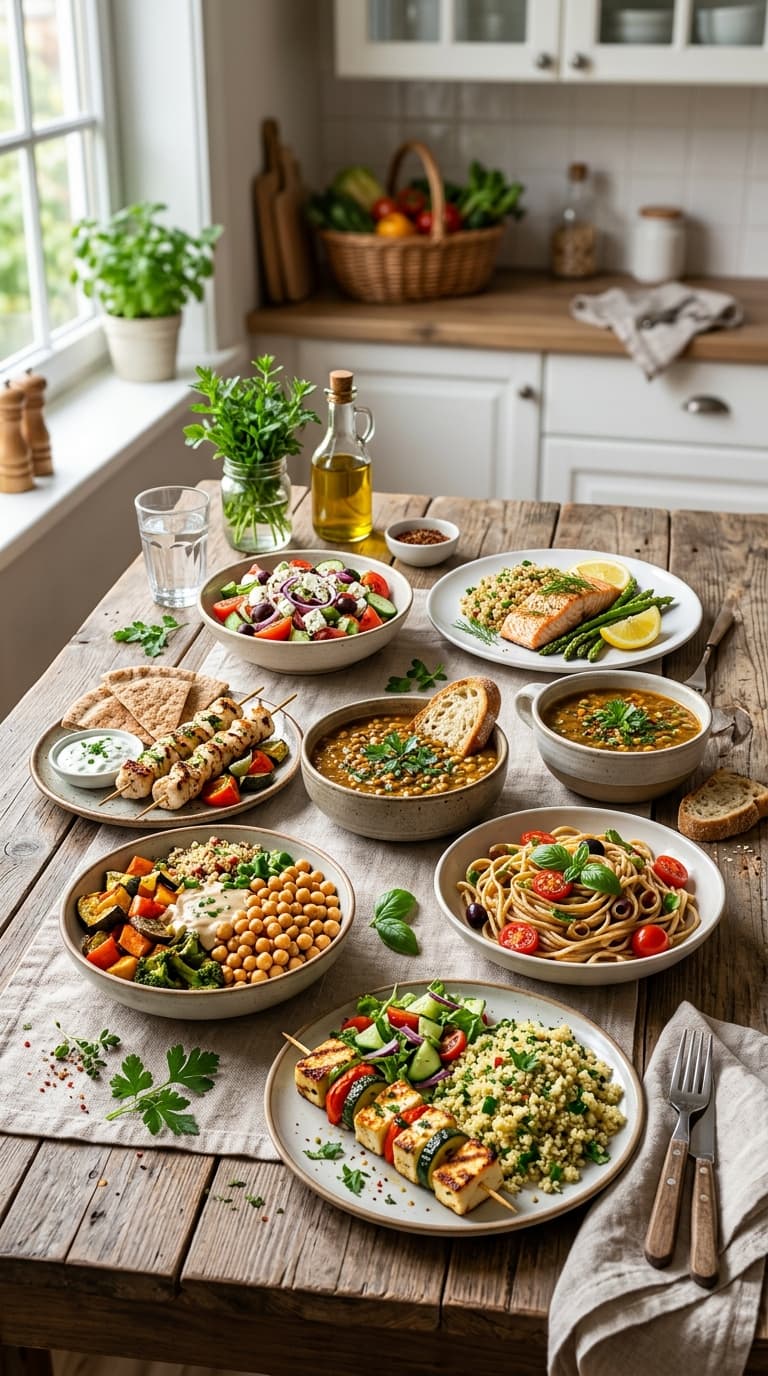
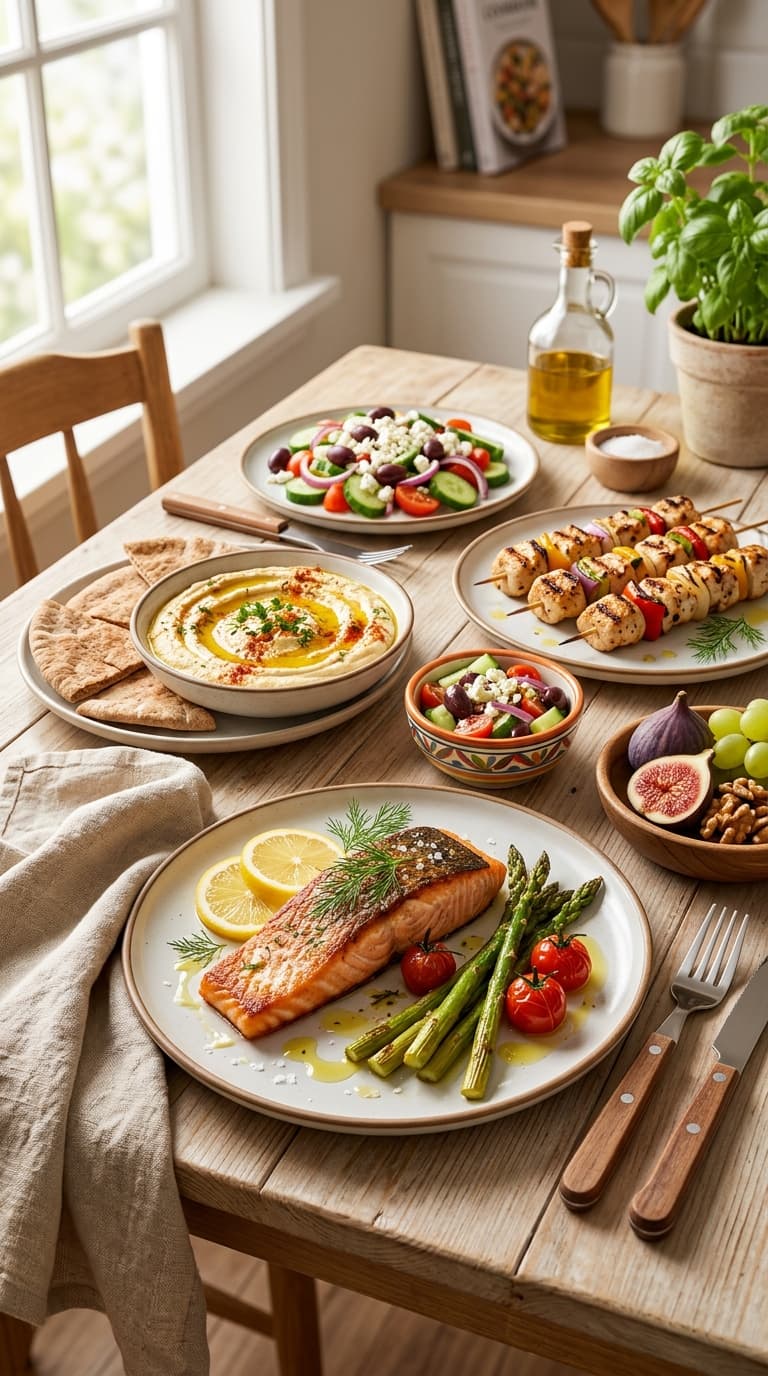
So you’ve heard about the Mediterranean diet approximately 47 times in the last month and you’re finally thinking, “okay, fine, let me actually try this.” Good call. This isn’t one of those miserable “eat lettuce and cry” diets. The Mediterranean diet is the one where olive oil, cheese, and wine actually make the approved list — and it still helps you lose weight. Wild, right?
I’ve been following this eating style on and off for a couple of years now, and honestly, it’s the first approach to eating that didn’t make me feel like I was being punished for existing. Let me walk you through a full 7-day meal plan, complete with calorie counts, so you know exactly what you’re working with.
What Is the Mediterranean Diet, Really?
Before we get into the food (the fun part), let’s quickly cover what this diet actually is. The Mediterranean diet draws inspiration from the traditional eating habits of countries bordering the Mediterranean Sea — Greece, Italy, Spain, and their neighbors.
It centers around:
- Whole grains, legumes, and vegetables
- Healthy fats (especially olive oil)
- Lean proteins like fish and chicken
- Fresh fruits as natural dessert
- Moderate amounts of dairy — mostly yogurt and cheese
- Limited red meat (think once or twice a week, max)
The goal isn’t calorie obsession. It’s about eating whole, nourishing foods that keep you full, support your metabolism, and reduce inflammation. The weight loss follows naturally when you swap processed junk for real food.
How Many Calories Should You Eat?
Here’s the honest answer: it depends on you. But for most people aiming for gradual, sustainable weight loss, a target of 1,400–1,700 calories per day works well. That’s enough to feel satisfied while still creating a calorie deficit.
The meal plan below averages around 1,500 calories per day. If you’re more active or taller, you can bump up portion sizes. If you’re on the shorter side or less active, stick closer to the lower end.
The 7-Day Mediterranean Diet Meal Plan
Let’s get into it. Each day includes breakfast, lunch, dinner, and a snack. Calorie counts are approximate because, let’s be real, no one is measuring every single olive.
Day 1 — A Fresh Start
Breakfast: Greek yogurt (plain, full-fat) with a handful of blueberries and a drizzle of honey — ~320 calories
Lunch: Whole grain pita stuffed with hummus, cucumber, cherry tomatoes, and feta cheese — ~410 calories
Snack: A small handful of almonds (about 20 nuts) — ~160 calories
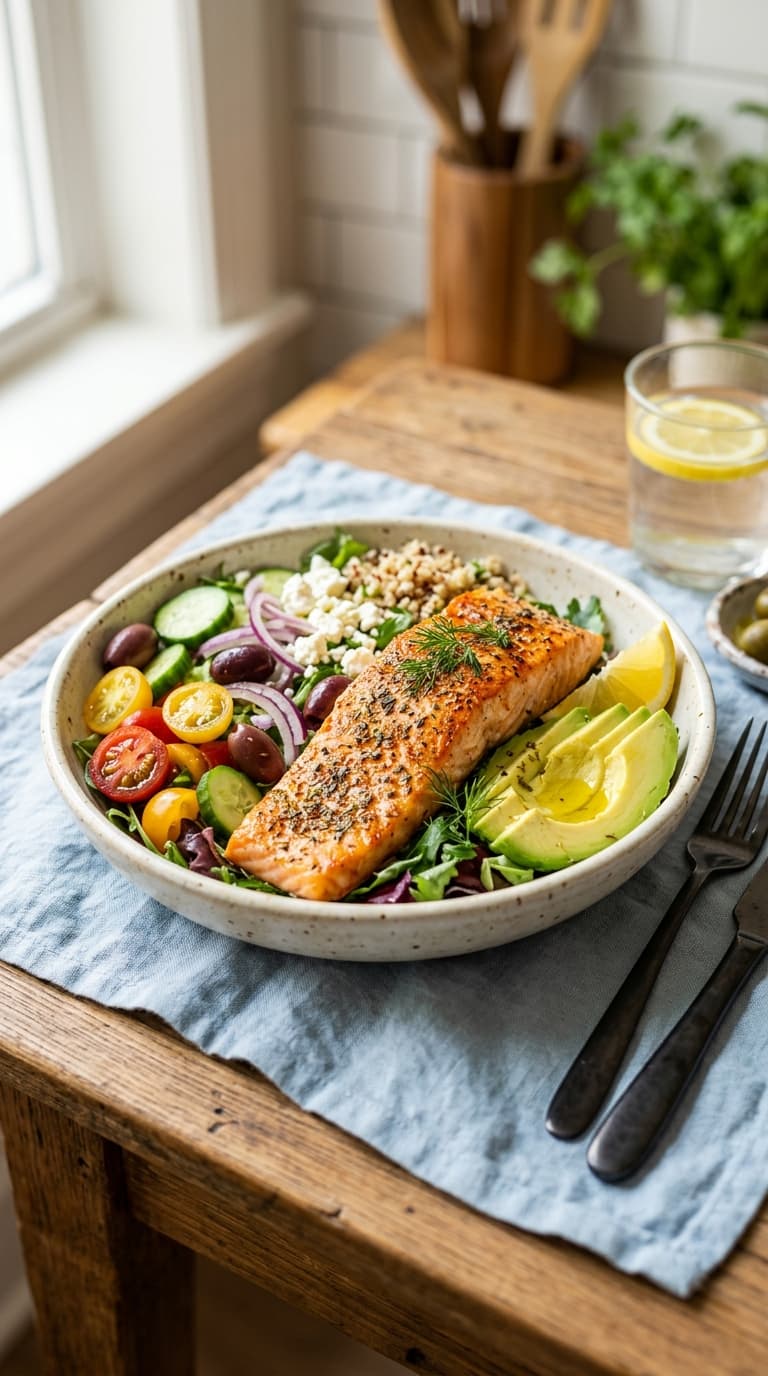
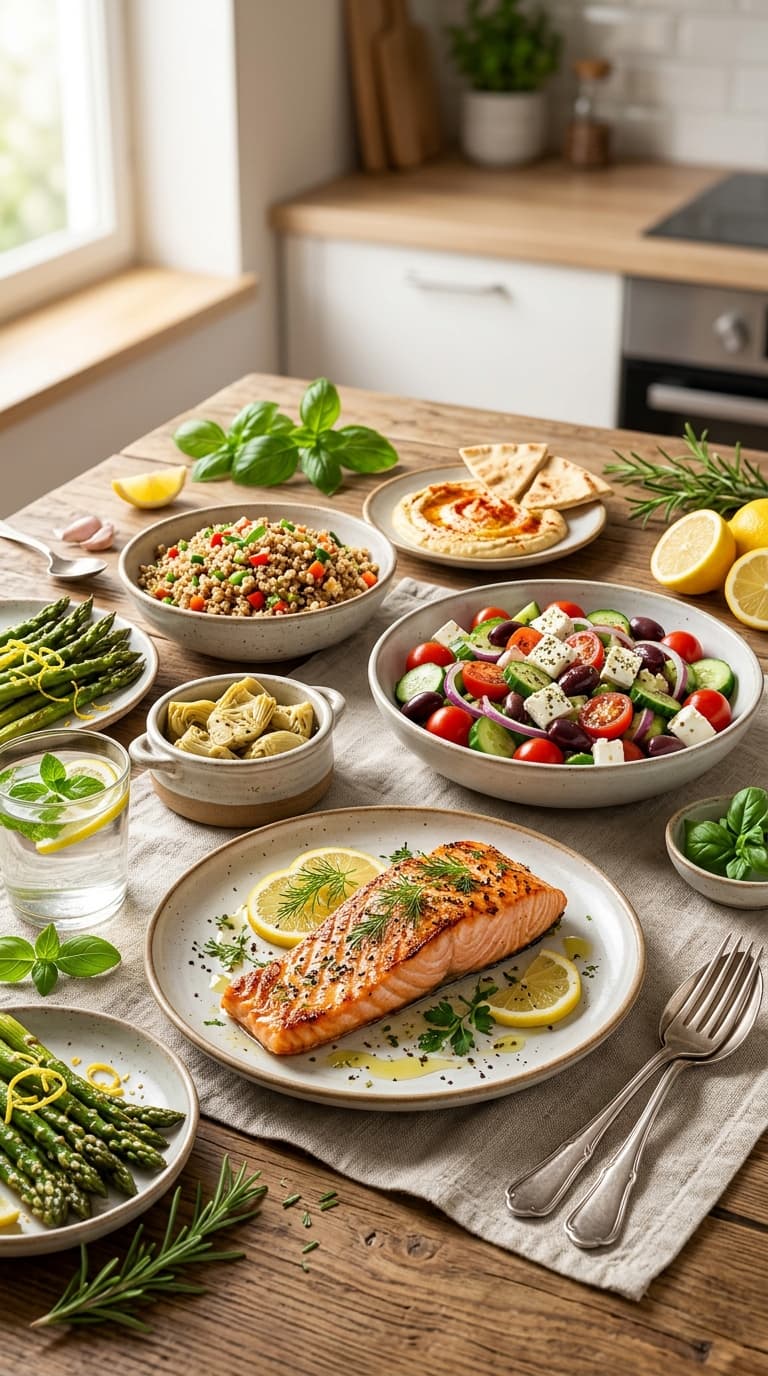
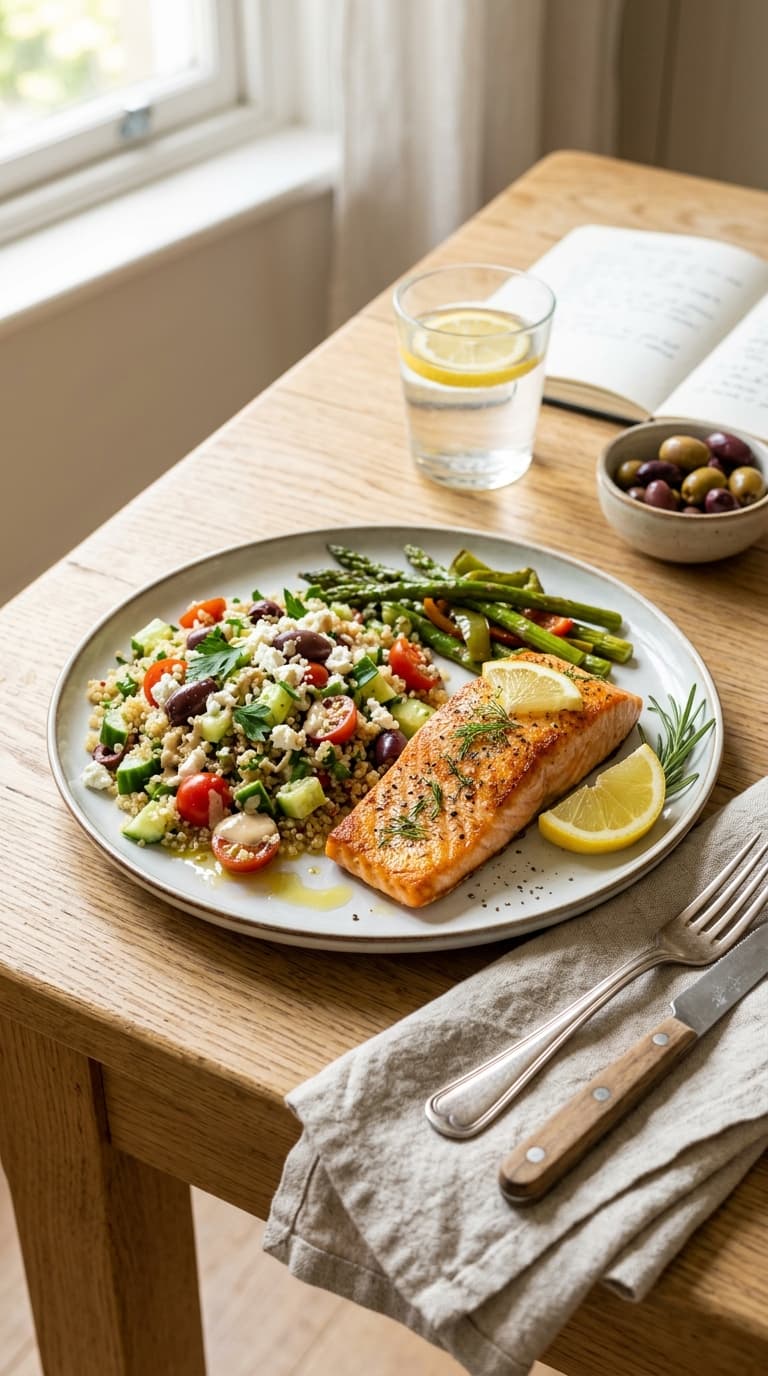
Dinner: Baked salmon fillet with roasted asparagus and a side of quinoa drizzled with lemon and olive oil — ~560 calories
Day 1 Total: ~1,450 calories
Salmon is genuinely one of the MVP foods of this diet. It’s rich in omega-3 fatty acids, keeps you full for hours, and tastes incredible when you bake it with a little garlic and lemon. Start strong.
Day 2 — Plant Power Day
Breakfast: Two scrambled eggs with spinach, cherry tomatoes, and a slice of whole grain toast — ~370 calories
Lunch: Lentil soup with crusty whole grain bread — ~450 calories
Snack: Sliced apple with a tablespoon of almond butter — ~180 calories
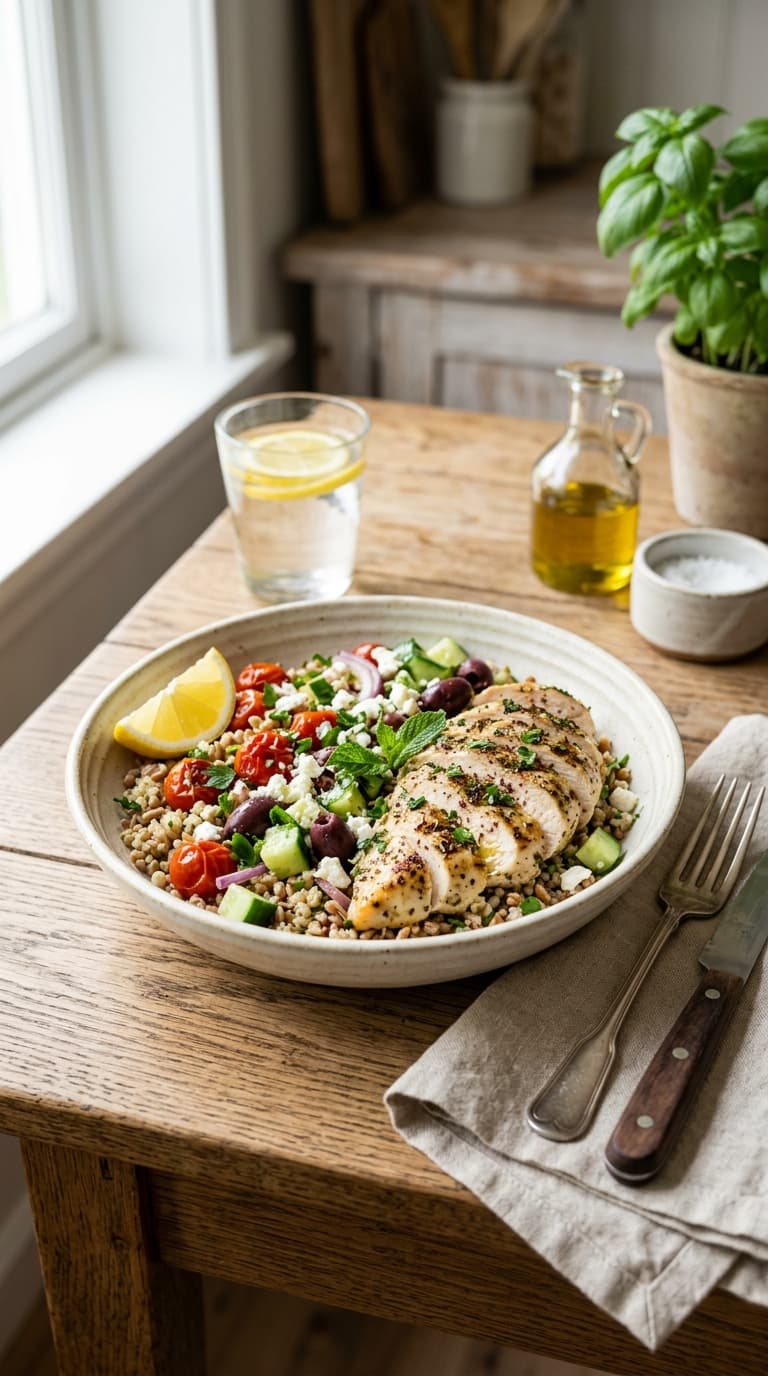
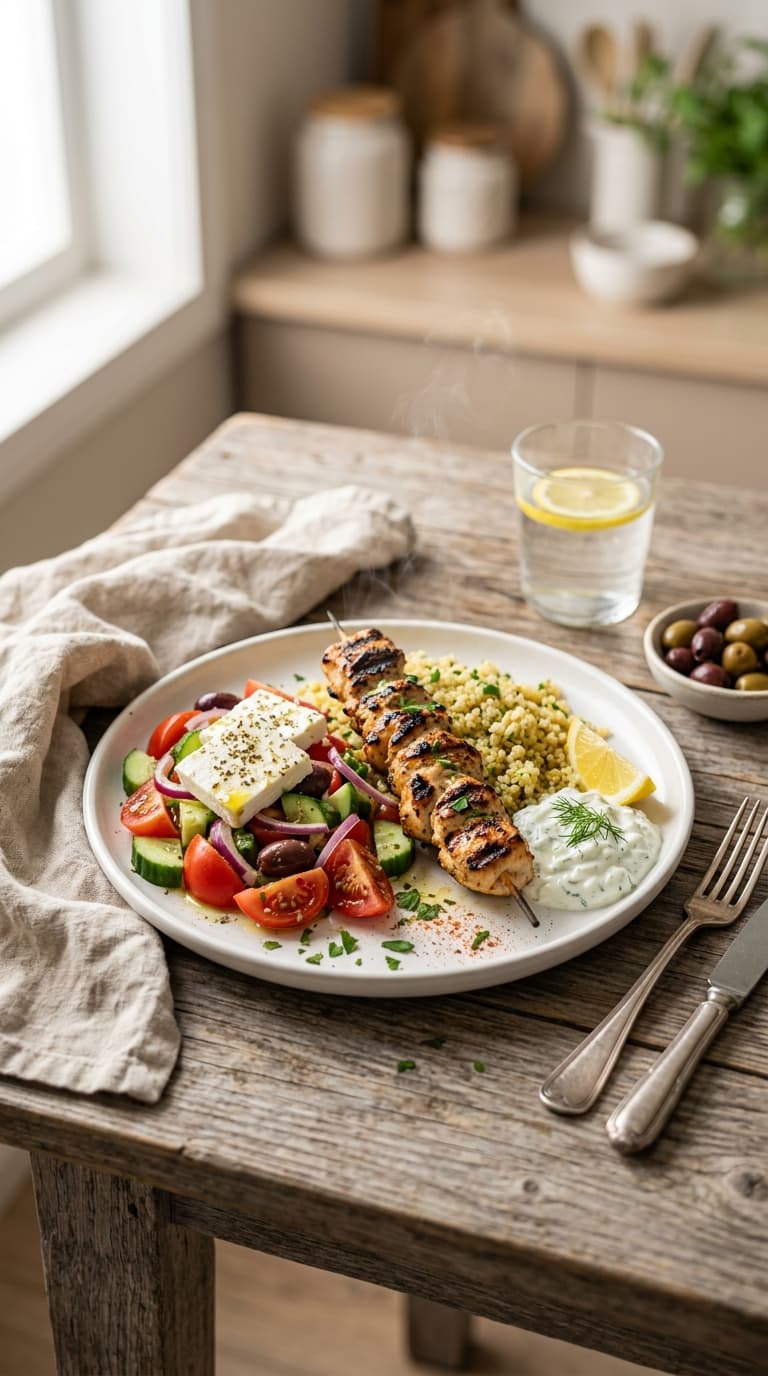
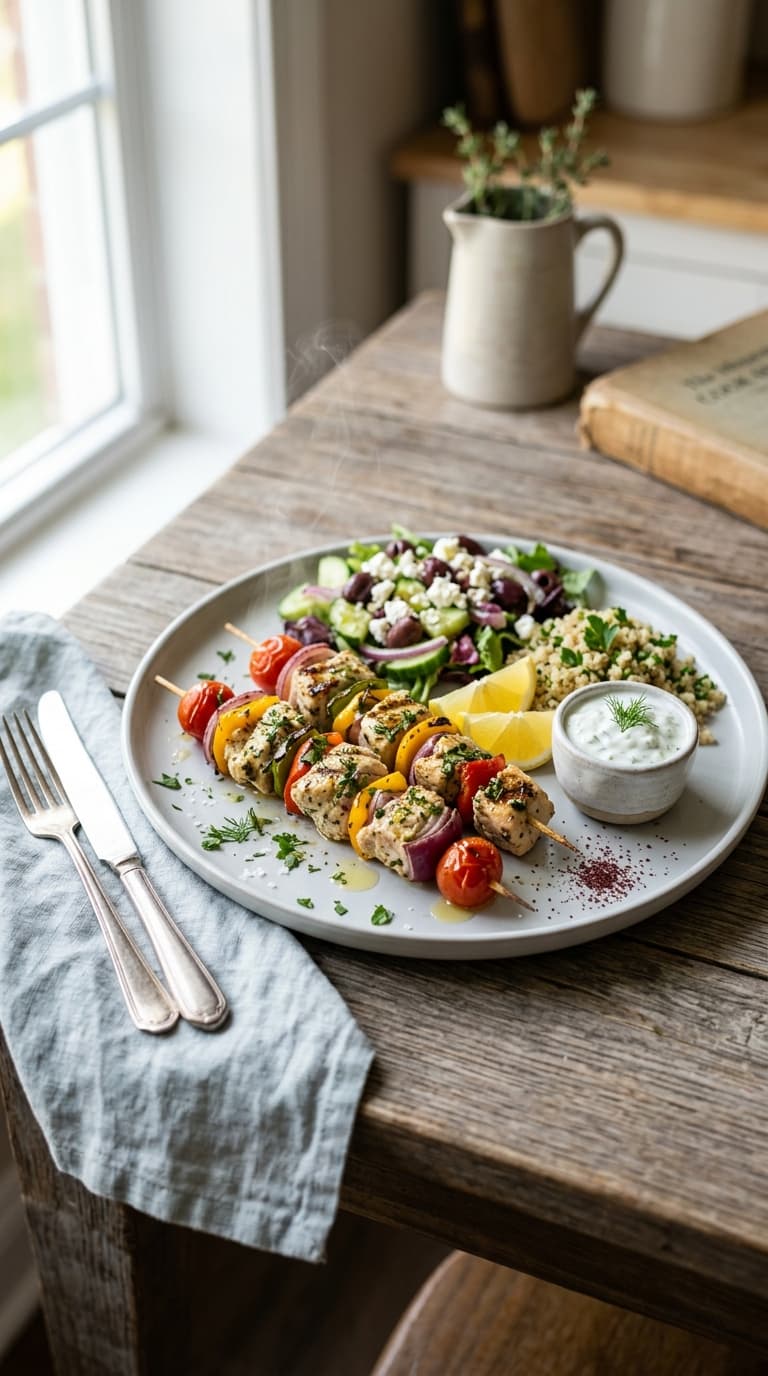
Dinner: Grilled chicken thighs with a Greek salad (olives, cucumbers, red onion, feta, olive oil dressing) — ~520 calories
Day 2 Total: ~1,520 calories
Lentils are criminally underrated. They’re packed with fiber and protein, cost almost nothing, and fill you up like nothing else. If you haven’t made lentil soup before, this week is your moment.
Day 3 — Midweek Momentum
Breakfast: Overnight oats made with rolled oats, almond milk, chia seeds, and sliced banana — ~360 calories
Lunch: Large mixed green salad with canned tuna (in olive oil), olives, capers, and a lemon-olive oil dressing — ~430 calories
Snack: A small bunch of grapes and a few walnuts — ~170 calories
Dinner: Shrimp sautéed in garlic and olive oil, served over whole grain pasta with cherry tomatoes and fresh basil — ~550 calories
Day 3 Total: ~1,510 calories
Ever wonder why Mediterranean food always tastes so vibrant? It’s the fresh herbs. Basil, parsley, oregano — these aren’t just garnishes. They add layers of flavor without adding calories. Load them on.
Day 4 — Keep It Simple
Breakfast: Two-egg veggie omelette with bell peppers, onions, and a sprinkle of feta — ~330 calories
Lunch: Whole grain wrap with grilled chicken, avocado, arugula, and sun-dried tomatoes — ~460 calories
Snack: Hummus with sliced bell peppers and celery — ~150 calories
Dinner: Baked cod with roasted zucchini, cherry tomatoes, and a side of brown rice — ~530 calories
Day 4 Total: ~1,470 calories
Cod is an underappreciated fish. It’s mild, lean, and takes on whatever seasoning you throw at it. A little smoked paprika, some garlic, lemon zest — done. You’ll be eating like you’re on a Greek island for about $4 a serving. IMO, that’s one of the best parts of this diet.
Day 5 — The Friday Treat
Breakfast: Whole grain toast with mashed avocado, sliced tomato, and a poached egg — ~380 calories
Lunch: Chickpea and vegetable stew with a side of crusty sourdough — ~430 calories
Snack: A square of dark chocolate (70%+) and a small orange — ~190 calories
Dinner: Grilled lamb chops with tabbouleh (bulgur, parsley, mint, lemon, olive oil) and roasted eggplant — ~590 calories
Day 5 Total: ~1,590 calories
Yes, dark chocolate is on the list. Don’t let anyone tell you this diet is restrictive. That small square hits the sweet craving without derailing your progress. And tabbouleh? It’s fresh, filling, and takes about 15 minutes to make. Win-win.
Day 6 — Weekend Ease
Breakfast: Greek yogurt parfait layered with granola, mixed berries, and a drizzle of honey — ~390 calories
Lunch: Grilled vegetable and feta flatbread on whole grain base — ~420 calories
Snack: A handful of mixed nuts and dried apricots — ~175 calories
Dinner: Baked sea bass with a Mediterranean herb crust, roasted cherry tomatoes, and garlic green beans — ~530 calories
Day 6 Total: ~1,515 calories
Weekends are where most diets fall apart. You get relaxed, social plans appear, and suddenly you’re three slices of pizza deep. The trick with the Mediterranean approach is that the food is satisfying enough that you don’t feel deprived. You’re not white-knuckling through the weekend.
Day 7 — Finish Strong
Breakfast: Spinach and mushroom frittata baked in the oven — ~340 calories
Lunch: Big grain bowl with farro, roasted vegetables, chickpeas, tahini dressing, and fresh herbs — ~480 calories
Snack: Sliced cucumber with tzatziki — ~130 calories
Dinner: Slow-cooked white bean and tomato stew with kale, served with whole grain bread — ~520 calories
Day 7 Total: ~1,470 calories
That grain bowl at lunch is genuinely one of my favorite meals in this whole plan. Farro has a nutty, chewy texture that feels hearty and satisfying, and when you add roasted vegetables and tahini dressing, it tastes like something from a bougie café. Except you made it at home. 🙂
Key Foods to Always Keep in Your Kitchen
Want to make this lifestyle stick? Stock these staples and you’ll always be able to throw together a Mediterranean meal in under 30 minutes.
- Olive oil — your main cooking fat, always
- Canned chickpeas, lentils, and white beans — protein and fiber on demand
- Whole grains — farro, quinoa, bulgur, brown rice
- Canned or fresh fish — tuna, sardines, salmon, cod
- Greek yogurt — breakfast, snacks, sauces
- Fresh lemons — squeeze them on everything, seriously
- Fresh or dried herbs — oregano, basil, thyme, parsley
- Nuts and seeds — almonds, walnuts, chia seeds
- Feta cheese — a little goes a long way
Tips to Maximize Weight Loss on the Mediterranean Diet
Following the meal plan is step one. But a few extra habits will seriously speed up your results.
1. Eat slowly. Mediterranean culture doesn’t rush meals. Eating slowly helps your brain catch up with your stomach, and you’ll naturally eat less without feeling deprived.
2. Prioritize vegetables at every meal. Half your plate should be vegetables, especially at lunch and dinner. They add volume, fiber, and nutrients for minimal calories.
3. Use olive oil, but measure it. Olive oil is healthy but calorie-dense. Two tablespoons run about 240 calories. Drizzle with intention, not abandon.
4. Limit processed foods and added sugar. The diet isn’t a magic license to eat Mediterranean-flavored snack bars and call it healthy. Stick to real, whole foods.
5. Stay hydrated. Sometimes hunger is actually thirst. Drink water throughout the day. Herbal teas also fit perfectly into this lifestyle.
6. Move your body. The traditional Mediterranean lifestyle includes regular walking. You don’t need to train for a marathon, but a 20–30 minute walk after dinner makes a real difference — both for weight management and digestion.
What to Expect in the First Week
FYI — the first couple of days might feel a bit different if you’re coming off a heavily processed diet. Your body adjusts to more fiber, more vegetables, and less sugar. You might feel a little sluggish on days 2 or 3. That’s completely normal.
By day 4 or 5, most people report feeling lighter, more energized, and noticeably less bloated. The cravings for processed snacks start to quiet down. Your taste buds recalibrate. Fruit starts tasting sweeter. It’s a bit of a journey, but the destination is worth it.
Is the Mediterranean Diet Actually Good for Long-Term Weight Loss?
Short answer: yes. The longer answer is that the Mediterranean diet consistently ranks as one of the best overall diets in the world — not just for weight loss, but for heart health, brain health, and longevity.
Unlike keto or crash diets, this isn’t something you do for 30 days and then abandon. It’s a lifestyle. Once you get used to eating this way, the idea of going back to processed food genuinely loses its appeal. The food is too good.
Wrapping It Up
Here’s what it comes down to: the Mediterranean diet works because it’s built on real food that actually tastes good. It’s not a punishment. It’s not a gimmick. It’s a sustainable, enjoyable way to eat that naturally supports weight loss.
This 7-day plan gives you a solid starting point. Each day averages around 1,500 calories, and every meal is designed to keep you full, satisfied, and energized. Stick with it for a week, see how you feel, and then keep going.
Your future self — the one who feels lighter, less inflamed, and genuinely looks forward to meal times — will thank you for starting today. :/ (That’s not skepticism, that’s just me knowing how easy it is to keep putting things off.)
Start with Day 1. That’s all you need to do right now.